
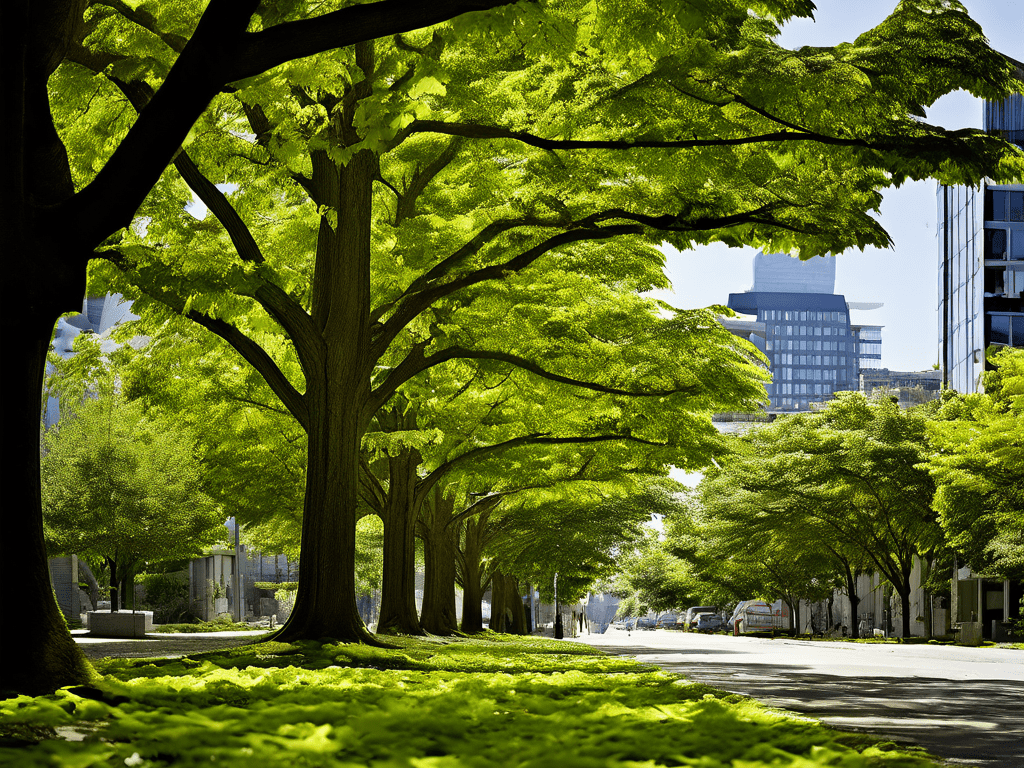
Trees are crucial allies in the fight against flooding, absorbing rainwater, slowing runoff, and replenishing groundwater.
Tax and economic incentive programs can provide significant benefits for expanding the urban tree canopy and improving stormwater management in cities like Portland and Vancouver. Studies have shown that large, healthy trees can intercept substantial volumes of rainfall, reducing the runoff that must be managed through costly infrastructure. To encourage the planting and preservation of these valuable trees, cities have implemented incentives like property tax rebates, reduced development fees, and expedited permitting for projects that incorporate tree conservation. For example, Portland offers rebates and credits to property owners who plant trees or implement other green infrastructure to manage stormwater on-site. Similarly, Vancouver has explored developing a system of tree credits that would provide incentives for incorporating trees into stormwater control measures. These types of programs recognize the critical role that urban trees can play in reducing stormwater runoff, improving water quality, and providing economic motivation for expanding the urban tree canopy.
In Portland, a study found that if the city’s full tree canopy potential of 20,886 acres was realized, it would represent $197 million in annual services, totaling $3.9 billion over 20 years.
https://www.portland.gov/sites/default/files/2020-08/tree-canopy-and-potential-2018.pdf
This includes substantial benefits for stormwater management, as trees can intercept rainfall and reduce the volume of runoff that must be managed through infrastructure.Similarly, a study on the application of stormwater tree trenches in Vancouver found that this green infrastructure technology can delay stormwater entry into the system by up to 2 hours and effectively remove heavy metals, suspended solids, and phosphorus from runoff.
This helps reduce the burden on the city’s stormwater system and associated maintenance costs.
So, it might seem surprising that Portland and Vancouver, neighboring cities in Washington, have different approaches to counting trees for their stormwater management programs. Here’s a breakdown:
Portland’s Treebate Program:
- Minimum height requirement: 15 feet at maturity
- Rationale: Trees need a significant canopy to effectively intercept and absorb rainwater. Smaller trees offer limited benefits, making the 15-foot threshold key to maximizing stormwater mitigation.
- Program incentives: Residents receive a one-time credit on their water bill for planting eligible trees. This incentivizes planting species with rapid growth potential to reach the minimum height quickly.
Vancouver’s Stormwater Credit Program:
- Minimum height requirement: the tree must grow to a mature height of at least 26 feet.
- Rationale: The program aims to encourage any tree planting within city limits, recognizing even smaller trees offer some stormwater benefits.
- Program incentives: Credits are based on a point system considering factors like tree species, planting location, and maintenance commitment. While larger trees earn more points, all plantings contribute.
The Science Behind the Heights:
Studies show a significant difference in water absorption between young and mature trees. A 35-foot tree can intercept up to 4,000 gallons of rainwater annually, while a 16-foot tree manages only around 1,000 gallons. This vast disparity underlines the rationale behind Portland’s minimum height requirement. While Vancouver aims for broader participation, focusing on larger trees translates to quantifiable impact on stormwater management.
- The Herrera Environmental Consultants report cited below states that large evergreen trees in the Pacific Northwest can intercept on average 20% of annual rainfall, with a range of 18-25% depending on the season.
https://owl.cwp.org/?mdocs-file=9300
Finding Balance:
Both approaches have merit. Portland’s emphasis on size ensures efficient water absorption, while Vancouver’s inclusivity encourages widespread tree planting, leading to long-term canopy growth. Ideally, combining these strategies could optimize stormwater mitigation.
Moving Forward:
While differences exist, both cities share a common goal: building greener, flood-resilient communities. Residents can support these efforts by:
- Planting trees: Choose fast-growing, native species appropriate for your location and climate.
- Following local guidelines: Understand your city’s requirements to maximize your contribution to stormwater management.
- Advocating for change: Support policies that encourage large tree planting while acknowledging the value of smaller ones.
Additional Resources:
- Portland Treebate Program: https://www.portland.gov/bes/grants-incentives/about-treebate
- Vancouver Stormwater Credit Program: https://vancouver.municipal.codes/VMC/14.09.060
- King County Flood Hazard Reduction Plan: https://kingcounty.gov/en/dept/dnrp/nature-recreation/environment-ecology-conservation/flood-services/flood-management-plan/about-plan
- Trees and Forests for Flood Mitigation: https://www.gov.uk/government/news/trees-and-woodlands-provide-over-400m-each-year-in-fight-against-flooding-new-study-finds
Remember, every tree counts, but understanding the reasoning behind minimum height requirements and advocating for balanced policies can ultimately create more resilient communities in the face of growing flood risks. Protecting trees and growing tree canopy is a cost-effective way to provide flood protection for coastal communities with minimal resources.
 Surfside Washington News