

When I was searching for coastal properties in Washington, heavy storms significantly impacted several lots I considered. For instance, a lot in Ilwaco with a trailer that I had made an offer on was flooded during a storm, making it impossible to inspect as the floodwaters were several inches deep. The offer was rescinded. Additionally, another lot I visited in Surfside was completely submerged. I observed a homeowner there actively pumping water into a nearby canal to mitigate the rising water levels that were threatening his property and home. These experiences highlighted the constant threat of flooding in these coastal areas especially near the coast where sandy soil is the norm.
Building on sandy soils presents numerous challenges and environmental concerns, especially when compounded by a lack of tree canopy and heightened flooding risks. This article explores the primary disadvantages and provides insight from relevant research to understand the implications better. Surfside Washington is impacted by the lack of trees in areas with higher risk of flooding and erosion.
Addressing Coastal Erosion: The Impact of Shifting Sands and the Role of Tree Canopies in the Pacific Northwest
In the Pacific Northwest, homes near the coast are particularly vulnerable to the phenomenon of shifting sands, exacerbated by heavy storms and powerful wave action. This region frequently experiences intense weather systems that can dramatically alter the coastal landscape. During such events, the combination of high winds and strong ocean currents can mobilize large quantities of sand, leading to significant erosion and deposition. This shifting of sand can undermine the foundations of coastal structures, causing instability and increasing the risk of damage or collapse. For homeowners and builders, this presents a challenging environment, necessitating specialized construction techniques and ongoing maintenance strategies to mitigate the impact of these natural forces and protect their properties from the unpredictable movements of sand. Additionally, cultivating a robust tree canopy in these areas could serve as a natural barrier against erosion, helping to stabilize the sand and buffer the effects of
The Role of Tree Canopies in Preventing Erosion of Sandy Soils
The impact of tree canopies on erosion in Pacific Northwest coastal communities is particularly significant when considering the prevalence of sandy soils in these areas. Here’s how tree canopies help manage erosion in such environments:
- Root Systems Enhance Soil Stability: In sandy soils, which are inherently loose and prone to shifting, the root systems of trees play a critical role. They bind the soil particles together and anchor the soil, reducing displacement during rainstorms or windy conditions.
- Canopy Mitigates Raindrop Impact: The canopy layer of trees intercepts rain before it can strike the ground directly. This interception is crucial in sandy areas as the direct impact of raindrops can easily displace loose sand, leading to increased erosion.
- Organic Matter Improves Soil Structure: The addition of organic matter from decomposed leaves and other tree debris helps bind sandy soil particles, which improves its cohesion and resistance to erosion. This organic matter also enhances the water-holding capacity of sandy soils, reducing runoff.
- Moisture Regulation Through Water Uptake: Trees absorb significant amounts of water from the soil, which is especially important in sandy soils that do not retain water well. By regulating soil moisture levels, trees help prevent the oversaturation of sandy soil, which can lead to soil slumps and erosion.
- Wind Barrier Effect: Coastal areas are often exposed to strong winds that can rapidly erode sandy soils. Tree canopies act as windbreaks, reducing the velocity of wind at the ground level and thereby minimizing the wind’s ability to displace sand.
- Long-term Soil Fertility and Structure: Trees contribute to the long-term enrichment and structuring of sandy soils through continuous cycles of leaf and wood decay. This not only prevents erosion but also gradually improves the quality of the soil for other plant life.
In the Pacific Northwest coastal communities where sandy soils are common, the role of tree canopies is vital for preventing erosion. These canopies reduce the physical impact of rain and wind while enhancing soil stability through biological and mechanical means, thereby protecting these vulnerable landscapes from degradation.
Increased Erosion Risks
The absence of tree canopies on sandy terrain accelerates soil erosion due to exposure to elements such as water and wind. Normally, trees stabilize the soil with their root systems and protect the surface with their canopies. Without these natural barriers, sandy areas are much more vulnerable to erosion, which undermines buildings and other structures. Research in environmental science and geotechnical engineering, including studies like those by Gyssels et al. (2005) in the “Journal of Environmental Quality”, demonstrates how vegetation reduces soil erosion effectively.
The Risks of Hillside Erosion: Protecting Lower Elevations from Degradation
Developing lots on hills presents significant erosion risks that can impact properties located below these elevated areas, particularly when the hills lack sufficient tree coverage. Trees are essential for stabilizing hillside soil; their roots create a natural mesh that holds the soil in place, reducing movement even under adverse weather conditions. Without this anchor, hills are prone to erosion, especially during heavy rainfall. This erosion can lead to soil flowing downhill, endangering lots and structures situated at lower elevations. The resulting sedimentation can exacerbate flooding, and increase risk of looking in waterways. Implementing erosion control measures such as preserving trees, terracing, and retaining walls is crucial to safeguard these vulnerable areas from the cascading effects of hillside erosion.
The Impact of Right of Way Tree Removal on Roadway Stability and Flood Risk
Row trees, often planted along roadways, play a significant role in road maintenance and safety. These trees not only enhance the aesthetic appeal of roads but also contribute to several functional benefits that can improve road longevity and safety.
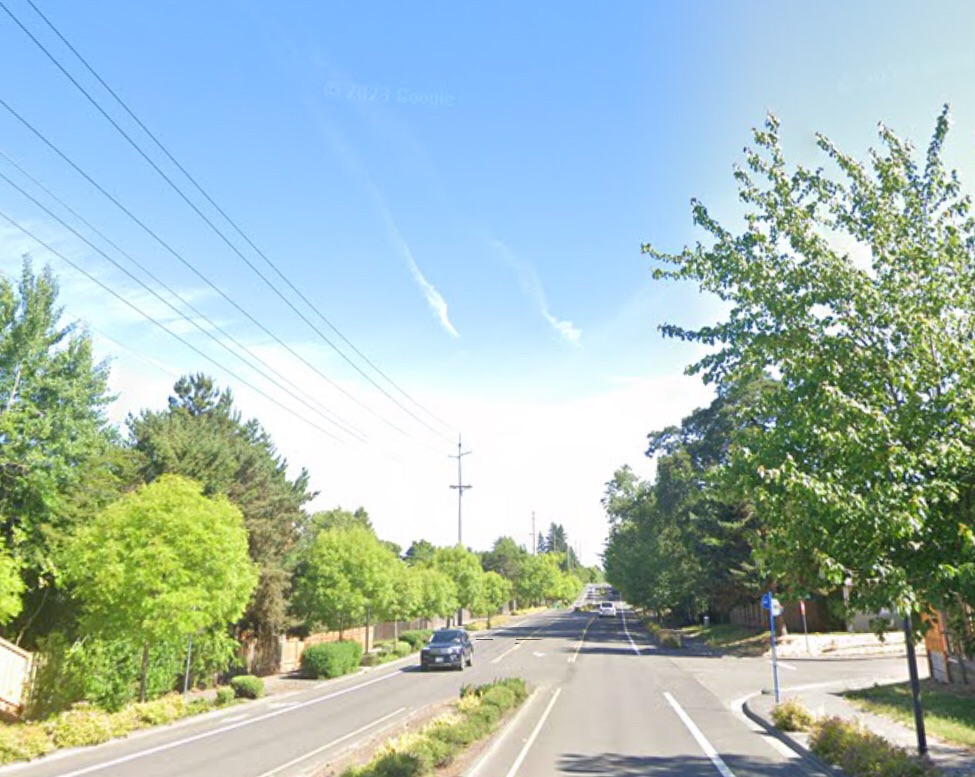
Here’s an overview of how row trees impact road maintenance:
- Temperature Regulation: Trees provide shade, which can significantly lower surface and air temperatures along roadways. This shading helps to reduce the temperature fluctuations that can cause asphalt to expand and contract, leading to cracks and potholes.
- Wind Shielding: Row trees can act as natural windbreaks, reducing the speed and impact of wind on vehicles. Additionally, by slowing the wind, these trees can help prevent the erosion of road shoulders and the accumulation of dust and debris on the road surface.
- Water Management: Trees help in managing surface water runoff through their root systems, which absorb significant amounts of water. This absorption can prevent the excessive buildup of water on roads, reducing wear on the road surface and mitigating the risk of flooding.
- Noise Reduction: Row trees can also serve as a sound barrier, reducing road noise for nearby residential areas. This makes neighborhoods not only more pleasant but also safer by reducing distractions for both drivers and pedestrians.
- Pollution Reduction: Trees along roads help to filter pollutants from the air, which can be especially beneficial in urban areas where vehicle emissions are higher. This contributes to cleaner air along roadways, benefiting both the environment and public health.
- Row trees, when integrated into well-designed landscaping, significantly enhance the beauty of neighborhoods, creating visually appealing and cohesive streetscapes. Their presence adds a natural, serene element to urban environments, transforming ordinary streets into picturesque and inviting communal spaces
The strategic use of row trees in road design and maintenance offers multiple benefits, from enhancing road durability and safety to improving environmental conditions. Beaverton oregon has invested in row trees to the betterment of neighborhoods with the many benefits of trees. Many communities By incorporating tree planting into road planning, communities can achieve more sustainable, and safer roadways while creating an aesthetically pleasing neighborhood.
Structural Integrity and Load-Bearing Capacity
The structural integrity of buildings on sandy soils is compromised due to the soil’s low load-bearing capacity, further exacerbated by waterlogging during floods. The absence of tree roots, which help bind the soil, means that structures are more prone to uneven settling, leading to foundational cracks and other structural damages. Civil and geotechnical engineering research focuses on these issues, providing guidelines and case studies on effective mitigation techniques when building on unstable soils like sand.
Seismic Amplification Risks
In regions susceptible to earthquakes, the lack of trees combined with sandy soil can increase the risk of seismic amplification. The properties of sandy soils may lead to stronger and potentially more damaging seismic effects at the surface. Research from the Earthquake Engineering Research Institute and other seismic studies discuss how different soil types, including sandy soils, influence seismic wave propagation.
Overlooking Environmental Benefits: The Impact of Tree Regulations in Surfside, WA
In Surfside, WA, where flooding and impact of heavy storms is always a threat, local tree height restrictions and policies on tree removal have been criticized for ignoring their environmental impacts. These trees are essential for absorbing rainwater, stabilizing soil, and reducing runoff, yet Pacific County’s support of these tree height regulations often disregards the protective benefits trees offer against severe weather. This oversight increases Surfside’s vulnerability to flooding, risking environmental and property damage. Critics urge a more balanced approach that considers the ecological advantages of mature trees alongside aesthetic or safety concerns. The impact of tree height restrictions needs to be studied in surfside Washington.
The extensive research in geotechnical engineering, environmental science, and hydrology provides a comprehensive understanding of the risks and challenges associated with building on sandy soils, particularly when tree cover or vegetation is sparse and flood risks are high. Addressing these issues often requires integrated and often costly engineering strategies, such as enhanced drainage systems, growing tree canopy, soil stabilization techniques, and robust foundation designs, to ensure the stability and sustainability of structures built on coastal terrains.
 Surfside Washington News