
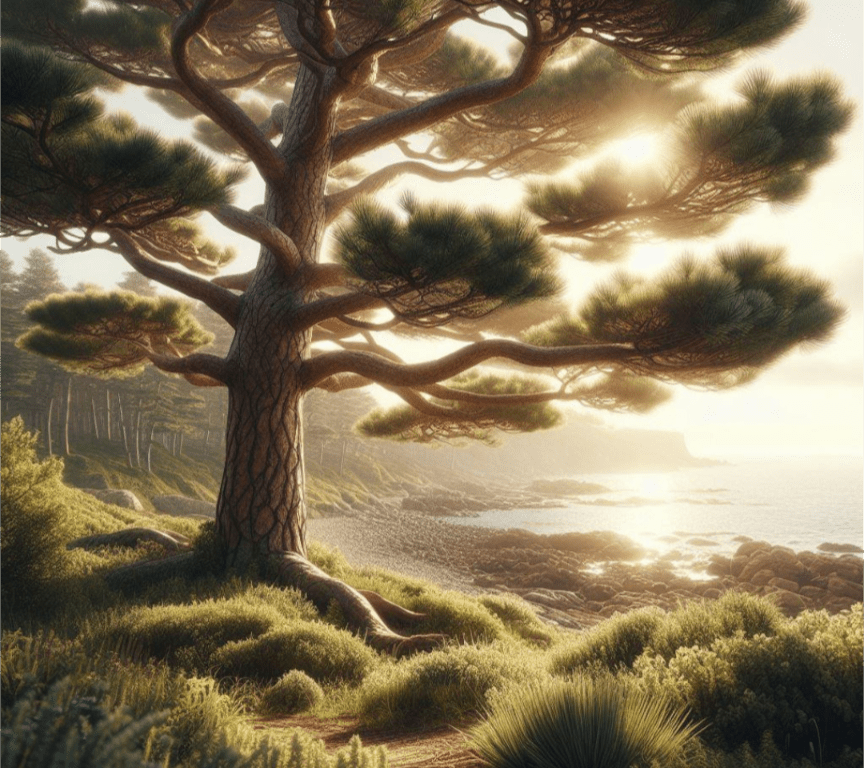
Coastal erosion is a significant concern for property owners and environmentalists alike, particularly in areas with sandy soils and harsh, windy conditions. The Shore Pine (Pinus contorta var. contorta), a variant of the Lodgepole Pine adapted to coastal environments, emerges as a vital player in mitigating these erosive forces. Drawing on insights from the Washington State University (WSU) paper titled “Using Plants & Trees for Stability,” this discussion underscores the multifaceted benefits of the Shore Pine and other vegetation in coastal erosion control as a recommendation for coastal home owners. The article is listed here and referenced by the WSU in the text.
https://shorestewards.cw.wsu.edu/faq/using-plants-trees-for-stability/
The Shore Pine: A Coastal Guardian
The Shore Pine is common throughout the Pacific Northwest. It can be found from northern California to Alaska, thriving under a variety of conditions along the Oregon coast, in the Willamette Valley, and the Cascade Mountain Range2. Additionally, it is a native species that grows along the Pacific Ocean from Alaska into northern California.
Root System
The Shore Pine boasts a deep and wide root system, crucial for soil stabilization. These roots interlock with sandy soils, enhancing their resistance against erosive elements like water and wind, thereby reducing erosion[WSU].
Windbreak
Serving as a natural windbreak, the Shore Pine diminishes the speed and impact of coastal winds, which are significant contributors to soil erosion. By buffering these winds, the tree helps protect the soil surface and curtail sand loss[WSU].
Sand Accumulation
The tree’s structure, characterized by low-growing branches and needles, acts as a trap for blowing sand. This not only aids in soil stabilization but also promotes the gradual buildup of the soil base around the tree, contributing to the landscape’s resilience against erosion[WSU].
Adaptability and Drought Resistance
Shore Pines are notably adapted to thrive in sandy soils, a trait not shared by many tree species. Their ability to prosper in such conditions without the need for rich, fertile soil, coupled with their drought tolerance, renders them particularly effective for erosion control in coastal environments[WSU].
Ecosystem Support
Beyond erosion control, Shore Pines play a pivotal role in supporting local wildlife, including birds and insects, thereby enriching the biodiversity of coastal ecosystems. This aspect is especially crucial in areas where development or other factors have diminished natural habitats[WSU].
The Broader Benefits of Vegetation
The WSU paper also highlights the broader effects of vegetation in minimizing erosion and supporting coastal stability:
- Roots of trees and shrubs hold surface soil and stabilize bank materials, playing a critical role in erosion control[WSU].
- Water Absorption by vegetation helps the ground to absorb water, reducing stormwater runoff and the risk of landslides[WSU].
- Sediment Trapping by fallen trees and their branches can protect embankments from wave action and serve as sediment traps, aiding in beach formation and providing additional buffers at the water’s edge[WSU].
Understanding Shoreline Dynamics
A fundamental understanding of how shorelines move is essential in appreciating the role of vegetation in coastal protection. Incoming waves, often arriving at a diagonal, create a zigzag pattern of sediment movement along the beach, known as littoral drift or shore drift. This process forms drift cells, where sediment deposition creates natural features like beaches, spits, and bars. Vegetation, including the Shore Pine, plays a crucial role in stabilizing these areas, mitigating erosion, and supporting the dynamic coastal ecosystem[WSU].In conclusion, the Shore Pine, alongside other coastal vegetation, offers a natural and effective solution to the challenges of coastal erosion. By leveraging the insights from the WSU paper “Using Plants & Trees for Stability,” property owners and environmentalists can better understand and utilize these natural defenses to protect and enhance coastal environments.
 Surfside Washington News