

Flooding remains one of the most devastating natural disasters, causing extensive damage to homes, businesses, and infrastructure. Traditional sandbags have long been the go-to solution for flood defense, but new technologies like FloodSax are emerging as innovative alternatives. Check out the reviews from your favorite supplier to see if it meets your needs. Here’s a comparison to help you decide which option suits your needs.
What Are Sandbags?
Sandbags are durable, woven bags filled with sand or soil, used to create a barrier against floodwaters. They are inexpensive and widely available, making them a traditional choice for emergency flood response.
Advantages of Sandbags:
Cost-Effective: Sandbags are relatively cheap to produce and purchase.
Reusable: When undamaged, sandbags can be reused in future flooding events.
Easy to Acquire: They are widely available in most disaster preparedness supply chains.
Disadvantages of Sandbags:
Heavy and Difficult to Handle: Filled sandbags can weigh 40-70 pounds, requiring significant labor to transport and position.
Limited Effectiveness: Sandbags can seep water over time, and their placement must be precise to form an effective barrier.
Environmental Concerns: After use, sandbags often become contaminated and require proper disposal to avoid spreading pollutants.
What Are FloodSax?
FloodSax are lightweight, self-inflating flood barriers made from a super-absorbent polymer inside a sturdy outer casing. When activated with water, FloodSax expand to create a solid barrier, similar in function to sandbags.
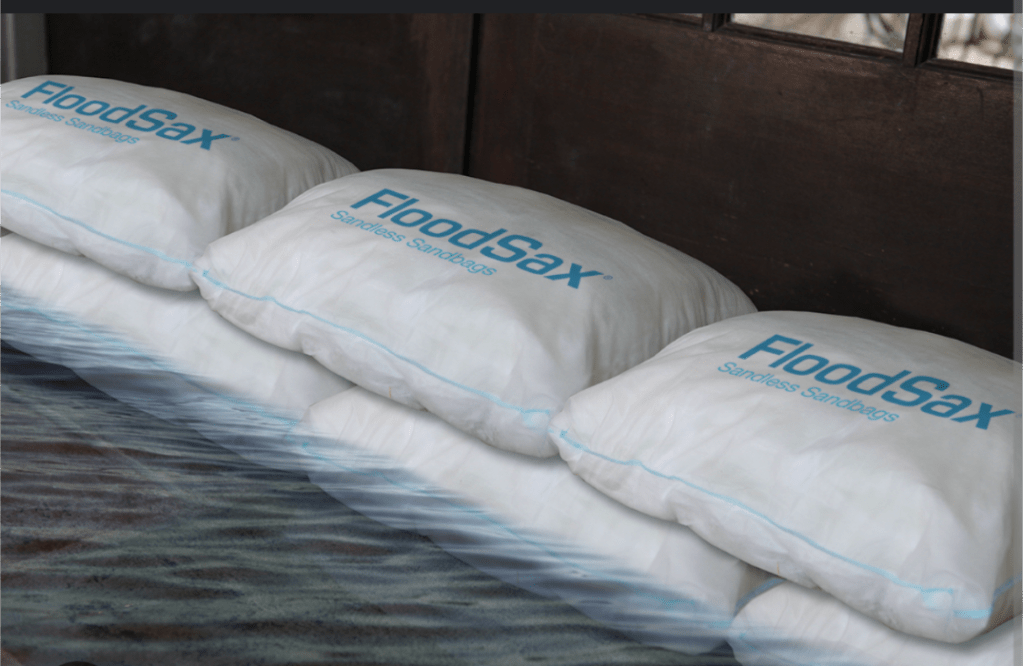
Advantages of FloodSax:
Lightweight and Compact: Each FloodSax weighs less than a pound when dry, making them easy to store, transport, and deploy.
Quick Activation: FloodSax inflate within minutes after contact with water, eliminating the need for sand or soil.
Effective Barrier: Once activated, FloodSax provide a watertight seal that is often more effective than sandbags.
Eco-Friendly: FloodSax are biodegradable and easier to dispose of compared to contaminated sandbags.
Disadvantages of FloodSax:
Higher Initial Cost: FloodSax are more expensive than traditional sandbags, which may deter large-scale use.
Limited Reusability: Unlike sandbags, FloodSax are single-use, as they lose their absorbent properties once used.
Shelf Life: FloodSax have a shelf life of approximately 5-10 years, requiring proper storage to maintain effectiveness.
Which Should You Choose?
Choose Sandbags if: You need a low-cost solution for short-term or small-scale flood defense, and you have the manpower and resources to fill and deploy them.
Choose FloodSax if: You prioritize ease of use, space efficiency, and flood defense, and are willing to invest in advanced technology.
Conclusion
While sandbags remain a staple in flood defense, FloodSax offer an innovative and efficient alternative for modern needs. Each has its place depending on budget, scale, and ease of deployment. There is no guarantee they can prevent the flooding for your needs but they are worth considering. As is always the case, your experience with the product may vary.
 Surfside Washington News