
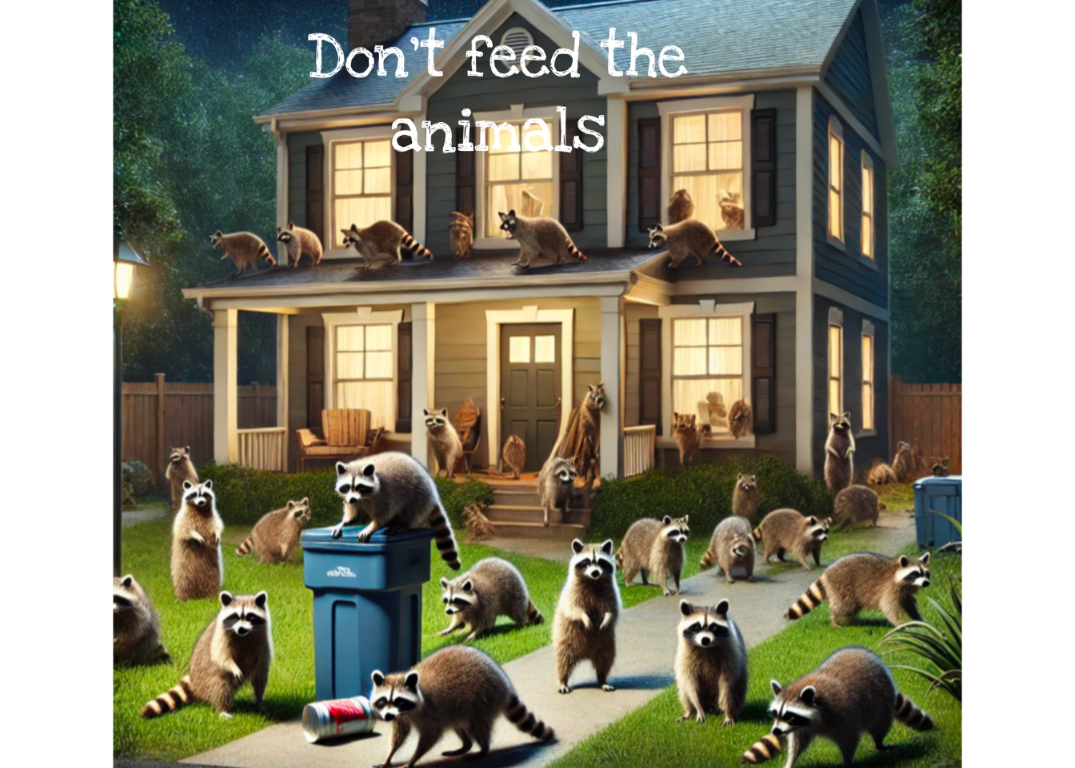
In Poulsbo, Washington, a quaint town known for its Scandinavian heritage and serene natural surroundings, an unusual story unfolded involving one woman and a growing population of raccoons. For 35 years, this local resident regularly fed raccoons near her home, fostering an unusual relationship with the wild creatures. However, what began as a personal act of kindness turned into a cautionary tale about the dangers of feeding wildlife. See a new report of the incident here:
https://youtu.be/QV419vp5kak?si=e0NzhMK08HXQ1ueD
A Lifetime of Feeding
The woman, started feeding raccoons decades ago, gradually attracting a small group of the masked animals to her property. Over the years, as more raccoons discovered this consistent food source, their numbers swelled dramatically. By the time her story made headlines, an estimated 100 raccoons regularly congregated around her home.
The Escalating Problem
As the raccoon population grew, so did their boldness. The once-timid visitors became increasingly aggressive, demanding food by scratching at her doors, windows, and even her car. Day and night, the animals surrounded her property, effectively trapping her in a cycle of feeding to appease them and maintain some semblance of peace.
The situation reached its tipping point when the woman, overwhelmed and fearful, called 911 for assistance. Authorities responded to the scene, assessing the growing risks to both the woman and her neighbors.
The Resolution
Wildlife experts and local officials intervened, advising the woman to cease feeding the raccoons immediately. Feeding wildlife, while often done with good intentions, disrupts their natural behaviors, leading to overpopulation and dependency on human-provided food sources. These animals can also become a nuisance or a danger to humans when they lose their natural fear of people.
After the woman stopped feeding the raccoons, their numbers around her home began to dwindle. The animals dispersed into the surrounding environment, returning to their natural foraging habits.
A Cautionary Tale
This story underscores the importance of maintaining proper boundaries with wildlife. Feeding wild animals can have unintended consequences, both for humans and the animals themselves. Over time, it can lead to overpopulation, increased aggression, and a loss of essential survival skills among wildlife.
In Washington, as in many other states, feeding wild animals is discouraged. The Washington Department of Fish and Wildlife advises residents to coexist peacefully with local fauna by securing trash, removing attractants like pet food, and appreciating wildlife from a distance.
A Lesson for All
The Poulsbo raccoon saga is a reminder that while humans and wildlife share the same spaces, maintaining a respectful distance is crucial. Acts of kindness toward animals should align with best practices for conservation and public safety, ensuring a harmonious coexistence for all.
For more information on how to safely coexist with wildlife, visit the Washington Department of Fish and Wildlife in website.
 Surfside Washington News