
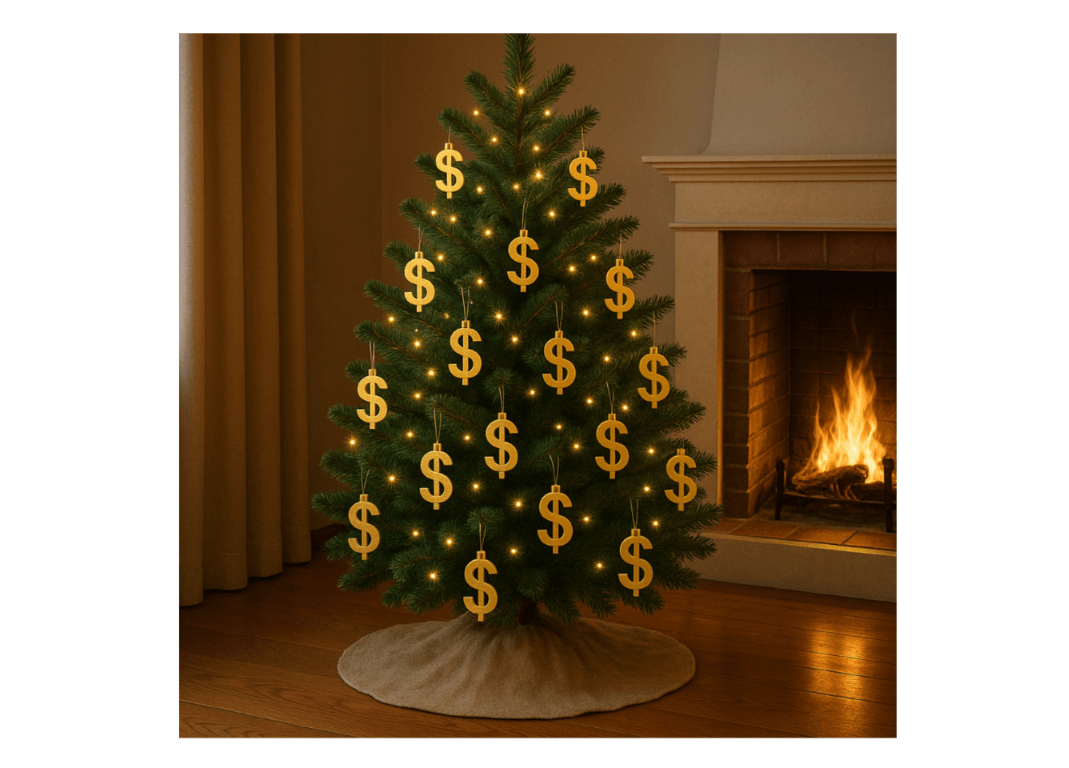
Instead of a Christmas tree that’s thrown away in January, imagine giving a living Christmas tree that becomes working infrastructure—one that protects your home, your community, local waterways, and future generations. A single $50 live tree planted each year for 10 years becomes a $500 infrastructure investment that quietly returns $8,000–$20,000+ in real economic and public-safety benefits in a coastal towns along the Long Beach peninsula.
A living Christmas tree is one of the few personal gifts that quietly grows in value every single year—protecting the home it was planted for, the family who gave it, and the community around it.
In many cases, that one $50 Christmas present will still be working 30, 50, even 100 years later as real infrastructure—filtering air and water, blocking storms, stabilizing soil, and sheltering wildlife.
This Christmas tree to infrastructure model is fully supported by Best Available Science (BAS) used in leading urban forestry plans across Washington, Oregon, and California, where tree canopy expansion is formally recognized as critical public infrastructure for stormwater control, air quality, flood mitigation, heat reduction, and long-term infrastructure cost saving.
This isn’t symbolism. It’s functional, measurable return on investment.
💰 1. Financial Payback: Property Value & Energy Savings
10-Year Return: $3,500–$10,000
- Trees raise property value by 5–20% over time.
- Within 10 years, even young trees add $350–$1,000 in value per tree.
- Ten trees = $3,500–$10,000 ROI from a $500 total investment.
Heating & Cooling Savings
- Coastal wind buffering and summer shading reduce energy bills $80–$250/year per home.
- Over 10 years: $800–$2,500 in utility savings.
Your Christmas tree becomes a permanent rebate on your power bill.
2. Flood & Infrastructure Protection Payback
10-Year Return: $2,000–$6,000+
Each tree acts like a natural stormwater utility system:
- Absorbs 1,000+ gallons of rainfall per year
- Reduces flood pressure on roads, culverts, canals, lakes, and storm drains
- Prevents erosion that damages:
- Shorelines
- Lake edges
- Drainage ditches
- Bridges and walkways
Ten trees = 10,000+ gallons of rainfall managed naturally every year Over 10 years = 100,000+ gallons diverted from flooding infrastructure
That translates into avoided public repair costs that routinely reach thousands per flood event.
3. Coastal Wind & Infrastructure Shield
10-Year Return: $1,500–$4,000+
Planted in rows or windbreaks, trees:
- Reduce coastal wind force by 30–50%
- Protect:
- Homes
- Roofs and siding
- Power lines
- Roads
- Pump stations
- Water infrastructure
Fewer storm damage repairs
Lower insurance claims
Longer building lifespan
Your Christmas tree becomes a living seawall for the air.
4. Waterway & Wildlife Infrastructure
10-Year Return: Ecological Protection with Direct Economic Impact
Trees along waterways:
- Filter fertilizers, heavy metals, hydrocarbons, and microplastics
- Reduce:
- Algae blooms
- Fish kills
- Lake closures
- Create habitat corridors for:
- Birds
- Pollinators
- Mammals
- Aquatic systems
Clean water reduces:
- Fish restocking costs
- Health risks
- Recreation shutdowns
- Property stigma
This is natural water-treatment infrastructure, not decoration.
5. Soil Stabilization & Erosion Control
10-Year Return: $1,000–$3,000+ in avoided land loss & repairs
Each tree:
- Locks soil with deep root structures
- Prevents:
- Dune instability
- Shoreline retreat
- Yard collapse
- Road edge erosion
- Protects septic systems, foundations, and drainage slopes
✅ One tree can stabilize thousands of pounds of shifting soil
The 10-Year Christmas Tree ROI Summary
Category 10-Year Value Property Value $3,500–$10,000 Energy Savings $800–$2,500 Flood Protection $2,000–$6,000 Wind Protection $1,500–$4,000 Erosion Control $1,000–$3,000 Waterway Protection Priceless + Public Health TOTAL ROI$8,800–$25,000+
Initial Investment: $500
Return: Up to 50X return in infrastructure value
The Bottom Line
Buying a living Christmas tree and planting it isn’t a holiday expense — it is:
- A stormwater system
- A wind barrier
- A water filter
- A soil stabilizer
- A wildlife habitat
- A public health investment
- A legacy gift to your community
A tree is the one present that grows in value, protects your home, and rewards future generations.
 Surfside Washington News