
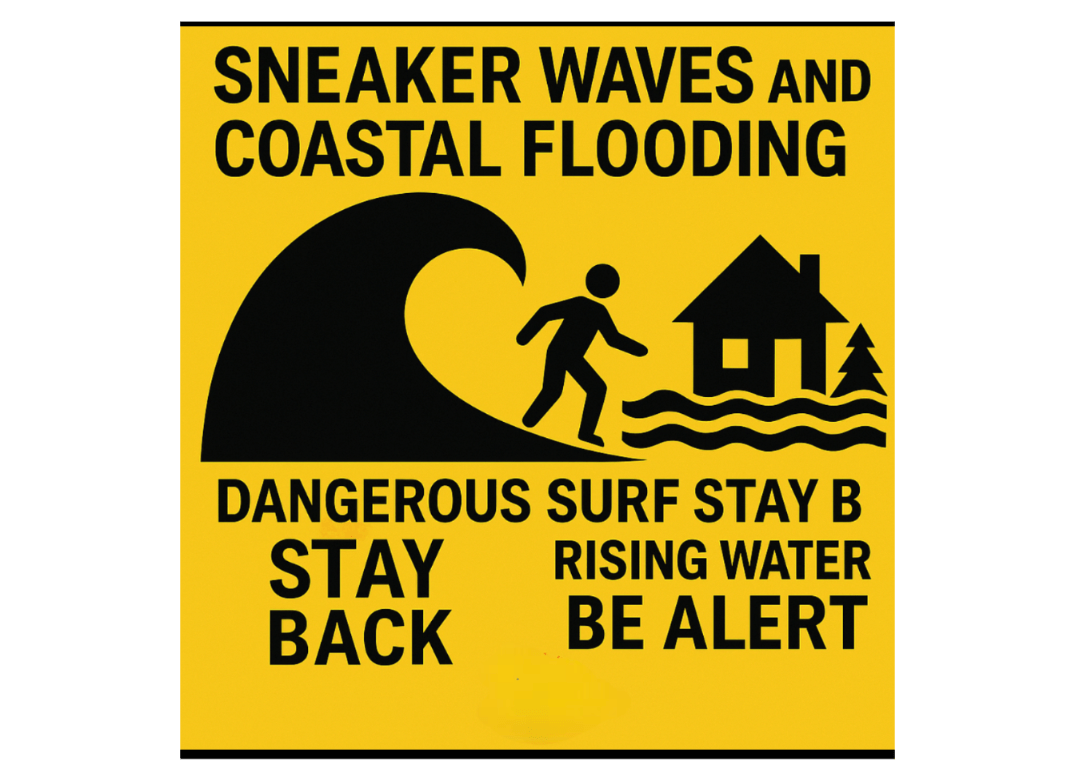
— The National Weather Service in Portland has issued both a Beach Hazards Statement and a Coastal Flood Advisory for the South Washington Coast and Clatsop County Coast in Oregon, warning residents and visitors of dangerous ocean conditions and possible tidal flooding.
The Beach Hazards Statement remains in effect through Wednesday evening, with sneaker waves posing a serious threat along the shoreline. These powerful, unpredictable waves can suddenly surge much farther up the beach than normal—overtopping rocks, jetties, and logs—often without warning. Beachgoers risk being knocked off their feet and pulled into the frigid Pacific, a situation that frequently leads to serious injury or drowning.
The Coastal Flood Advisory will be in effect Thursday from 9 AM to 2 PM PST, as unusually high tides are expected to cause tidal overflow flooding in low-lying coastal areas. Forecast tide levels include:
Up to 11.1 feet at Toke Point
Up to 10.6 feet at Tongue Point
These levels could result in water rising up to one foot above ground level near:
Bays and sloughs
Coastal river mouths and lower river reaches
Other vulnerable low-lying shoreline areas
Who Is Most at Risk
Beach walkers and photographers near the surf zone
Children playing near the water
People on rocks, jetties, and driftwood
Those participating in razor clam digs
Residents in low-elevation coastal neighborhoods
Safety Warnings From the National Weather Service
Officials stress that sneaker waves are life-threatening and often strike with little visual warning. The public is urged to:
Remain well out of the water
Never turn your back on the ocean
Keep children and pets far from the surf
Avoid rocks, jetties, and driftwood
Monitor rising water levels during Thursday’s high tides
What a Coastal Flood Advisory Means
A Coastal Flood Advisory indicates that minor tidal flooding is expected, not just possible. Coastal residents should be prepared for rising water that could impact:
Driveways and roads near bays and canals
Docks and marinas
Stormwater systems
Basements and crawl spaces in low-lying homes
Residents are advised to move vehicles, secure property, and stay alert for rapid water rise during the Thursday morning and early afternoon high tide.
Bottom Line
This combination of dangerous surf and elevated tides creates a high-risk coastal environment over the next 36 hours. Even calm-looking ocean conditions can hide deadly surge cycles.
The safest choice is simple: stay back, stay dry, and stay alert.
 Surfside Washington News