
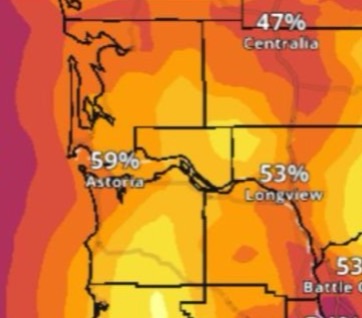
An intense series of atmospheric rivers (ARs) is taking aim at the Washington coast and the greater Pacific Northwest, kicking off what forecasters are calling a “storm train” of heavy, prolonged rainfall, rapidly rising rivers, and heightened flooding and landslide threats. The strongest of the systems is expected to arrive by mid-December 2025, with significant impacts already developing across the region.
What’s Happening
Multiple Storms, Compounding Impacts
Meteorologists warn that three atmospheric rivers are on track to sweep across Washington and Oregon through December 10, 2025. While each system carries high moisture levels, the third AR is forecast to be the most powerful, tapping into deep tropical moisture and directing it squarely into the Pacific Northwest.
A “River in the Sky”
Atmospheric rivers are long, narrow corridors of concentrated water vapor—essentially highways of moisture in the atmosphere. When they intersect with mountainous coastal terrain like the Olympics or Cascades, they release torrents of rain and snow.
This AR event is funneling substantial Pacific moisture inland, with forecasters comparing its intensity to other historically strong early-winter ARs that have reshaped seasonal precipitation totals.
Rain, Flooding, and Record Totals
Western Washington is already seeing heavy, steady rainfall, particularly along the Olympic Peninsula, coastal ranges, and lowland urban areas. Rivers such as the Snoqualmie and Snohomish are rising swiftly and may reach or exceed flood stage, prompting flood watches and preparation efforts from emergency managers.
Urban flooding is possible as storm drains struggle to keep up with rainfall rates, especially in Seattle, Everett, Olympia, and surrounding communities.
High Snow Levels and Mountain Impacts
Snow levels during this AR series remain high, keeping most precipitation as rain at lower and mid-mountain elevations. However, at summits above 8,000 feet, including Mount Rainier and Mount Baker, snowfall totals could exceed 10 feet, providing a welcome boost to the year’s early snowpack.
Impacts and Outlook
A Mixed Blessing: Drought Relief and Hazards
While this series of atmospheric rivers will deliver significant drought relief, replenishing reservoirs and soils across Washington and Oregon, the intensity of the systems brings notable risks. Prolonged rainfall increases the likelihood of landslides, particularly in steep or burn-scarred terrain.
Residents are urged to clear storm drains, check gutters, and stay alert for rapidly changing conditions through the week.
Timing and Intensity
Heaviest rainfall: Monday–Wednesday (Dec. 8–10, 2025) Persistent showers: Continuing through mid-December Wind: Occasional gusty conditions, especially along exposed coastal areas
Forecast Precipitation Totals
Western Washington & Oregon: Several inches of rain Olympic Peninsula & Coastal Mountains: Potential for record-setting totals High Cascades: Over 10 feet of snow at uppermost elevations
Bottom Line
The Pacific Northwest is entering a turbulent stretch of weather as multiple atmospheric rivers line up across the Pacific. While the event promises to deliver vital moisture to a drought-affected region, the combination of flooding, saturated soils, and rapid river rises poses serious hazards through mid-December. Communities are advised to prepare now and monitor updates as the storm train continues to roll through.
Check the latest weather at
 Surfside Washington News