
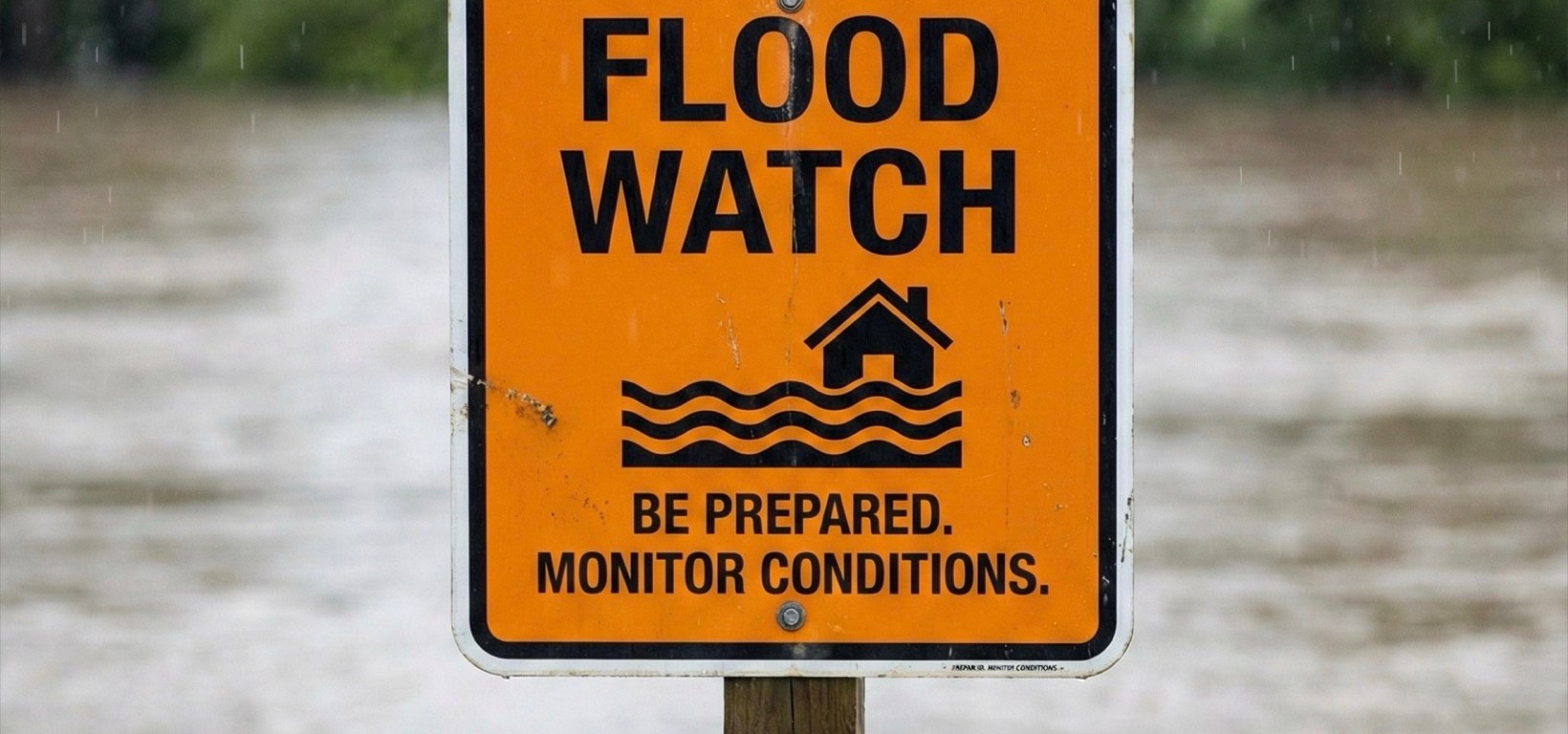
The National Weather Service in Portland has issued a Flood Watch for a broad stretch of northwest Oregon and southwest Washington, warning residents of the potential for river flooding, urban flooding, landslides, and debris flows beginning late Sunday night and lasting through late Thursday night.
A Large Region Under Watch
The Flood Watch covers coastal areas, Coast Range foothills, valleys, Cascade foothills, and numerous gorge communities in both states. Affected areas include major population centers such as Portland, Vancouver, Salem, Eugene, Corvallis, Longview, and many smaller communities extending from the Pacific Coast to the Cascades.
Rivers draining the Oregon Coast Range, the Willapa Hills, and several Willamette Valley tributaries are of particular concern.
What Is Driving the Flood Threat?
Forecasters report that a prolonged atmospheric river—a long, narrow band of moisture streaming in from the Pacific—will stall over the region for several days.
- Heavy rainfall is expected Monday through Wednesday,
- Lighter but steady rain will continue Thursday into Friday,
keeping soils saturated and waterways running high.
The Weather Service estimates:
- 40–70% chance of flooding on rivers draining coastal mountains and major tributaries.
- Flooding along the Willamette River mainstem remains unlikely, with probabilities under 5%.
Potential Hazards
The combination of intense rainfall, saturated soil, and steep terrain heightens multiple risks:
- River, creek, and stream flooding in low-lying or flood-prone areas
- Urban flooding, especially where storm drains clog
- Landslides and debris flows, particularly near burn scars and steep slopes
- Rapidly moving landslides threatening roads, structures, and canyon areas
Residents near steep hillsides, canyon mouths, or known landslide zones should remain especially vigilant.
Preparation and Safety Tips
Officials urge the public to stay alert and take precautions before flooding begins:
- Monitor updated forecasts and watch for upgrades to Flood Warnings.
- Identify alternate travel routes in case of road closures.
- Clear leaves and debris from storm drains near homes.
- Prepare go-bags and have emergency plans ready, especially in landslide-prone areas.
- Never attempt to drive across flooded roads—“Turn Around, Don’t Drown.”
More flood safety information is available at the National Weather Service: weather.gov/safety/flood
 Surfside Washington News