
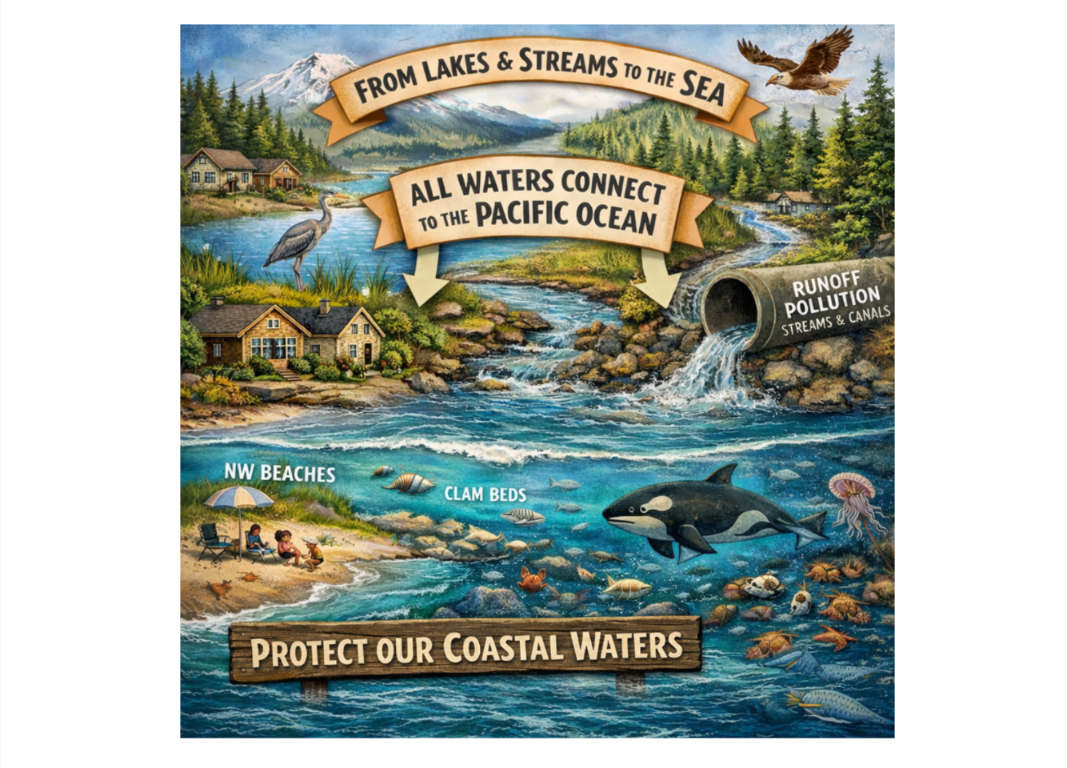
From the edge of Seabreeze Lake, it is easy to believe the water stops there. The surface looks still. The canals seem quiet. The Pacific feels far away. But science tells a different story: every drop that falls on Surfside, every bit of runoff that slides off a roof or street, and every nutrient or toxin that escapes our soils is carried—sooner or later—into the ocean. We do not live beside isolated waters. We live inside a single, connected system.
Hydrologists call this a watershed. Ecologists call it a life-support network. Fishermen and shellfish growers know it more simply: what happens upstream decides what survives downstream. The federal government calls this discharge by pipe or other means into the “Waters of the United States”. This should be protected by federal law.
In Surfside, the lakes and canals are man in the 60s. The county appears to want to ignore state laws protecting critical areas and protecting trees due to them being man made or not a designated critical area.
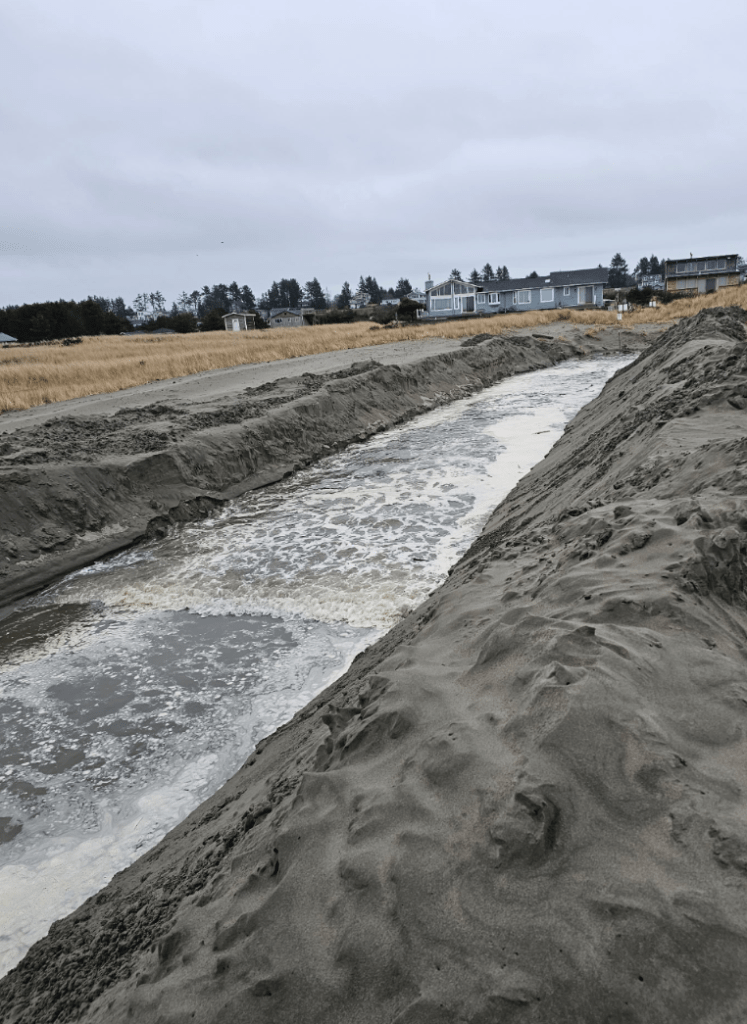
However, They are working parts of the coastal circulatory system. During heavy rains and atmospheric river events—now more frequent and more intense in the Pacific Northwest (Ralph et al., 2019)—these waters rise, move, and discharge through outfalls to the Pacific.
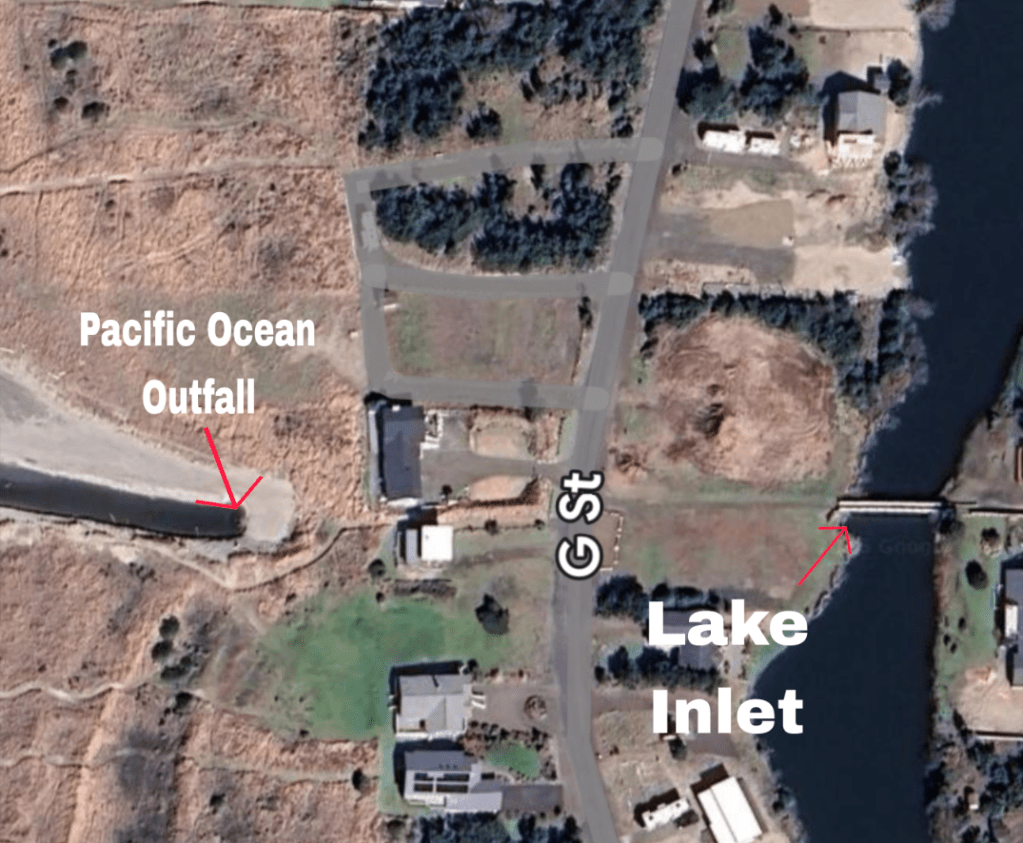
Along the way, they carry whatever we have allowed onto the land flowing into sea breeze lake and the canal: sediments, nutrients, bacteria, heavy metals, tire dust, microplastics, and the chemical residues of our daily lives. The ocean does not get a vote in this. It gets our consequences.
You cannot ignore Best Available Science when it comes to trees. The science is settled: trees are not decorative, and they are not optional. They are essential infrastructure for flood prevention, pollution control, and clean water protection. Mature tree canopy intercepts rainfall, slows runoff, stabilizes soil, increases infiltration, and captures contaminants before they ever reach pipes, lakes, canals, or the ocean. This protective function does not magically turn on only when a map labels a place a “critical area.” It operates across the entire landscape—on streets, on private lots, in neighborhoods, and throughout communities. Whether or not a waterway in a community, trees still reduce flooding, still absorb pollution, still protect water quality, and still shield downstream ecosystems. Ignoring this science is not a policy choice—it is a decision to increase flood risk, worsen pollution, and degrade public health. Planning that sidelines trees is planning for failure.
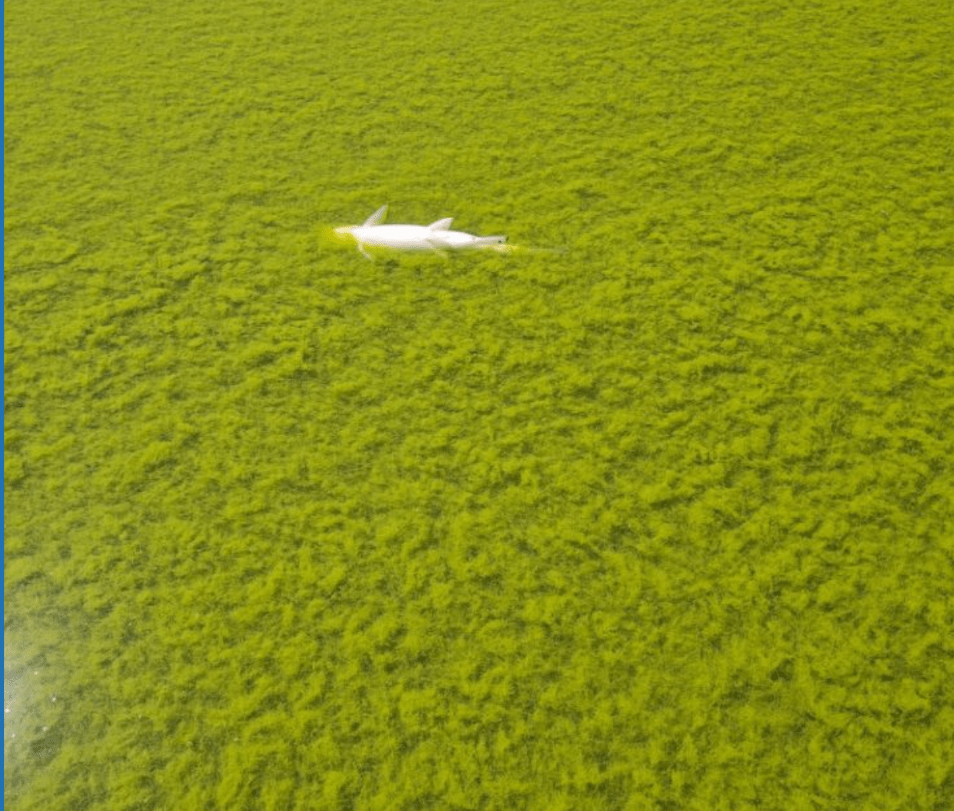
The science is unambiguous. When tree canopy and vegetated buffers are removed, stormwater runoff increases, water temperatures rise, and nutrient pollution accelerates—exactly the conditions that fuel harmful algal blooms and oxygen crashes in lakes and estuaries (Xiao & McPherson, 2016; US Forest Service; EPA). When algae die and decompose, they strip oxygen from the water, suffocating fish and invertebrates. Toxins such as microcystins can follow, threatening pets, wildlife, and people. What begins as a local canopy decision becomes a regional water-quality problem. Whether seabreeze is recognized as a “lake” worthy of protection depends on the outfall’s year-round direct connection to the Pacific Ocean.
And that problem does not stop at the shoreline.
Coastal science shows that pollutants discharged nearshore are transported by currents along beaches and into shellfish beds (NOAA, EPA). Clams, oysters, and mussels are not just residents of these waters—they are filters. They concentrate what we release. That is why shellfish beds are closed after storms. That is why bacterial and toxin advisories follow runoff events. And that is why protecting inland waters is not optional if we care about the health of Pacific County’s beaches and marine life.
Trees are the missing infrastructure in this story.
Decades of research by the U.S. Forest Service and urban watershed scientists show that mature tree canopy intercepts rainfall before it hits the ground, increases soil infiltration through deep root systems, stabilizes banks, cools surface waters through shade, and captures pollutants before they reach streams and lakes (Xiao & McPherson, 2016; Nowak et al., 2014; USFS). In economic terms, trees function as stormwater utilities, water-treatment systems, and climate-control devices rolled into one—without sending a bill. In biological terms, they are the difference between a living watershed and a failing one.
Size and maturity matter. Large, healthy trees with full crowns do exponentially more work than young replacements. They hold more water, filter more air and runoff, store more carbon, and provide more shade—the very factors that keep lakes cooler, slow algal growth, and protect aquatic life (Nowak et al., 2014; Xiao & McPherson, 2016). You cannot replace a 60- or 100-year-old tree with a sapling and pretend the system is intact. But growing trees provide protection over the lifetime of the tree. Topping them artificially limits the protection they provide. The science is clear: when mature canopy is lost, the watershed pays the price for decades.
This is not an abstract concern for Surfside. The lakes and canals here are directly connected to the ocean. During major rain events, significant excess water is released seaward. If that water is warm, nutrient-rich, or contaminated, those conditions are exported to nearshore ecosystems—exactly where clams live, where surf breaks, and where families walk the beaches of Pacific County. What we allow to happen around Surfside homes next to Surfside waterways potentially shows up in our tide pools.
Public-health research adds another layer of urgency. Trees reduce air pollution, lower heat stress, and are associated with lower rates of cardiovascular and respiratory disease (Nowak et al., 2014; Wolf et al., 2020). Water-quality science shows that vegetated buffers reduce bacterial and nutrient loading to surface waters, protecting both ecosystems and people (EPA; USFS). In other words, canopy protection is not just environmental policy—it is preventive medicine, for both communities and coastlines.
Washington law already recognizes this connection. The Growth Management Act requires the use of Best Available Science to protect critical areas. The Shoreline Management Act demands “no net loss” of ecological function. The Water Pollution Control Act makes clean water a shared responsibility. None of these laws were written to protect views. They were written to protect systems—watersheds, shorelines, fisheries, and the people who depend on them. The fact the county can label it a man made waterway doesn’t change the fact it acts like a canal and lake when it comes to pollutants and discharge into the ocean.
Yet in Surfside, we have watched a different experiment unfold: a steady reduction of tree canopy due to fines and lawsuits when residents exceed tree heights, a warming and more vulnerable water system, and the appearance of symptoms scientists have warned about for years—algal blooms, fish die offs, increased runoff, and growing flood risk. These are not coincidences. They are cause and effect.
It is about how a line of trees along a lake is also a line of defense for clams on the coast. It is about how a topped or removed canopy upstream becomes a water-quality problem downstream. It is about how “local” decisions accumulate into regional damage—and how the same science shows us a way back.
Protecting Surfside’s lakes and canals is not just about preserving a neighborhood. It is about protecting the Pacific Ocean at its most vulnerable edge. It is about safeguarding shellfish beds, beaches, clams, mussels and marine food webs that define Pacific County’s identity and economy. And it is about recognizing, finally, that in a coastal watershed, there is no such distinction as “man-made” when it’s connected to the Pacific ocean.
There is only upstream and downstream. And we live at both.
 Surfside Washington News