
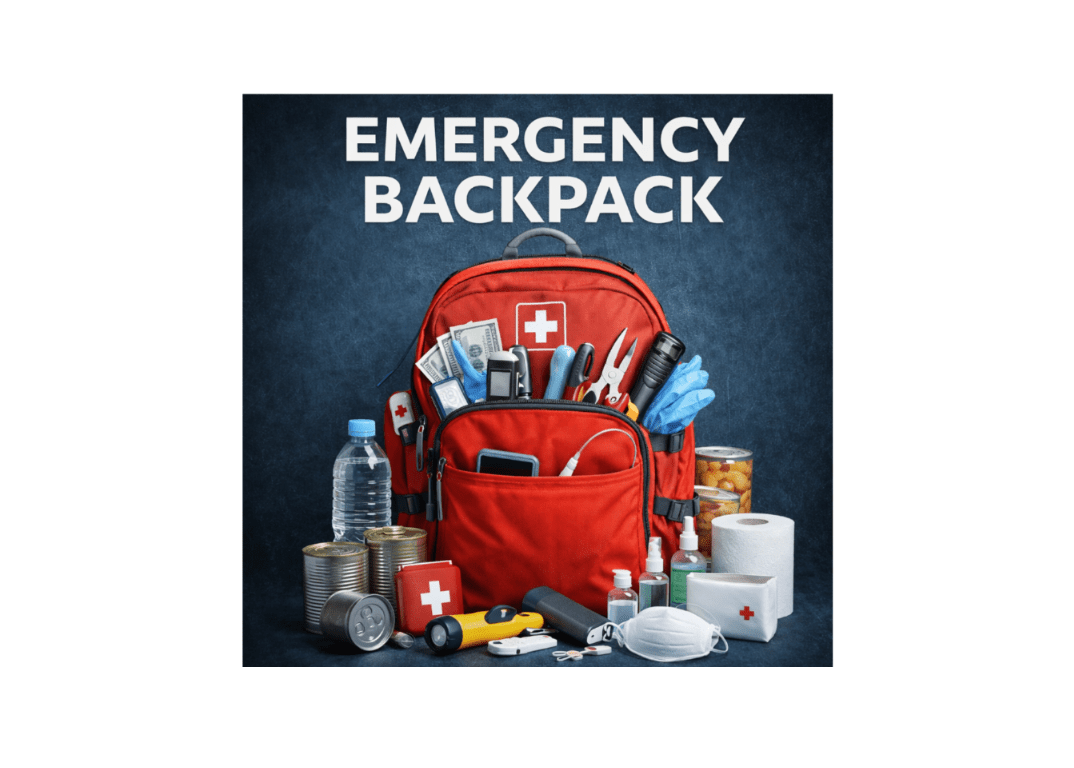
When an earthquake strikes along the coast, a tsunami can arrive within minutes. On places like the Long Beach Peninsula and Surfside, Washington, evacuation time can be extremely short, which is why emergency planners emphasize having a ready-to-grab evacuation backpack, often called a “Go Bag.”
Japan—one of the most tsunami-prepared nations in the world—encourages residents to keep a pre-packed evacuation bag near the door so they can leave immediately after strong shaking. The checklist used in Japan provides a practical guide for building a backpack designed for fast evacuation and short-term survival.
Below is a breakdown of key supplies based on Japan’s recommended Go Bag checklist, adapted for coastal communities.
Everyday Essentials
These items help maintain basic comfort and hygiene during the first hours after evacuation.
Essential items to include:
- Drinking water
- Extra clothing (warm layer, socks, rain jacket)
- Glasses or contact lenses
- Toothbrush and toothpaste
- Small towel or cloth
- Garbage bags (can double as rain protection or ground cover)
These simple supplies can make a big difference when staying in evacuation shelters or temporary gathering areas.
Emergency Preparedness Supplies
Emergency equipment should focus on communication, light, and basic survival needs.
Recommended supplies:
- Small amount of cash (ATMs may not work after disasters)
- Portable phone charger or battery pack
- Long shelf-life food such as energy bars
- A few canned foods with easy-open lids
- Emergency contact information printed on paper
- Flashlight or headlamp
- Extra batteries
- Portable radio for emergency broadcasts
- Multi-purpose tool
- Thermal emergency blanket or insulating sheet
- Gloves (plastic or cloth)
- Pet supplies if you have animals
- Ear plugs and a sleep mask for shelter conditions
These items help you stay informed and safe during the first 24–72 hours after evacuation.
Important Documents
Disasters often separate people from their homes and records, so keeping copies of important documents in a waterproof pouch is recommended.
Include copies of:
- Identification (driver’s license or passport)
- Health insurance card
- Bank information
- Emergency contact numbers
- Property or insurance information if needed
Store these in a sealed waterproof bag inside your evacuation backpack.
Medical and Hygiene Supplies
Medical supplies are essential, especially for seniors or anyone with ongoing health conditions.
Recommended items:
- Prescription medications
- Copies of medical records if needed
- Basic first-aid kit
- Sanitary or hygiene products
- Soap or cleaning wipes
If you care for infants or young children, include baby supplies such as diapers, wipes, and formula.
Health Protection Supplies
Following the COVID-19 pandemic, Japan also recommends including health protection supplies.
Add to your bag:
- Face masks
- Hand sanitizer
- Alcohol wipes
- Small thermometer
These items help reduce the spread of illness when evacuees gather in shelters.
Why a Backpack Matters
In a tsunami emergency, every second counts. Residents may need to move quickly to higher ground, sometimes on foot and across uneven terrain. A lightweight evacuation backpack allows you to carry essential supplies while keeping your hands free and moving quickly.
Where to Keep Your Evacuation Backpack
To ensure you can leave quickly during an emergency:
- Store your backpack near the front door
- Keep sturdy shoes and a flashlight nearby
- Place your tsunami evacuation map on the back of your door
- Check and refresh supplies twice a year
Preparation Saves Lives
Japan’s long experience with earthquakes and tsunamis has shown that prepared communities survive disasters more safely. Having a ready evacuation backpack ensures that when strong shaking begins, you can immediately move to higher ground without wasting precious minutes gathering supplies.
For residents living near the Pacific Ocean, building a tsunami Go Bag today could one day save your life.
 Surfside Washington News