
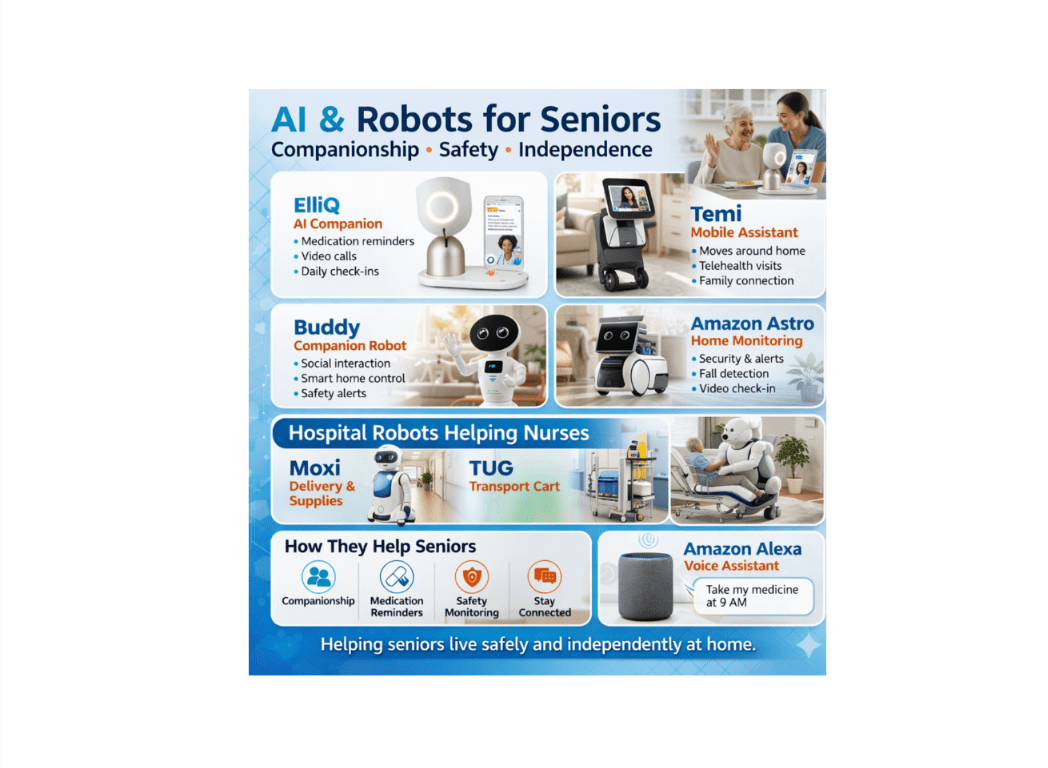
Artificial intelligence and robotics are beginning to transform healthcare, helping nurses reduce workload while improving patient care and safety. According to industry research, the global robotic nurse market could reach nearly $2.8 billion by 2031, showing how quickly hospitals and home care systems are adopting robotics.
These technologies are not designed to replace nurses. Instead, they handle repetitive or physically demanding tasks so healthcare workers can focus more on direct patient care. At the same time, a new generation of home companion robots is helping seniors remain independent while living at home.
Below are some of the most important healthcare robots and home companion systems currently being used.
Hospital Robots Helping Nurses
Moxi – Hospital Support Robot
One of the best-known healthcare robots is Moxi, developed by Diligent Robotics.
https://www.diligentrobots.com/moxi
Moxi helps hospital staff by performing routine logistical tasks such as:
- delivering medications
- transporting lab specimens
- collecting medical supplies
- moving linens and equipment
Hospitals such as Medical City Dallas are already using Moxi to reduce nurse workload and improve efficiency.
TUG – Autonomous Hospital Delivery Robot
The TUG robot, created by Aethon, acts as an automated delivery cart inside hospitals.
https://aethon.com/mobile-robots-for-healthcare/
TUG robots transport medications, lab samples, medical equipment, and waste across healthcare facilities. These robots are currently used in more than 37 Veterans Affairs hospitals across the United States.
Pepper – Humanoid Social Robot
The Pepper robot, developed by SoftBank Robotics, is designed to interact socially with patients.
https://us.softbankrobotics.com/pepper
Pepper can:
- greet hospital visitors
- answer questions
- provide directions
- allow patients to communicate with family
During the COVID-19 pandemic, Pepper robots helped hospitals reduce human contact while allowing patients to video chat with loved ones.
Home Companion Robots for Seniors
Healthcare robotics is expanding beyond hospitals. A growing number of AI companions are designed specifically to help seniors living alone.
These robots provide reminders, conversation, and connections with caregivers.
ElliQ – AI Companion for Seniors
The ElliQ companion robot is designed to help older adults live independently at home.
ElliQ can:
- remind users to take medications
- suggest exercise or wellness activities
- provide conversation and companionship
- connect seniors with family through video calls
The robot learns a user’s habits over time and encourages healthy daily routines.
Temi – Mobile Telehealth Robot
The Temi robot is a mobile assistant that can move around the home.
Temi allows seniors to:
- make video calls with family or doctors
- receive reminders
- control smart home devices
- communicate with caregivers remotely
Some healthcare providers are beginning to use Temi for telemedicine visits in the home.
Buddy – Family Companion Robot
The Buddy robot, developed by Blue Frog Robotics, focuses on companionship and home safety.
Buddy can:
- interact socially with users
- monitor home activity
- control smart home devices
- alert caregivers if something unusual happens
The robot is designed to help seniors remain safe while living independently.
Amazon Astro – Home Monitoring Robot
The Amazon Astro robot acts as a mobile security and communication assistant.
Astro can patrol a home, send alerts, and allow family members to remotely check on elderly relatives.
Features include:
- home monitoring cameras
- video communication
- smart home integration
- fall detection alerts in development
How Robots Support Nurses and Caregivers
Robotic assistants help healthcare workers by performing routine tasks that would otherwise take up valuable time.
Benefits include:
- reduced workload for nurses
- improved patient monitoring
- fewer physical injuries from lifting patients
- faster delivery of supplies in hospitals
- better communication between patients and families
Sensors and artificial intelligence can also detect falls, monitor activity levels, and alert caregivers if a patient’s condition changes.
The Future of Healthcare Robotics
As populations age and caregiver shortages increase, robots will likely become a standard part of healthcare systems. Hospitals will continue to use robots for logistics and patient assistance, while home companion robots will help seniors remain independent longer.
Instead of replacing nurses and caregivers, these technologies act as support systems, allowing healthcare professionals to spend more time providing the compassionate care that only humans can offer.
 Surfside Washington News