
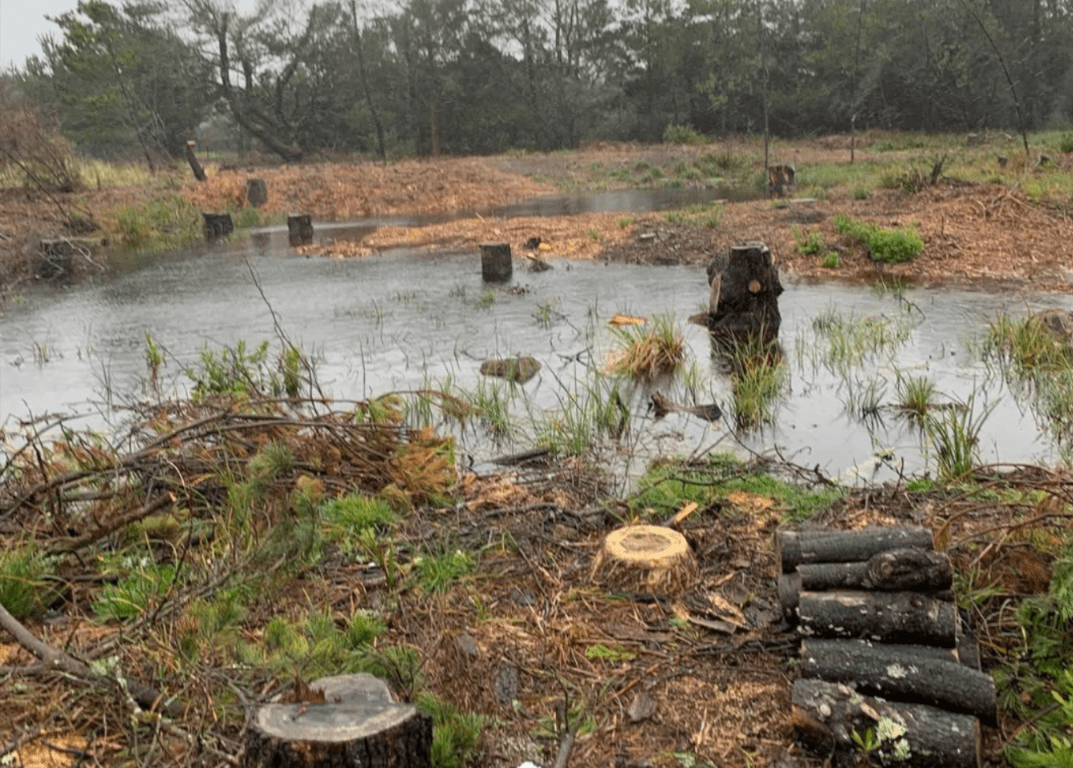
Along the streets and lots of Surfside, Washington, stand what many residents now call the “ghost trees.” They are not casualties of wildfire or storms. They are the remains of once-healthy trees that were topped, mutilated, and slowly killed in the name of rigid tree height restrictions. These trees are not from an AI generated fire scene with burned dead trees to scare residents. It’s reality. Their bare trunks and shattered crowns tell a disturbing story: this is what happens when policy overrides ecology, science, and common sense. Grounded in what regulators call the “best available science.” There is no science advocating for topping of trees and reducing tree canopy.
After years of aggressively enforcing strict tree height restrictions, the results of the policy are now visible across Surfside. Hundreds of trees were cut in half, weakened, or left to die, leaving behind what many residents now call the “Ghost Trees of Surfside.” These skeletal trunks and broken tops are not natural decay—they are the direct result of the HOA’s own destructive rules. Now, rather than acknowledging the damage caused by these policies, the board appears to be shifting tactics. By proposing new fines for so-called “debris” or dead trees, homeowners who followed the original height restrictions may now face additional penalties for the very damage those rules created. In effect, the policy that mutilated the trees is now being used again to punish residents, while quietly attempting to remove the most visible evidence of a failed and harmful tree management strategy.
In memory of the fallen, a protest song was written to highlight the destruction.
https://www.facebook.com/share/v/1GezDerPRd/
These ghost trees are not just unsightly. They are evidence—living (and dying) proof of an environmental policy failure.
Data from a recent i-Tree Canopy analysis of Surfside shows a strong contrast between the east and west sides of the community. The west side canopy has dropped to about 14–15%, while other zones—particularly the east side—retain much higher tree coverage approaching roughly 45%, reflecting areas where trees were not heavily cut or enforced under the same height restrictions.
From Living Canopy to Stumps in the Sky
For decades, Surfside’s coastal tree canopy helped protect homes and waterways. The tree canopy slowed rainfall, absorbed runoff, filtered pollution, reduced wind, stabilized soil, cooled neighborhoods, and supported birds and wildlife. Trees were not just scenery; they were infrastructure—natural, effective, and free. The visible evidence showed up in increasing algae blooms in sea breeze lake.
Then came aggressive enforcement of tree height restrictions. Homeowners were put in an impossible position. If they did nothing, they risked fines. If they tried to comply, they often had to pay out of pocket to top or cut back their trees—a practice widely condemned by arborists because it:
- Permanently damages tree structure
- Makes trees more vulnerable to disease and rot
- Creates unsafe, weak regrowth
- Shortens the tree’s life dramatically
- Turns healthy trees into long-term hazards
And if homeowners chose another route—cutting trees down entirely to avoid repeated fines—that also came at their own expense. In other words, residents paid to destroy their own canopy, either by mutilating trees to meet arbitrary limits or by removing them altogether.
The result is what we see today: rows of mutilated trunks, dead spires, and hollowed-out remnants—trees that no longer provide meaningful canopy, shade, storm protection, or habitat.
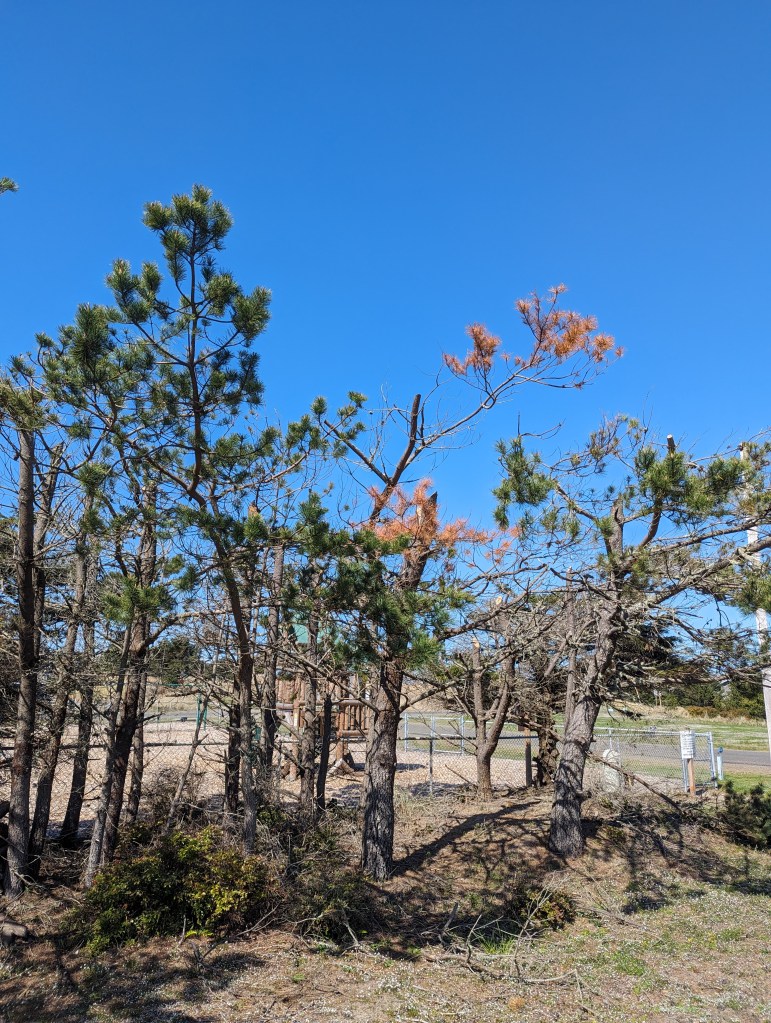
They remain standing like crime scene markers, showing exactly where the canopy was cut away.
The Second Cut: Trying to Remove the Evidence
Now, instead of confronting the policy that caused this damage, the Surfside board appears to be moving in a different direction: remove the ghost trees themselves.
On the surface, this might sound reasonable—after all, these trees look bad, and some are dying. But that framing ignores the real issue. These trees didn’t fail naturally. They were made into hazards by bad policy and bad practices.
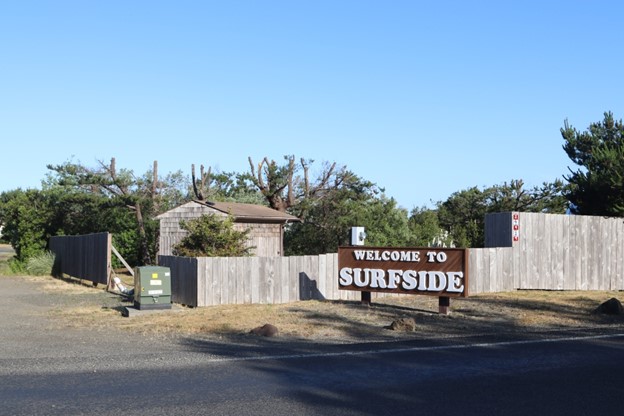
Removing them without acknowledging why they’re in this condition is like bulldozing a crime scene before the investigation is finished.
- The canopy wasn’t lost because of nature.
- It wasn’t lost because of storms or fire.
- It was lost because of human decisions—backed by fines and enforcement.
Coconspirator in this crime
Pacific county is another coconspirator. By allowing topping of trees by strict enforcement if tree height restrictions. They are the legal authority to regulate trees. Despite overwhelming evidence on the benefits of tree and best of science for protecting neighborhoods from flooding, sea rise, rising temperatures and climate change, Pacific county ordinances allowed the environmental destruction.
Cutting down the ghost trees without changing the rules that created them simply resets the cycle: new trees will grow, they’ll be topped again, they’ll decline again, and Surfside will continue bleeding canopy year after year—while homeowners keep paying the bill.
A Slow-Motion Environmental and Financial Disaster
The loss of tree canopy isn’t just aesthetic. It has real, measurable consequences:
- More flooding and runoff into lakes, canals, and eventually the Pacific Ocean
- More pollution carried from streets and yards into waterways
- Hotter, windier neighborhoods with less natural protection
- Less wildlife habitat and fewer birds and pollinators
- Weaker coastal resilience in the face of stronger storms and climate extremes
But there’s also a financial cost that rarely gets acknowledged: residents are fined, pressured, or forced to pay for the very actions that are destroying the canopy—whether that’s repeated topping, emergency removals, or full tree cutting to escape ongoing penalties.
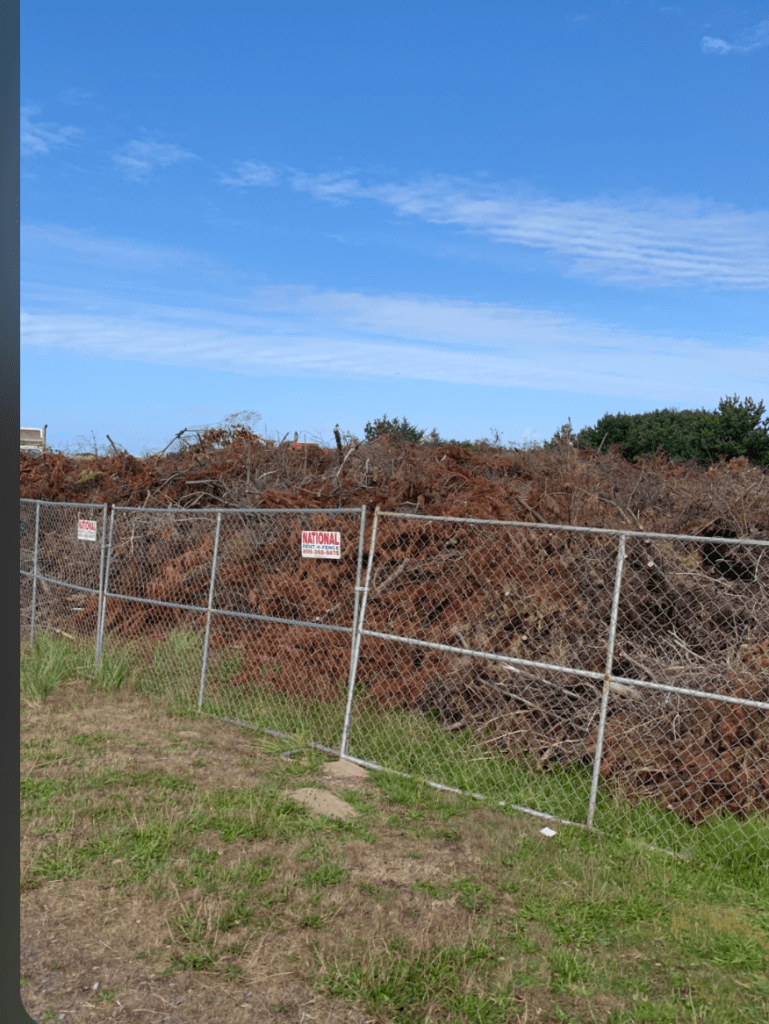
This is not just environmental damage. It is a system that penalizes people for trying to comply and makes them fund the destruction of their own community’s natural defenses.
The Irony: Calling It “Maintenance”
Tree pruning is often described as routine “maintenance,” but too often it becomes nothing more than topping. In reality, the practice does the opposite of caring for a tree. Major arboriculture organizations agree that topping is tree abuse—it leads to weak, unstable regrowth, increases vulnerability to disease, and ultimately creates more hazards and higher long-term costs
So when we look at the ghost trees of Surfside, we’re not looking at neglect. We’re looking at the predictable outcome of a policy that forces residents to choose between fines or paying to damage or remove their own trees.
A Choice: Restore or Repeat
Surfside is standing at a fork in the road.
One path is to:
- Remove the ghost trees
- Ignore how they got that way
- Keep the same rules
- Keep fining or pressuring homeowners
- And quietly accept the continued loss of canopy, resilience, and environmental health
The other path is harder—but far more responsible:
- Acknowledge the damage
- End destructive topping practices
- Reform tree height policies
- Stop punishing residents for trying to comply
- Prioritize healthy, naturally structured trees
- Begin restoring the canopy instead of erasing what’s left of it. The HOA should replace all trees damaged by a bad policy.
The Ghost Trees Are Trying to Tell Us Something
They stand there, stripped and broken, not because nature failed—but because policy did.
And the people who paid the price were not faceless institutions. They were homeowners who were fined, pressured, or forced to pay to mutilate or remove their own trees.
If the Surfside board attempts to erase the shame of the Ghost Trees they created without changing the destructive policies that caused them, it will not be solving the problem—it will be concealing the evidence. Removing the dead trunks and broken tops will not restore the forest that once protected the community. The damage has already been done: the loss of shade, the loss of wind protection, the loss of beauty, the loss of environmental resilience, and the loss of property value. What remains across the west side of Surfside is the visible record of a policy that turned a healthy coastal canopy into a landscape of stumps and skeletal trees. Clearing away those ghost trees without changing course would not be restoration—it would be an attempt to hide the proof of a tragic environmental disaster.
The real solution isn’t just removing dead and dying trees.
It’s stopping the practices that turn living forests into ghost forests in the first place.
 Surfside Washington News