
The following statement has been presented as a defense of the tree covenant by a blog post on Surfside preservation we site and Annette. Tree covenants do not:
Reduce overall tree cover.
Expose residents to high winds, flooding, severe storms, smoke filled air from forest fires, algae blooms, and harmful uv sun rays.
On its surface, this statement suggests neutrality—no harm, no impact, no consequence.
Reality is that the tree canopy has been destroyed. The tree canopy in west Surfside is measured to be between 14-16% in 2024..compared with just under 30% in 2020. Through heavy fines up to 5000 dollars and threatened lawsuits. When residents are not with tree height violations, they want to avoid any legal lawsuits that they can afford the 20k lawyer so they choose to down their trees. Those that try to meet tree height restrictions top the trees or prune them both can degrade the tree over time and end in the death of the tree.
As far as being forced to move, i know several people left the HOA specifically due to the heavy fines and tactics of the tree committee. I got involved with trees when a native American was forced out of Surfside due by Surfside preservation members who harassed the family causing her to experience health problems. In many Native American and Indian cultures, trees are revered as living relatives and sacred providers of life—offering oxygen, shelter, medicine, and spiritual connection between the earth and sky. While Native American cultures emphasize living in harmony with trees as sacred partners in sustaining life, self-described preservationists often prioritize preserving wealth over protecting the environment, treating trees as expendable rather than essential to life. Every breath you take depends on the oxygen trees generate. I thank this person for a different perspective on the importance of trees to our health and well being.
Ironically, many cities now set 30% tree canopy as a minimum standard—not for aesthetics, but because it measurably reduces heat islands, slows stormwater runoff, and protects communities from flooding. The focus isn’t algae blooms themselves; those blooms are simply the visible symptom of a deeper problem—excess stormwater carrying elevated levels of phosphorus and nitrogen into lakes and canals.
That’s why modern urban forestry policies prioritize protecting and expanding tree canopy, especially near waterways where filtration matters most to protect against flooding. True leaders in these plans don’t fixate on the symptom—they address the cause, recognizing that healthy tree systems are essential infrastructure for clean water, climate resilience, and public health.
The Surfside president and board show little interest in following best available science to protect and expand the tree canopy for the health of residents and the environment, focusing instead on preserving views. The board relies on HOA legal counsel to guide its decisions based on an ill conceved covenant to restrict tree heights instead of grounding them in best available science.
The nine board members legacy will be a destruction of a once healthy tree canopy to one that will impact the environment and the well being of every resident of Surfside for decades.
But the destruction of tree canopy for views when compared to what city leaders, planners, and environmental stakeholders across Washington actually say about the importance of tree canopy becomes impossible to ignore.
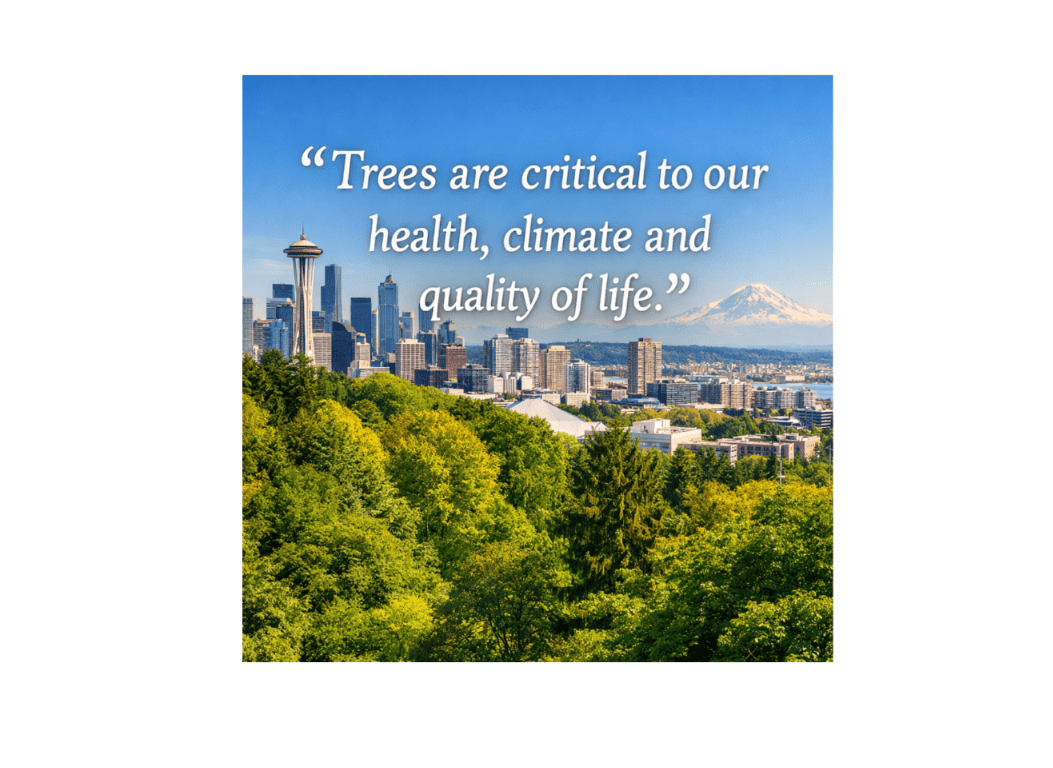
You do not hear “Trees are critical to our health, climate and quality of life” from this board. You don’t hear anything about the benefit of trees.
While Seattle strengthens protections for mature trees as critical infrastructure, Surfside enforces policies that guarantee their decline.
Seattle: Trees Are Public Health and Climate Infrastructure
Mayor Bruce Harrell:
Seattle City Council (tree ordinance context):
“Trees are critical to our health, climate and quality of life.”
“We must protect the trees that cool our neighborhoods, clean our air and water, and contribute to climate resilience.”
“Seattle’s tree canopy is essential to addressing climate change, extreme heat, and inequities in our communities.”
Urban Forest Management Plan:
“Trees reduce stormwater runoff, improve air and water quality, and mitigate climate impacts.”
Seattle leadership does not debate whether trees prevent harm.
They treat trees as infrastructure that actively protects residents.
Tacoma: Canopy Loss = Increased Risk
Tacoma Environmental Services:
“Urban forests are critical to managing stormwater, improving air quality, and reducing urban heat.”
Tacoma Urban Forestry Program:
“Tree canopy loss contributes to increased runoff, higher temperatures, and degraded environmental conditions.”
Tacoma City leadership (planning language):
“Expanding and protecting Tacoma’s tree canopy is essential to climate resilience and community health.”
Tacoma explicitly connects tree loss to harm—the exact harm denied in the claim.
Bellevue: Tree Canopy Is Essential to Livability
City of Bellevue:
“Tree canopy is a vital component of Bellevue’s environmental health and quality of life.”
Bellevue Environmental Stewardship Plan:
“Preserving and enhancing tree canopy is essential to reducing stormwater impacts and protecting water quality.”
Bellevue leadership messaging:
“A healthy tree canopy supports cleaner air, cooler neighborhoods, and resilient communities.”
Bellevue reinforces that trees are directly tied to water quality and heat reduction.
Bellingham: Trees Protect Watersheds and Ecosystems
City of Bellingham Urban Forestry Plan:
“Trees play a critical role in protecting water quality and reducing stormwater runoff.”
Bellingham Planning Department:
“Urban forests are essential to ecosystem health and long-term community resilience.”
Local environmental stakeholders:
“Protecting tree canopy is one of the most effective tools we have to safeguard our waterways.”
Bellingham emphasizes watershed protection—a key link to algae blooms and runoff.
Vancouver, Washington: Trees Reduce Flooding and Pollution
City of Vancouver Urban Forestry Program:
“Trees reduce flooding, improve air quality, and provide critical environmental benefits.”
Vancouver leadership:
“Maintaining and expanding tree canopy is essential for long-term resilience and livability.”
Stormwater planning language:
“Urban trees are a key component of green infrastructure for managing runoff.”
Vancouver clearly defines trees as stormwater management systems.
Regional & Environmental Stakeholders
Washington Native Plant Society:
“We need to increase the urban canopy, not stand by while it dwindles.”
“Loss of tree canopy means loss of a healthy environment for people.”
Urban forestry professionals (common planning principle):
“Tree canopy loss is directly linked to increased heat, runoff, and environmental degradation.”
Now Compare the Claim to What Leaders Say
Claim:
“The tree covenant does not reduce overall tree cover.”
Reality:
Every city listed:
Measures canopy
Identifies loss as a problem
Implements policies to prevent it
If canopy declines, it is treated as a failure—not a non-issue
Claim:
“Does not expose residents to high winds, flooding… algae blooms…”
Direct contradiction across all cities:
Seattle → trees reduce runoff and heat
Tacoma → canopy loss increases runoff and heat
Bellevue → trees protect water quality
Bellingham → trees protect watersheds
Vancouver → trees reduce flooding
Therefore:
Tree loss increases exactly the risks being denied
Claim:
“Does not force people to destroy their trees.”
Policy reality across cities:
Urban forestry plans are designed to:
Prevent tree loss
Avoid harmful pruning practices
Protect mature trees
Because cities recognize that: Indirect pressure still produces direct outcomes.
Heavy fines and threat of legal action leads to trees being topped or downed.
Claim:
“Does not promote removing trees…”
Reality:
If a system:
Penalizes and enforces tree height restrictions
Results in a large number of topped trees with many of them ghost trees.
Leads to decline and death of tree canopy.
Fines damaged trees
Then:
Removal becomes the predictable result—regardless of stated intent
The Core Conflict: Assertion vs. Evidence
The statement relies on what the policy claims.
City leaders rely on:
Measurable outcomes
Scientific research
Measured Canopy data
Environmental impact
And across all jurisdictions, the conclusion is identical:
Trees overwhelmingly benefits the environment and health of residents
Tree loss increases harm to residents health and access to clean air and water.
A Unified Voice Across Washington
Seattle. Tacoma. Bellevue. Bellingham. Vancouver.
Mayors. Councilmembers. Planners. Environmental leaders.
All aligned on one point:
Tree canopy is essential to protecting people, property, health and the environment
Conclusion: When Words Don’t Match Reality
The quoted statement presents a policy that reduces tree canopy through downing trees and topping as harmless.
But every major Washington city says the opposite:
Trees prevent flooding
Trees protect water
Tree clean the air
Trees reduce heat
Trees improve health
So when:
Tree canopy declines
Environmental risks increase
Residents feel pressure from enforcement
The issue is no longer interpretation.
It is a contradiction between policy claims and real-world outcomes
Final Line
If every major city in Washington is working to protect and expand tree canopy,
then any policy producing the opposite result—
while claiming no impact—
is not supported by science, other state leaders, or reality.
It stands alone—and it stands disproven.
The lack of leadership and vision with regard to a healthy environment from the Surfside board and president is not just a policy failure—it is a choice that sacrifices long-term community health, the environment , and property stability for short-term preferences, leaving residents to bear the consequences of decisions that ignore both science and responsibility.
“
 Surfside Washington News