
In Annette’s blog post she claims I asserted.
Tree covenants enforcement
Does not promote removing trees that the boards preservation members argue are cheap to cut down (would like to know where this quote comes from). Mean that those that support it and comply don’t care about the environment.
Well this article explains where I got that notion. After reading this article, you might consider a name change to Surfside Wealth Preservation. It’s all about property values and least cost when deciding about a tree.
In a Surfside board meeting about trees on two HOA owned lots, a revealing discussion unfolded—not about protecting the community’s owned trees on a lot, but about how best to eliminate it.
At the center of the debate were two HOA-owned lots. The problem? The trees had grown too tall.
Not diseased.
Not dangerous.
Simply… out of compliance.
🌲 Trees as Violations, Not Value
The conversation began with a simple admission:
“First of all, we are out of compliance with our own covenants. We need to resolve that.”
You wonder if they got a certified letter stating the violation? Did they accumulate a five-thousand-dollar fine with daily fines?
From that point forward, trees were no longer discussed as part of an ecosystem, a canopy, or a health benefit. They were framed as violations—something to fix, reduce, or remove.
There was no mention of stormwater absorption, no discussion of phosphorus or nitrogen runoff, algae blooms, and no acknowledgment of the role trees play in preventing flooding. No discussion or mention of how trees protect people’s homes or health. Or how removing the trees may impact the adjacent lots due to increased stormwater, leading to potential water flooding their home or foundations.
Instead, the discussion focused on cost. It’s was all about money.
💰 The Two Options: Save or Eliminate
The board considered two choices:
- Trim the trees to meet height limits
Estimated cost: ~$21,000
Outcome: Likely tree damage or death, ongoing maintenance - Clear-cut the lots entirely
Estimated cost: ~$9,000
Outcome: Permanent compliance, no future maintenance
One board member acknowledged what many residents already know:
“If you cut those heavy, they’re going to die.”
At least he acknowledges cutting trees leads to ghost trees.
Another added:
“Eventually they turn brown and die… you’ll be back in a year.”
This is not speculation. This is lived experience across Surfside—trees topped into decline, pruned into skeletons, and eventually removed. But clearly the board understands that tree height restrictions leads to trees being damaged and in eventual death.
And yet, despite acknowledging that trimming leads to death, the solution leaned toward removal since it is as lower cost.
No mention by the board member on the impact on seniors who face the same decision with a potential fine of up to 5000.
Costs of $9,000 and $21,000 are presented without any sense of shock or concern—no acknowledgment of how burdensome they are, and not even a simple recognition of why residents are understandably upset when facing the same decision .
Annete’s blog post stated
The tree covenant does not:
Force people to destroy their trees.
She clearly doesn’t understand economics, because clearly a home owner with limited resources faces the same decision plus threats of fines if they cant afford to do either.
Hiring an arborist, repeated trimming, or removing trees to comply can cost thousands of dollars—expenses that many cannot afford while relying on Social Security. Instead of acknowledging this hardship, the policy effectively forces vulnerable residents into an impossible choice: risk fines and legal threats, or pay for work that strains their limited resources. This isn’t just an environmental issue—it’s an economic one that disproportionately impacts those least able to absorb the cost. But the board clearly discussed that homeowners prefer no trees on their lot.
The Real Priority: Cost and Convenience
The discussion made one thing unmistakably clear:
This is not about trees—it’s about money and simplicity.
“Let’s see what it costs us to get them cleared and not have to mess with them again.”
That single statement captures the policy in practice. This ignores the economic benefit of trees
Trees provide clear economic benefits by reducing energy costs, as shade from mature trees can significantly lower air conditioning use in summer and help block cold winds in winter, reducing heating expenses. They also increase property values and extend the lifespan of roofs and pavement by protecting them from excessive heat and UV exposure. In addition, trees reduce stormwater runoff—lowering infrastructure and flood damage costs—while improving air quality and public health, which can decrease overall medical expenses.
Trees are not treated as long-term environmental assets or infrastructure.
They are treated as recurring expenses to be eliminated.
The logic is simple:
- Trees grow → they violate rules
- Fixing them costs money → repeatedly. A financial burden caused by tree height restrictions.
- Letting them grow has much less cost to maintain
- Removing them costs less → once
So remove them. They have no percieved value.
🏗️ Trees vs Property Value
One voice suggested that future buyers might actually want trees:
“Most buyers would like to have some trees…”
But that perspective was quickly countered with the assumption that cleared lots are more desirable—and more profitable.
Clearly, the founders and real estate developers saw that their empty lots weren’t selling, so they planted shore pine trees across the west side to make them more appealing—green trees = green money.
Mature trees can add significant value to property prices—often increasing home values by 5% to 15% or more—because they provide shade, reduce stormwater runoff, and enhance curb appeal; as noted by the National Association of Realtors, well-landscaped homes with mature trees are consistently more attractive to buyers and can command higher sale prices, proving that green trees truly equal green money.
The possibility that trees themselves add value—through shade, beauty, environmental protection, and livability—was not seriously explored.
🌧️ What Was Missing: Science
Perhaps the most striking aspect of the discussion was not what was said—but what wasn’t. No consideration to the impact on the environment.
There was:
- No mention of stormwater runoff
- No discussion of tree canopy and water absorption
- No reference to nutrient loading (phosphorus/nitrogen)
- No acknowledgment of public health benefits
- No mention of trees providing clean air and clean water
In a community actively dealing with water quality issues, this silence is not just notable—it’s critical. I didn’t attend the meeting on what was decided.
But it was clear none of these board members thought about the best available science and the importance to the environment.
It was about the cheapest solution down the trees. Any other options. Leads to the death of the tree.
Luckily I live in a neighborhood in Beaverton where home owners love the trees for their protection from flooding, shade and cooling of our homes, from the beauty of my five large oak trees, my plum tree. My neighbor’s cherry tree and a variety of other trees surround my property providing both protection and privacy.
Portland is filled with neighborhoods where the old trees add character. Portland has identified 300 heritage trees in the Portland area. They even have a guidebook and map where the heritage trees reside.
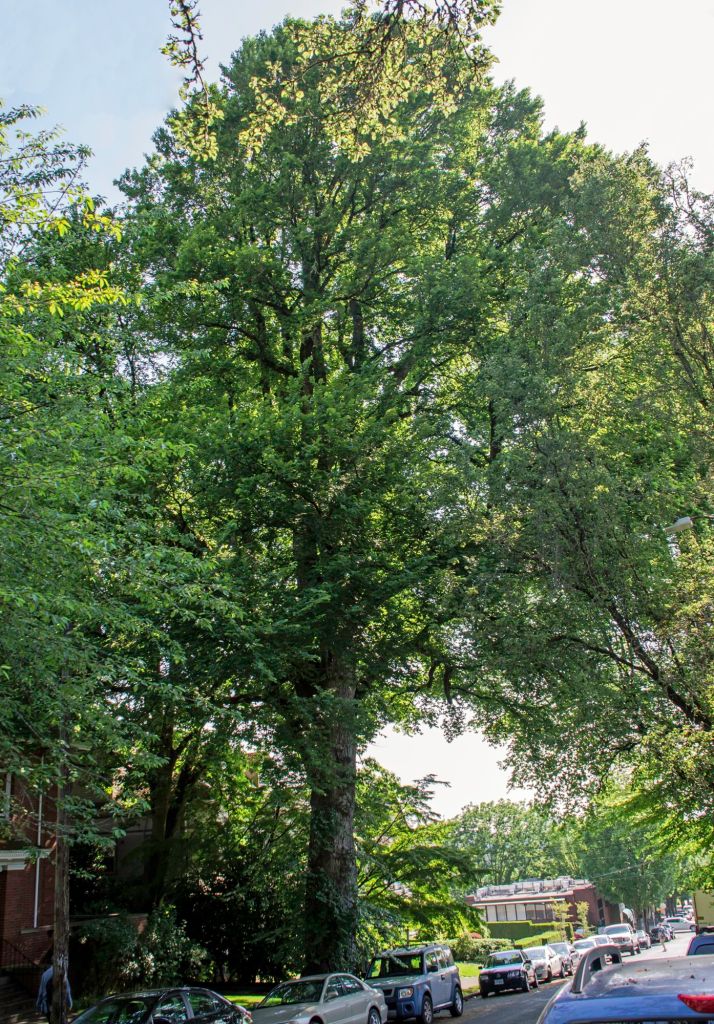
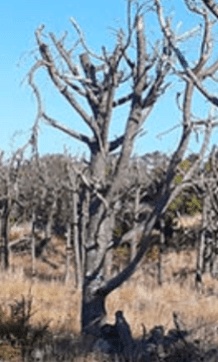
Example of Surfside heritage tree
Perhaps Surfside should create a “ghost tree” map so residents can see where trees have died across the community. Yet, in a striking irony, residents are now being fined for those very dead trees—despite the board’s own acknowledgment that heavy cutting causes trees to brown within a year and ultimately die.
The worst part of the tree covenant is that it denies residents a healthier environment with cleaner air and water by preventing trees from growing to magnificent heights, where they provide maximum benefits to health and flood protection.
I didn’t hear that discussed in the meeting either. After all, the HOA can pay whatever the cost. They spend your money not theirs. Why would they care whether they preserve the tree or down it?
 Surfside Washington News