
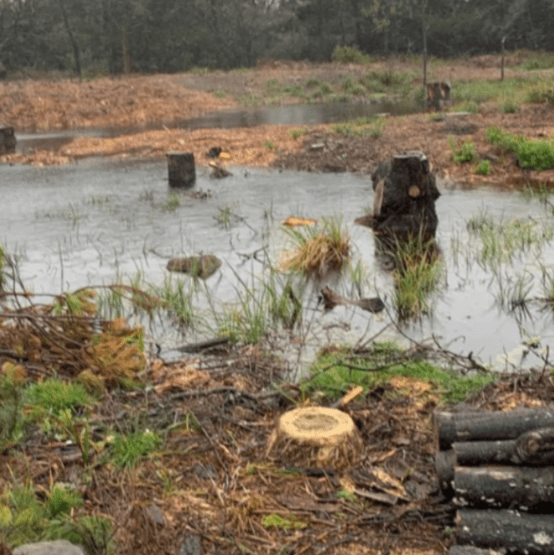
After heavy rains, standing water in vacant lots, grassy areas, and low-lying spaces near homes may seem like a temporary inconvenience—but it can quickly become a serious public health concern. In coastal communities and areas with high water tables, this pooling water affects not just property, but the air we breathe, the water we rely on, and the health of those living nearby.
When the Ground Can’t Breathe, Neither Can We
Standing water forms when soil becomes saturated and can no longer absorb rainfall. Without adequate drainage or tree cover, water lingers on the surface, creating conditions that directly impact human health:
- Increased humidity around homes, worsening respiratory conditions
- Mold growth in crawl spaces and walls, triggering asthma and allergies
- Stagnant air quality, especially in enclosed or low-lying neighborhoods
For seniors and individuals with respiratory conditions, even small increases in moisture and mold exposure can lead to shortness of breath, chronic coughing, and fatigue.
Septic System Failure and Exposure Risks
One of the most serious health threats comes from the impact on septic drain fields.
When soils are saturated:
- Wastewater cannot properly filter through the ground
- Untreated sewage may rise to the surface
- Harmful bacteria, viruses, and parasites can spread into nearby areas
This creates a direct exposure pathway to pathogens such as E. coli and other contaminants—especially dangerous for children, seniors, and those with weakened immune systems.
Even without visible sewage, a failing drain field can release airborne contaminants, contributing to poor air quality around the home.
Contaminated Water and Algae Blooms
Standing water often collects nutrients from surrounding materials like grass, soil, and organic debris. During continued rainfall, this water can move into nearby canals, lakes, or drainage systems.
The result:
- Nutrient overload (nitrogen and phosphorus)
- Rapid growth of algae, including harmful blooms
- Release of toxins that affect both humans and animals
Exposure to these conditions has been linked to:
- Skin irritation and rashes
- Respiratory distress from airborne toxins
- Increased risk of long-term health effects with repeated exposure
Insects, Odors, and Daily Quality of Life
Stagnant water also creates immediate, noticeable health and comfort issues:
- Breeding grounds for insects that can carry disease
- Persistent odors from decaying organic matter or sewage
- Reduced outdoor usability of yards and neighborhood spaces
For older adults or those spending more time at home, these impacts can significantly reduce quality of life and mental well-being.
Why Tree Loss Makes It Worse
Tree canopy plays a critical but often overlooked role in protecting public health.
Trees:
- Absorb and store rainfall, reducing standing water
- Improve air quality by filtering pollutants
- Help regulate humidity and temperature
When trees are removed or limited in height, more water hits the ground at once, overwhelming the soil and drainage systems. The result is more pooling, more contamination, and greater health risk.
Warning Signs You Shouldn’t Ignore
If you live near areas where water collects, watch for:
- Standing water lasting more than 2–3 days after rain
- Musty smells or visible mold indoors
- Slow drains or sewage odors
- Increased breathing issues or allergy symptoms
These are not just property concerns—they are early indicators of environmental health exposure.
A Public Health Issue, Not Just a Drainage Problem
Standing water reflects a breakdown in how we manage land, vegetation, and stormwater. As storms become more intense, these conditions will become more common unless addressed proactively.
Protecting health means:
- Preserving and restoring tree canopy as natural infrastructure
- Managing runoff before it accumulates
- Keeping organic and waste materials away from waterways
- Designing neighborhoods with both drainage and human health in mind
Standing water is more than a puddle—it’s a warning sign. It signals conditions that can affect respiratory health, increase exposure to harmful bacteria, and reduce overall quality of life. Addressing it isn’t just about drainage—it’s about protecting the health of the community. What’s the solution?
A Simple, Proven Solution: Plant Trees in Your Yard
One of the most effective ways homeowners can reduce standing water and protect their health is surprisingly simple: plant and maintain trees on your property.
Science consistently shows that trees function as natural water management and health protection systems—working continuously to reduce the very conditions that lead to standing water, contamination, and respiratory risks.
How Trees Reduce Standing Water
Trees actively manage stormwater in ways that no single engineered system can fully replicate:
Tree canopies intercept rainfall before it hits the ground, reducing the volume and intensity of runoff
Root systems loosen and aerate soil, allowing water to infiltrate instead of pooling.
Trees absorb and store water, then release it slowly through evapotranspiration
Research shows that urban trees can reduce stormwater runoff by 15–27% annually, significantly lowering the likelihood of standing water near homes.
In field studies, a single tree has been shown to reduce thousands of liters of runoff over time, demonstrating their measurable impact at the lot level.
 Surfside Washington News