
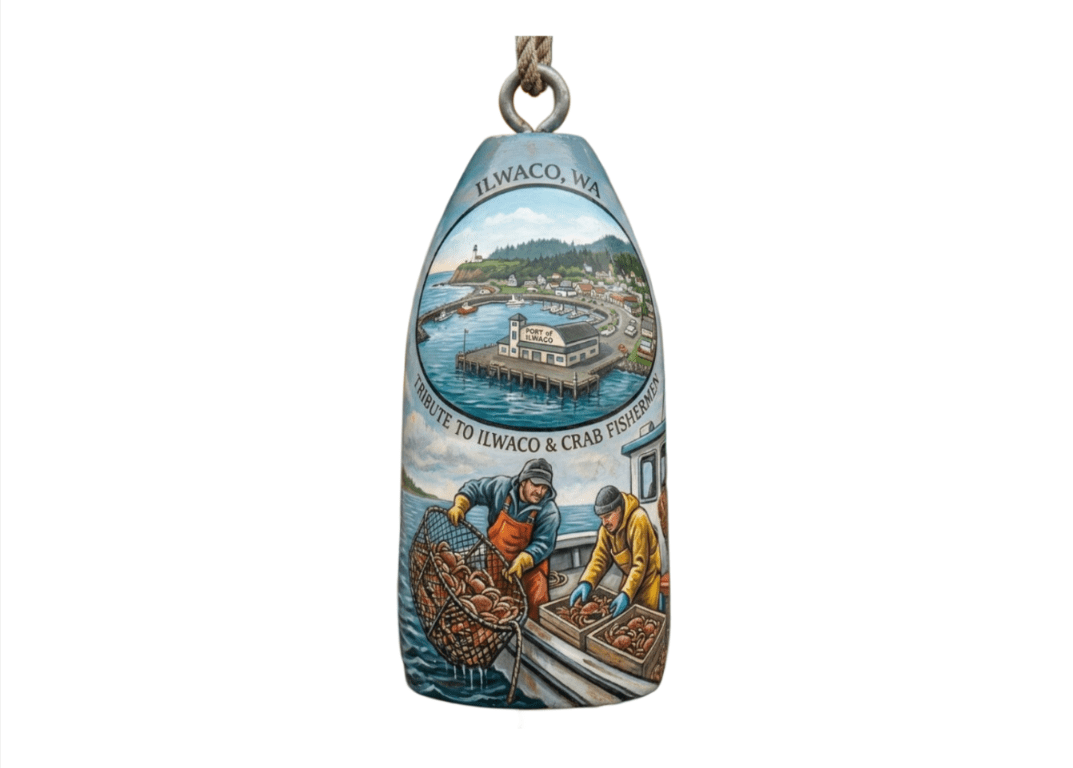
Buoys are deeply revered as coastal decorations, especially among fishermen, because they symbolize safety, livelihood, resilience, and a profound connection to the sea. Their significance goes far beyond their practical maritime function.
People put them in their yards as a tribute to our coastal community and what it represents
In the coastal town of Ilwaco, buoys are far more than simple maritime tools—they are powerful symbols of the hard work and dedication of local fishermen whose livelihoods depend on the sea. Each brightly colored buoy marks fishing gear such as crab pots and nets, representing long hours on the water, resilience in the face of unpredictable conditions, and the commitment to providing for their families and sustaining the community. For generations, these buoys have embodied the spirit of Ilwaco’s fishing heritage, serving as tangible reminders of the industry that supports local businesses, preserves cultural traditions, and strengthens the economic and social fabric of this coastal community.
1. Symbols of Safety and Survival
For fishermen, buoys are essential navigational tools that mark:
Safe channels and hazards, helping vessels avoid rocks, reefs, and shallow waters.
Fishing gear, such as crab pots and nets, ensuring equipment can be located and retrieved.
Mooring points, providing secure anchorage.
Because lives often depend on them, buoys have come to represent protection and safe passage, making them powerful symbols when displayed onshore.
2. Representation of Livelihood
Fishing communities rely on the ocean for their economic survival. Each buoy often:
Identifies a specific fisher or vessel through unique colors and markings.
Marks ownership of traps or nets, particularly in industries like crabbing and lobstering.
Displaying retired buoys honors the hard work and heritage of generations who have made their living from the sea.
3. Cultural Heritage and Maritime Identity
Buoys have become icons of coastal culture, symbolizing:
The traditions of maritime communities.
The enduring relationship between people and the ocean.
A sense of place and belonging.
In many coastal towns, buoy decorations celebrate local identity and preserve maritime history, much like anchors or ship wheels.
4. Good Luck and Protection
Among fishermen, the sea is both a provider and a source of danger. As a result, maritime traditions often attribute protective or lucky qualities to nautical objects. Displaying buoys is believed to:
Bring good fortune for future voyages.
Serve as a reminder of safe returns home.
Honor those who may have been lost at sea.
5. Artistic Expression and Community Storytelling
Retired buoys are frequently repurposed as coastal folk art:
Painted in bright, distinctive colors that reflect individual fishing families.
Used in public art installations and festivals.
Incorporated into gardens, fences, and harbors as decorative elements.
These displays transform functional objects into storytelling artifacts, preserving personal and community histories.
6. Environmental and Sustainable Reuse
Reusing old buoys as decorations also reflects a sustainable coastal ethos:
Prevents marine debris from entering landfills or oceans.
Encourages creative recycling and environmental awareness.
Highlights the community’s respect for ocean stewardship.
7. Emotional and Nostalgic Connections
For many coastal residents, buoys evoke:
Memories of family members who fished.
The rhythm of tides and seasons.
A sense of nostalgia and pride in maritime traditions.
They serve as tangible reminders of perseverance, community, and the enduring bond with the sea.
So next time you see it in someones yard, view them as symbols of the fisherman who rely on them for their livelihood.
 Surfside Washington News