
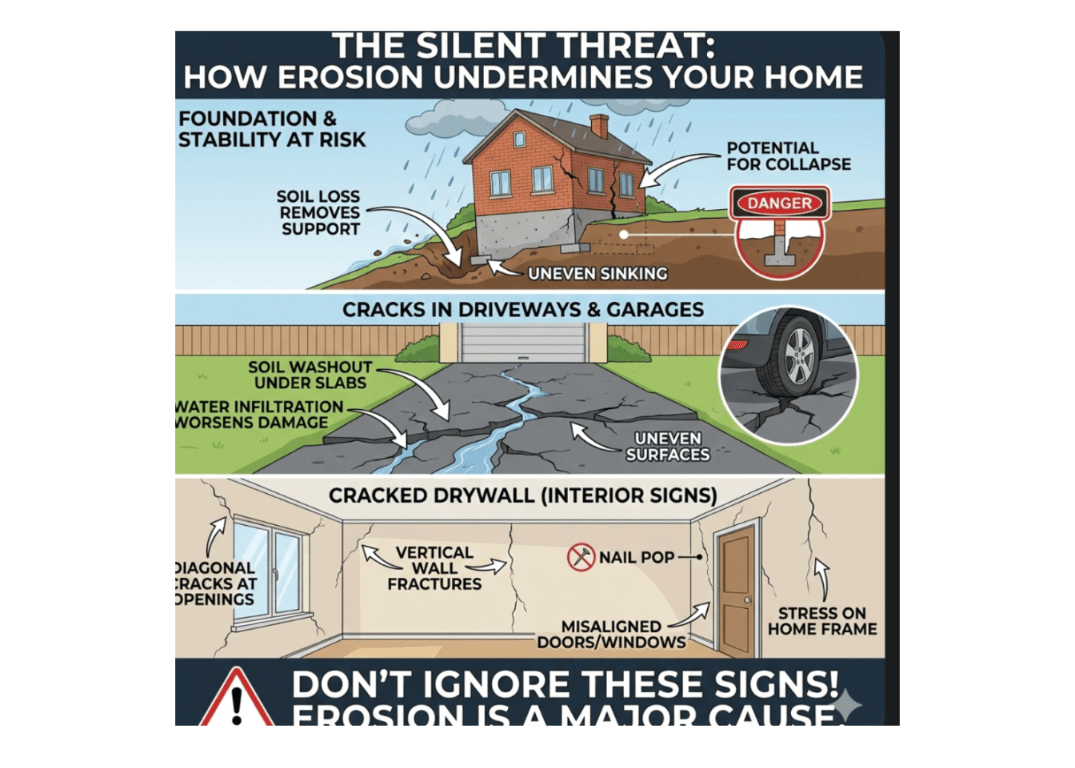
Communities sometimes celebrate low water bills as a sign of good management. But when low costs result from under-investing in storm drains, ditches and allowing widespread tree removal without investing in tree canopy growth and planting of trees, homeowners eventually pay the price. Cheap water without investment in stormwater infrastructure, including growing tree canopy, often becomes extremely expensive storm damage. People assume it takes three feet high flood water to damage homes. Even standing or saturated soil can impact home through erosion and foundation cracking
Washington’s Recent Flooding Shows How Powerful Today’s Storms Are
Images of severe flooding around Washington State are a reminder of how destructive atmospheric storms have become. Yet most people don’t realize you don’t need waist-deep water to suffer major damage. The images of homes floating down rivers is heartbreaking.
Heavy rains—even without visible flooding—can:
- Erode soil and destabilize slopes
- Saturate the ground beneath foundations
- Cause roofs, siding, decks, and paint to deteriorate
- Lead to structural movement in homes
- Wash pollutants into lakes, canals, and groundwater
Storm impacts begin in the soil long before the water is visible on the surface.
Trees Are Infrastructure: They Stabilize Soil and Prevent Flood Damage
Trees can’t completely stop flooding—no natural system can—but they work continuously to reduce its impact. Even during storms that don’t look like “major flood events,” trees:
- Stabilize soil with deep root systems
- Slow runoff and reduce erosion
- Absorb and store significant amounts of water
- Buffer foundations from shifting soils
Trees don’t need a disaster-level storm to provide protection. They work year-round to keep the ground from becoming saturated and unstable, saving homeowners from costly water and foundation damage.
Cities like Beaverton, Bellevue, Seattle Vancouver, and Portland understand this. They protect tree canopy and maintain engineered storm-drain systems, even if it means higher water and utility rates.
What Happens When Trees Are Removed: A Real Example from Beaverton
When I moved into my home in Beaverton, the hillside above us was covered in mature oak and fir trees. Developers soon cleared the forest to build homes, dropping the canopy from nearly 100% to just above zero percent.
My Downhill neighbors adjacent to these developed lots thirty years ago soon experienced saturated, spongy soil every winter. With one neighbor, Their foundations literally rose and sank with the seasons. Over time, Cracked walls, foundations, damaged ceilings, and structural shifting eventually required over $100,000 in repairs through Terra Firma for the foundation. A totally new driveway was needed as well Replacing and painting the cracked dry wall tens of thousands.
This wasn’t “traditional flooding.” It was soil saturation and standing water caused by heavy rains and the loss of trees adjacent to their lots that once absorbed and slowed that water. Beaverton has since spent millions on row trees and preserving trees. Thirty years ago the best available science did not see trees as infrastructure.
Beaverton investment in trees
Beaverton has made sustained, science-based investments in stormwater infrastructure that recognize trees as essential public assets, not ornamental extras. A few Years ago, on SW 170th Avenue, Beaverton invested in expanded tree canopy, landscaped medians, and vegetated buffers work in tandem with engineered systems to slow runoff, increase infiltration, and reduce stormwater loads before water reaches streams and the Tualatin River watershed.
While beaverton invests in trees and storm water infrastructure for roadways, Surfside invests in speed signs. Which is the better investment for roads protecting residents from flood waters rushing down roadways or in Surfside where lead footed seniors speed down the roadways.(Actually they average 20 in 25).
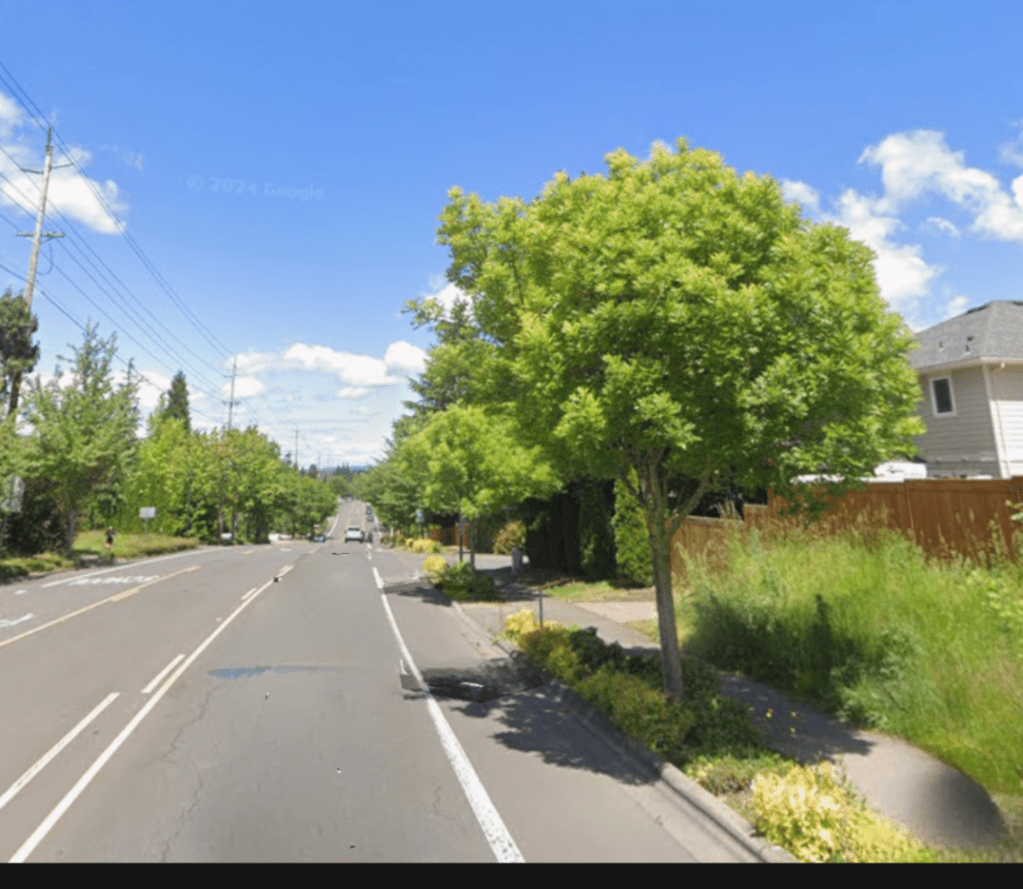
These living trees intercept rainfall, stabilize soils, and lower peak flows during intense storms—functions that pipes alone cannot perform. By integrating urban forestry into its stormwater strategy, once planted they provide a lifetime of storm water management. Beaverton reduces flood risk, protects water quality, cools neighborhoods, and lowers long-term infrastructure costs, demonstrating how cities that treat trees as storm water infrastructure are better prepared for increasingly frequent and intense rain events caused by atmospheric rivers. Beaverton also invests in and maintains an extensive stormwater drainage system and has tree policies that protect trees. Does it stop catastrophic flooding, No. But the waters will reside and the trees will go back to work to help mitigate flooding. It is certainly better than not having any tree cover.
The water bills may cost around $100 a month. However, the drinking water is clean, and the resulting flood protection saves hundreds of thousands of dollars in potential flood damage. However, the protection is not just for major storms; homes are also protected against the constant rain that occurs.
Surfside: A Community Losing Its Natural Storm Protection
Surfside has taken an especially damaging path by implementing:
- aggressive tree fines, and
- strict 16- and 24-foot tree-height restrictions
These policies have resulted in widespread canopy loss to 14%. The remaining trees—forced into unnatural, stunted heights—simply cannot stabilize soil or absorb significant stormwater. A 16-foot tree is not functioning infrastructure. It cannot replace the stormwater control of a natural tall coastal evergreen.
With atmospheric storms intensifying across the Pacific Northwest, Surfside’s tree restrictions are making the flooding impacts far worse.
The Consequences Are Already Visible
When I first considered purchasing a lot in Surfside years ago, during a major storm, I toured a cleared Surfside lot near the canal that had a lot next to it that became a pond due to heavy rainfall. The neighbor was pumping water into the canal that was flooding his house to protect his foundation. A stripped area of trees can potentially cause thousands of dollars in water damage, because the natural tree canopy that once handled the water has been removed. Needless to say, I did not purchase the lot adjacent to the storm-created pond.
Multiply that across hundreds of lots and the cumulative damage becomes significant
Case Study: The Aftermath of Tree Removal in Surfside
In Surfside, a large acre of trees once stood as a protective barrier between a row of condos and surrounding homes. With threats if fines from the HOA, Concerned about the health of those trees, the condo owners attempted to work with the Surfside homeowners association (HOA) to develop a plan to preserve the trees.
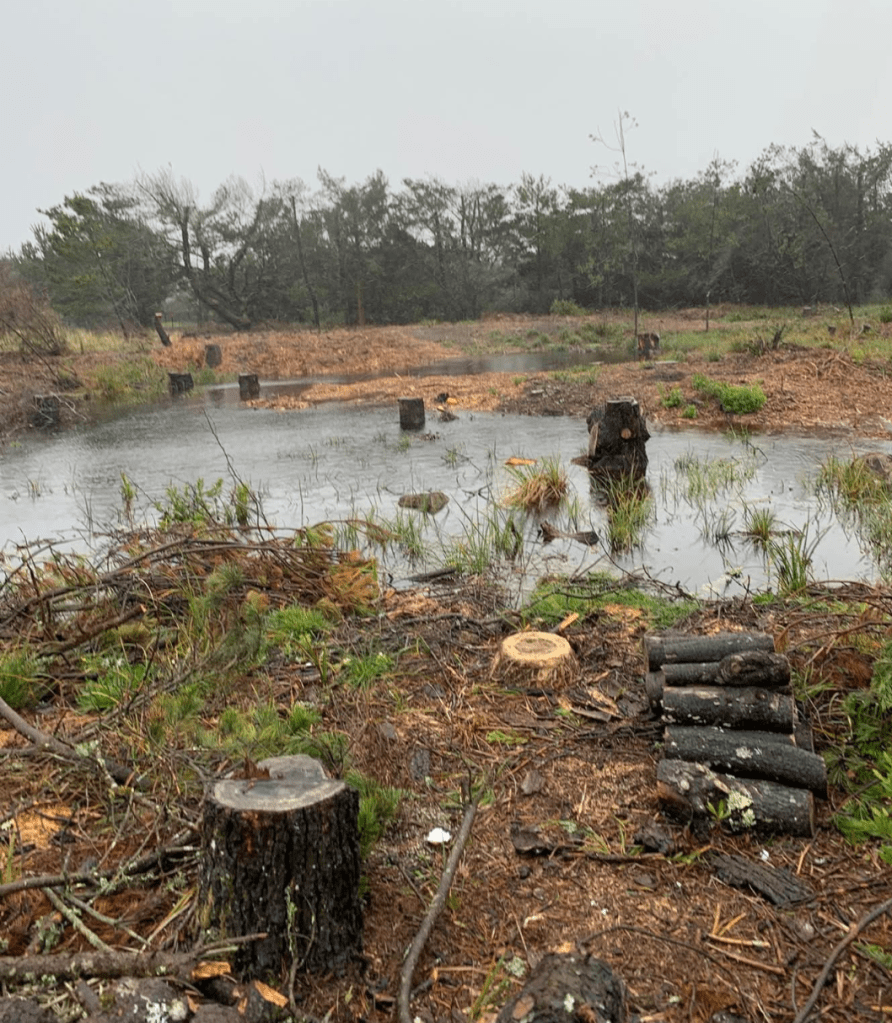
The proposal would have allowed them to attempt to retain the trees by thinning them over time while addressing maintenance and tree height concerns to avoid heavy fines. However, the HOA rejected the plan. Like many home owners. Pressured by the threat of heavy fines and legal risks, condo owners cleared the entire acre—stripping away decades of tree canopy and ecological stability in the process.
In most counties and cities, removal of trees would require a review before granting a permit to ensure storm water considerations are taken into account.
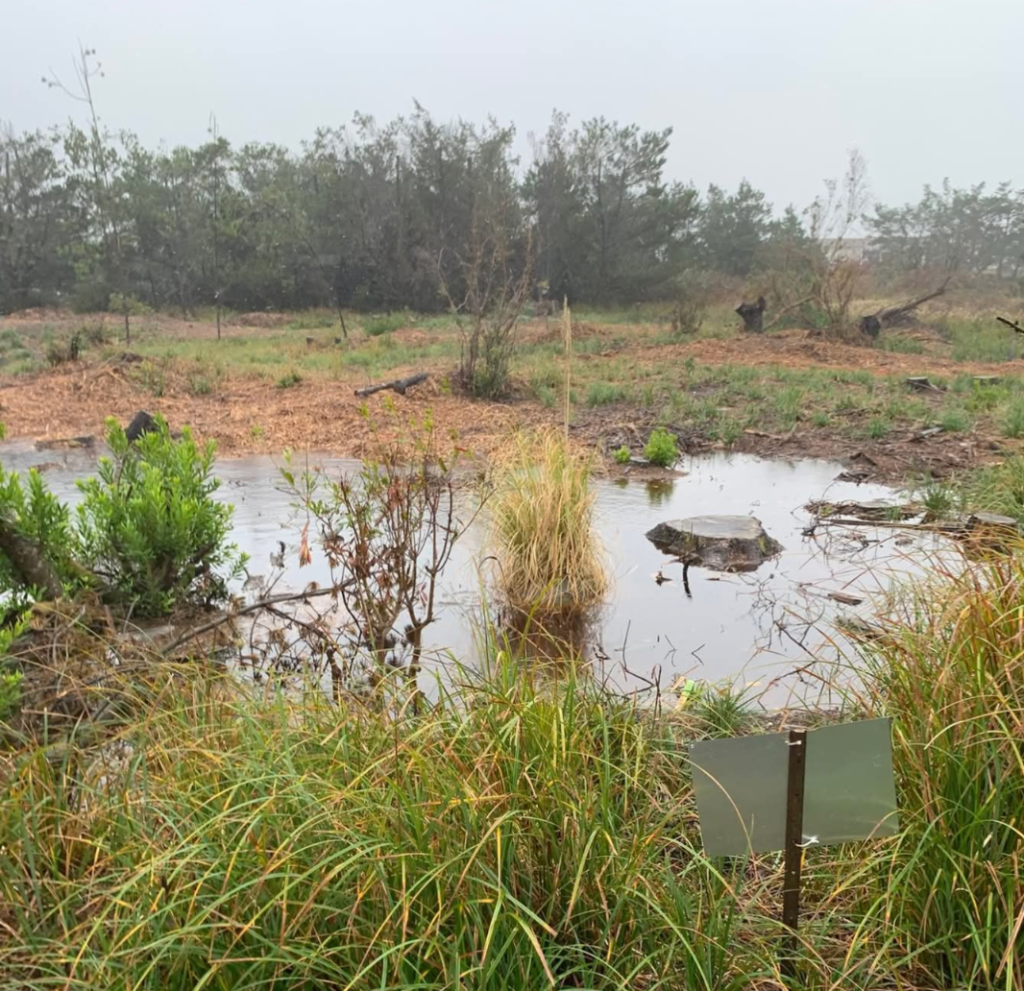
The consequences of that decision have been swift. In the first major windstorm after the clearing, one of the remaining edge trees on a neighboring lot was snapped in half.—an early sign of how the loss of canopy disrupted local wind buffering. Without the windbreak, homes that were once sheltered now face direct exposure to salt air and heavy Pacific rains. This exposure accelerates wear on siding, decks, roofs, and paint, while amplifying the moisture seeping into soils beneath foundations.
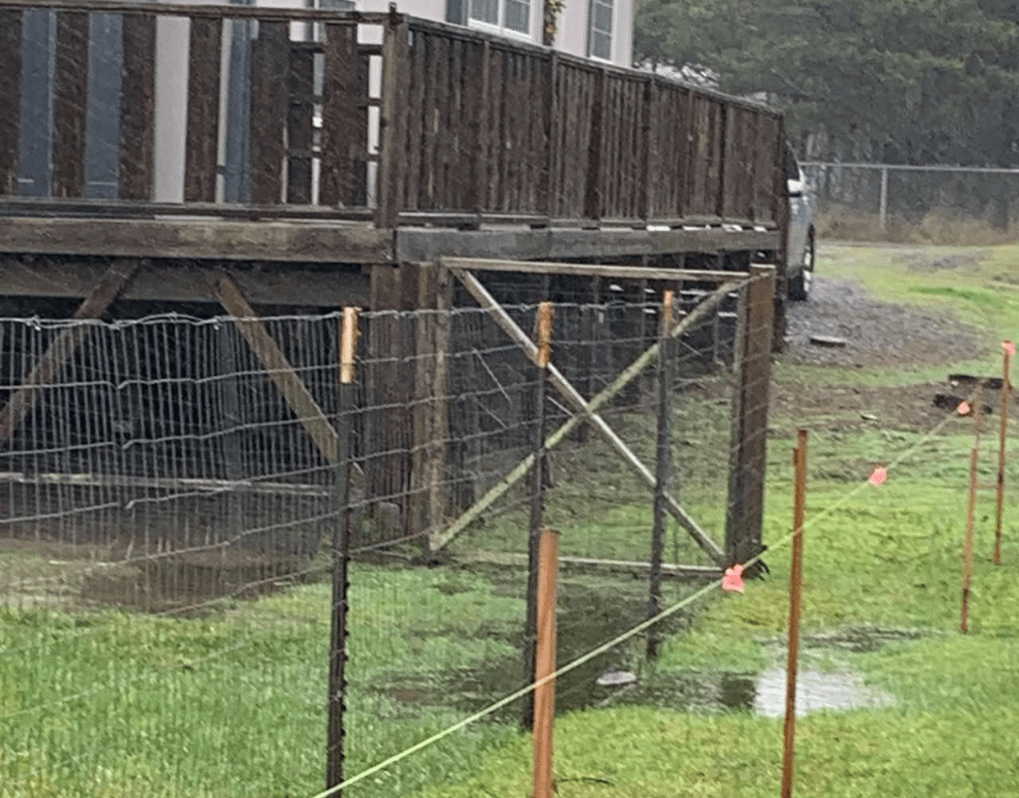
Impact in foundations with heavy rains
Already, the cleared acreage is transforming into a waterlogged depression resembling a swamp during storms, raising concerns about soil erosion and long-term structural impacts on adjacent properties.
The Surfside case underscores how tree loss is not just an aesthetic issue but a functional one: when tree canopies vanish, the local microclimate shifts, water flow changes, and homeowners downstream or next to tree cleared lots—literally and figuratively—pay the price.
Pacific County Must Act: Tree-Height Restrictions Are Causing Real Economic Harm
Surfside’s combination of:
- minimal stormwater infrastructure,
- punitive tree fines, and
- Development without tree protections leading to lot clearing of trees
- height limits that prevent trees from functioning
is putting homeowners at escalating risk.l die to reduced tree canopy.
Pacific County can protect residents by:
- Eliminating tree-height restrictions
- Ending fines that discourage canopy growth
- Restoring the natural tree infrastructure needed to offset heavy rains
- Recognizing trees as essential storm protection—not decor
The Bottom Line
You don’t need a dramatic flood to suffer damage.
You don’t need water rushing down your street.
You don’t even need visible standing water.
All it takes is soil that becomes saturated because the trees are gone. And unfortunately trees removed from adjacent lots for development or to avoid fines can effect neighboring lots significantly.
Trees can’t stop every storm—but they dramatically reduce the routine, annual damage that destroys foundations, destabilizes soil, and costs homeowners millions. But also do a lot to decrease the amount of storm water rushing into lakes. Rivers and waterways
Pacific County has the responsibility—and the opportunity—to change course by removing any tree restrictions near critical areas before the next storm adds to the bill. With two major storms in five years, the change is needed now.

