
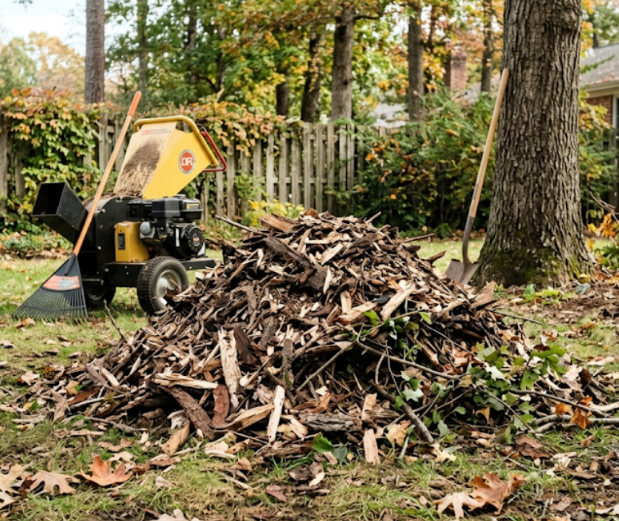
When trees are cut down and branches are chipped, the resulting pile of wood chips and organic debris can become an excellent source of natural fertilizer and soil improvement in your back yard. With time, moisture, and microbial activity, this pile transforms into a nutrient-rich mulch or compost that can be used in gardens and landscapes.
How the Process Begins
A pile of chipped wood, leaves, and small branches contains large amounts of carbon-rich material. Once the pile is formed and lightly watered, naturally occurring microbes—bacteria and fungi—begin breaking down the material.
This starts a gradual process:
Fresh chips contain complex compounds like cellulose and lignin
Microorganisms begin decomposing these materials
Heat may build in the pile as biological activity increases
Over time, the structure softens and darkens
The Role of Water
Water is essential to this process. When the pile is watered:
It activates microbial life
It helps break down tough woody fibers
It allows nutrients to dissolve and move through the pile
As water moves through the material, it forms leachate—a nutrient-rich liquid created by dissolving compounds released during decomposition.
Formation of Nutrient-Rich Material
As the pile matures, several important changes occur:
Nitrogen compounds form and become available to plants
Phosphorus is released from plant tissues
Potassium and micronutrients are freed from organic matter
Organic material breaks down into humus, a stable, soil-like substance
The pile effectively becomes a natural recycling system, turning tree debris into valuable soil amendments.
What Leachate Contributes
Leachate plays an important role in enriching the pile:
It carries dissolved nutrients throughout the material
It helps distribute nitrogen and phosphorus evenly
It contributes to the formation of biologically active compost
In a backyard setting, this process helps create a uniform, nutrient-rich mulch or soil that supports plant growth.
From Wood Chips to Garden Soil
Over time—typically months depending on conditions—the pile transitions from rough chips to a darker, finer material:
Early stage: coarse chips and visible debris
Mid stage: partially decomposed, softer texture
Final stage: dark, crumbly compost rich in organic matter
This finished material can be used to:
Improve soil structure
Add nutrients to support plant growth
Enhance microbial life in the soil
Why This Is Valuable for Gardens
A well-managed compost pile made from tree debris provides:
Slow-release nutrients for plants
Improved soil aeration and drainage
A phosphorus source above 5 -11 ppm provides a good range of nutrient-rich soil.
Increased water retention
Long-term soil fertility
Unlike synthetic fertilizers, this organic material feeds both plants and the soil ecosystem, creating healthier and more resilient gardens.
Key Takeaway
A backyard pile of chipped trees and branches, when properly watered and allowed to decompose, becomes a self-sustaining system that converts organic waste into nutrient-rich mulch and compost. Through the combined action of water, microbes, and time, it transforms into a valuable phosphorous rich resource that can improve soil health and support thriving gardens.
 Surfside Washington News