

In Surfside, a strange kind of fire awareness has taken hold. Board members now speak urgently about wildfire risk, invoking scenes from California and Hawaii, warning that we must act before it’s too late. But as they drive through the neighborhood, something doesn’t quite line up with the message.
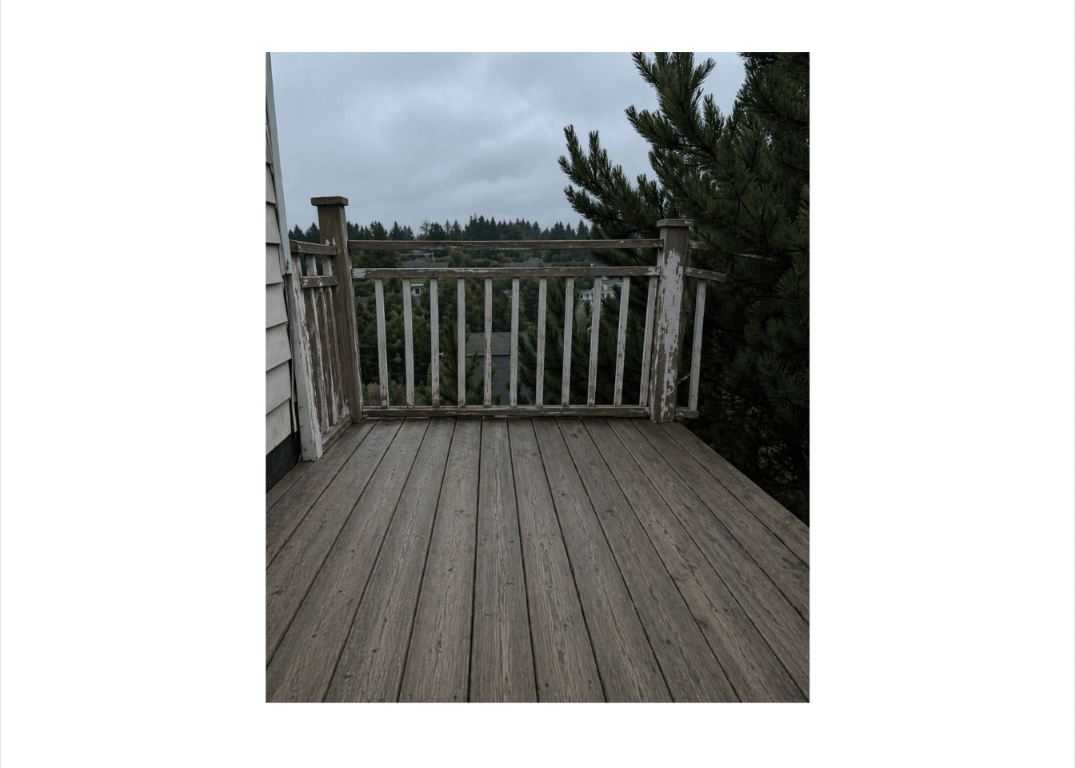
Look closely at the homes they pass. Decks packed with dry leaves. Gaps filled with needles and bark. The underside cluttered with years of debris, kindling waiting for a spark. These are not minor oversights. Under **Firewise USA guidance, this is the most dangerous zone of all—the first five feet around a home, where ignition is most likely to occur.
The 0–5 foot rule is not complicated. It calls for a noncombustible buffer—gravel, stone, or bare ground. No flammable debris. No fuel buildup. No shortcuts. Yet this is precisely where the silence is loudest. No enforcement. No letters. No urgency.
Instead, the spotlight is aimed somewhere else entirely—at trees.
In Surfside, trees have been cut, topped, and reduced to comply with height restrictions that have little to do with actual fire behavior. The result is visible across the community: stressed trees, dead tops, weakened canopies. What were once living, moisture-rich systems are now, in many cases, dry and deteriorating structures.
And here is where the irony turns into something much harder to ignore.
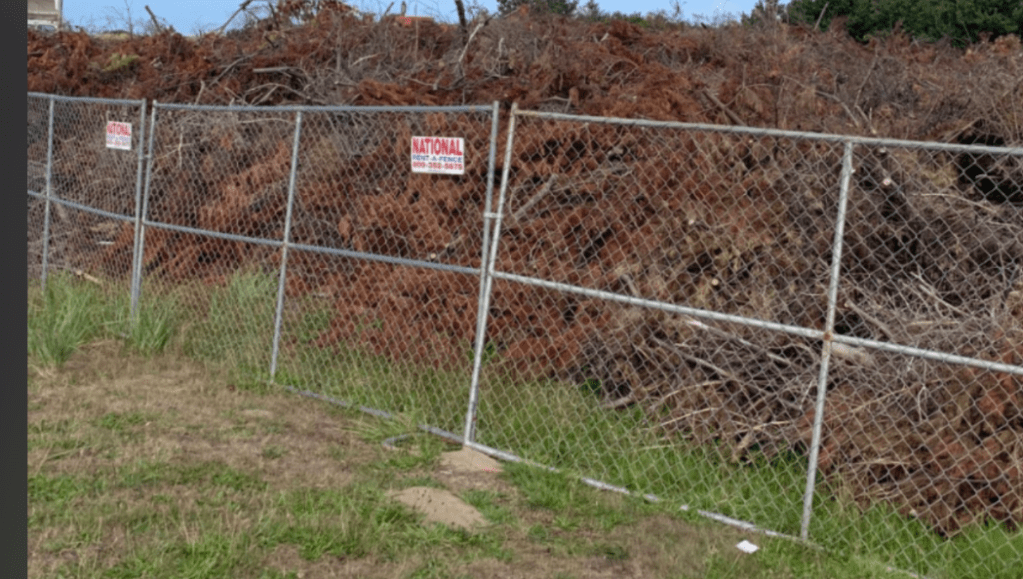
The chipper brush pile in the heart of Surfside stands as a textbook violation of basic Firewise principles—an oversized accumulation of dry, compacted fuel placed where it has no business being. Firewise guidance is clear: large debris piles, especially those left to cure and dry, create concentrated ignition sources that can burn hotter, longer, and with greater intensity than natural vegetation. This pile sits around for months. Instead of reducing risk, this pile does the opposite—holding heat, trapping embers, and providing the kind of fuel bed that can carry fire rapidly.
What makes it more troubling is the contrast between enforcement and example. While residents are cited for brush, limbs, and perceived fire hazards on their own properties, this centralized pile represents a far greater and more dangerous load of combustible material. Positioned near homes and community infrastructure, it undermines the very message being promoted. Firewise isn’t about appearances or selective enforcement—it’s about eliminating real risks. And a large, unmanaged brush pile like this is exactly the kind of hazard those standards are meant to prevent.
On Surfside’s own property—right near the playground and surrounding common areas—a certified arborist documented that the HOA’s own topping practices damaged trees, leading to decline, disease, and in some cases, death. These were not homeowner mistakes. These were actions taken by the HOA under the same policies the board continues to promote.
Those trees didn’t fail overnight. They stood there—dead or dying—for four to five years. Board members drove past them repeatedly. No emergency action. No warnings. No enforcement letters to themselves. No acknowledgment that the very practices they mandated had created visible fire hazards on their own land.
That silence speaks volumes.
The same policy used to justify cutting trees for “views” was applied to Surfside property, and the outcome was exactly what tree science predicts: topped trees become stressed, structurally compromised, and far more likely to die. A dead or dying tree is no longer a living, moisture-rich system—it becomes fuel.
So while residents receive violation notices—hundreds of them—for tree and brush issues, those notices are tied directly to a policy that is actively creating the problem. The reported “300 violations” don’t exist in a vacuum. They are the downstream effect of a rule that pushes trees into decline and then penalizes the result.
This is where the contradiction becomes impossible to defend.
A deck attached directly to a home, filled with dry organic debris, is a proven ignition point. Embers don’t need a forest to start a fire—they need a place to land. And a neglected deck, especially one with an open underside, is the perfect trap. Once ignited, the fire doesn’t have to travel. It’s already at the house.
The area most likely to have a massive fire fueled by trees and poorly maintained decks is Jol.
Meanwhile, a healthy tree, properly spaced and maintained, is not the enemy. It provides shade, retains moisture, reduces wind speed, and can even slow fire. But when that tree is repeatedly topped or forced below its natural growth pattern, it becomes stressed. It dies back. It dries out. And eventually, it turns into fuel.
So we are left with a policy approach that promotes one risk while ignoring another.
Board members speak of responsibility, of not wanting Surfside to “burn down,” yet overlook the most immediate hazards associated with the very homes they pass by each day. They enforce three rules with precision while ignoring decks that violate the most basic principles of fire prevention. They cite Firewise, but apply it selectively. The decks on homes in j pl require no fire-wise rules to apply, despite being more of a danger within 0 to 5 feet. Will the board ban decks in Surfside? Especially
They also ignore the most glaring example of all—the consequences of their own actions on their own property. That’s not fire safety. That’s optics.
Real fire prevention doesn’t come from slogans or selective enforcement. It comes from understanding how homes actually ignite and addressing those risks honestly. It starts at the structure—at the roof, the vents, and yes, the deck. It requires consistency, not convenience.
If Surfside is serious about safety, then the first five feet around every home should matter more than the height of a tree down the street. And if the board is serious about accountability, it must confront the fact that its own tree-height policies have already produced the very hazards it now warns against.
Because the truth is simple: you can’t claim to be protecting a community from fire while ignoring the fuel sitting right beneath your feet—or the dead trees created by your own rules. Fire safety starts by protecting and preserving trees so we have healthy trees protecting our homes.

