
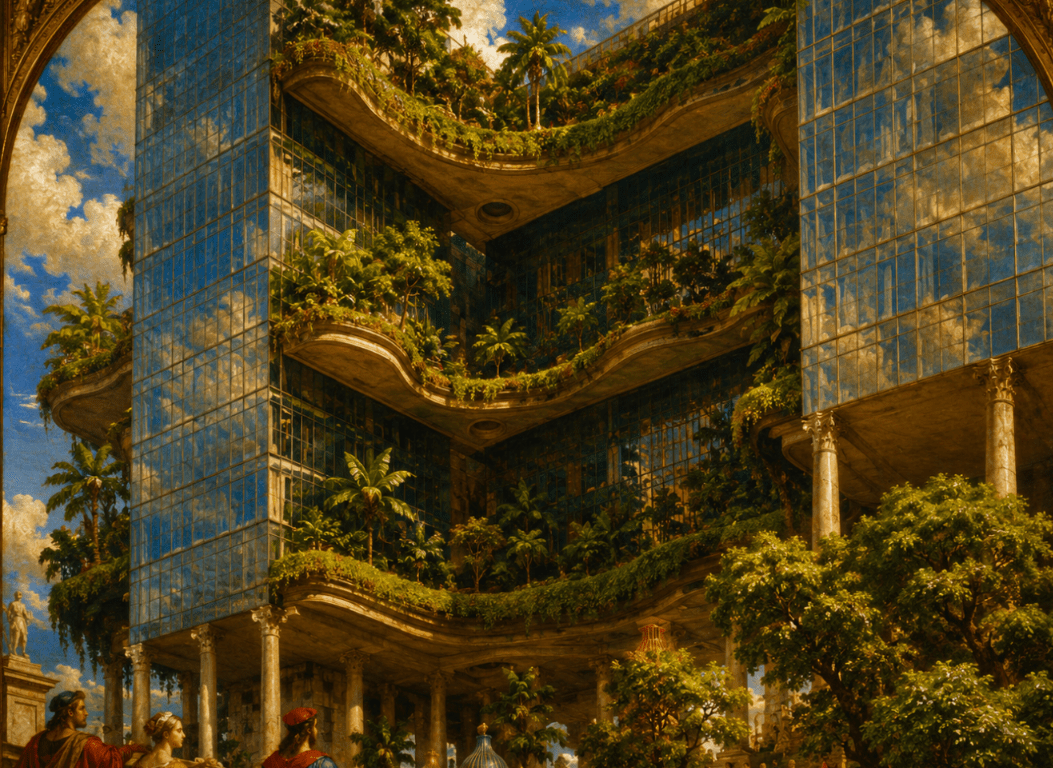
Few cities in the world have embraced the idea of blending nature with urban development as boldly as Singapore. Faced with limited land, dense development, rising temperatures, and climate pressures, Singapore transformed itself into what many now call a “City in Nature” — a place where trees, gardens, and green infrastructure are woven directly into buildings, highways, shopping centers, hospitals, and skyscrapers.
Instead of treating trees and urban growth as opposing forces, Singapore chose a different path: integrating nature into the architecture itself.
From “Garden City” to “City in Nature”
Singapore’s transformation began decades ago under former Prime Minister Lee Kuan Yew, who believed greenery would improve public health, quality of life, tourism, and even national identity.
Today, that vision has evolved far beyond parks and street trees.
Modern Singapore incorporates:
- Vertical forests
- Rooftop gardens
- Sky terraces
- Green walls
- Elevated parks
- Rainwater gardens
- Biodiversity corridors
- Tree-covered residential towers
The city now requires many new developments to replace greenery lost during construction with vegetation integrated directly into the buildings themselves.
Trees Climbing Into the Sky
One of the most famous examples is Gardens by the Bay, where giant “Supertrees” rise above the landscape like futuristic living towers.
These towering structures are covered in thousands of plants and function as environmental systems that help:
- Absorb heat
- Collect rainwater
- Support biodiversity
- Reduce urban temperatures
- Improve air quality
The concept demonstrates how infrastructure can serve both human and ecological purposes simultaneously.
Marina One: A “Green Heart” Inside a Skyscraper Complex
Another iconic project is Marina One, a massive development featuring lush tropical vegetation built directly into the center of four high-rise towers.
Instead of a traditional concrete courtyard, the development contains a multi-level rainforest environment with waterfalls, trees, and shaded vegetation.
The greenery helps:
- Cool surrounding air naturally
- Reduce energy demand
- Improve stormwater management
- Create healthier living spaces
- Provide mental health benefits to residents and workers
Oasia Hotel: A Living Skyscraper
Perhaps one of the most striking examples is Oasia Hotel Downtown.
Unlike conventional glass skyscrapers, the building is wrapped in red mesh covered by more than 20 species of climbing plants and thousands of square feet of vegetation.
The building acts almost like a vertical ecosystem:
- Birds and butterflies inhabit the structure
- Vegetation lowers surface temperatures
- Open-air sky gardens improve airflow
- Greenery reduces the urban heat island effect
It represents a dramatic shift away from sterile concrete urbanism toward biologically integrated cities.
Fighting Heat and Climate Threats Naturally
Singapore’s approach is not simply aesthetic. It is part of a broader climate adaptation strategy.
Trees and vegetation:
- Lower temperatures through shade and evapotranspiration
- Reduce flooding by slowing stormwater runoff
- Improve water quality by filtering pollutants
- Capture carbon dioxide
- Reduce particulate pollution
- Improve mental and physical health
Research increasingly shows that urban forests can cool neighborhoods by several degrees while reducing stress, respiratory illness, and heat-related health risks.
For coastal communities facing rising temperatures, flooding, atmospheric rivers, and climate instability, Singapore demonstrates that trees are not obstacles to development — they are critical infrastructure.
Building Codes That Require Nature
Singapore’s government uses aggressive planning policies to ensure greenery remains part of urban growth.
Programs encourage or require developers to include:
- Green roofs
- Vertical gardens
- Tree replacement
- Rain gardens
- Energy-efficient landscaping
- Biodiversity-friendly design
In some projects, developers must replace every square foot of greenery removed during construction with equal or greater amounts of vegetation elsewhere in the project.
This philosophy treats tree canopy as essential infrastructure, much like roads, utilities, or drainage systems.
Lessons for Coastal Communities
Singapore offers important lessons for communities around the world, including coastal regions facing climate threats.
Instead of reducing tree canopy for aesthetics or short-term views, cities can:
- Design around trees
- Expand urban canopy
- Integrate vegetation into buildings
- Use trees for stormwater control
- Improve resilience naturally
As climate threats intensify, many planners now recognize that the cities best prepared for the future may not be the ones with the most concrete — but the ones that successfully bring nature back into the urban environment.
Singapore has shown that even one of the world’s densest cities can build upward while still growing a forest.

