
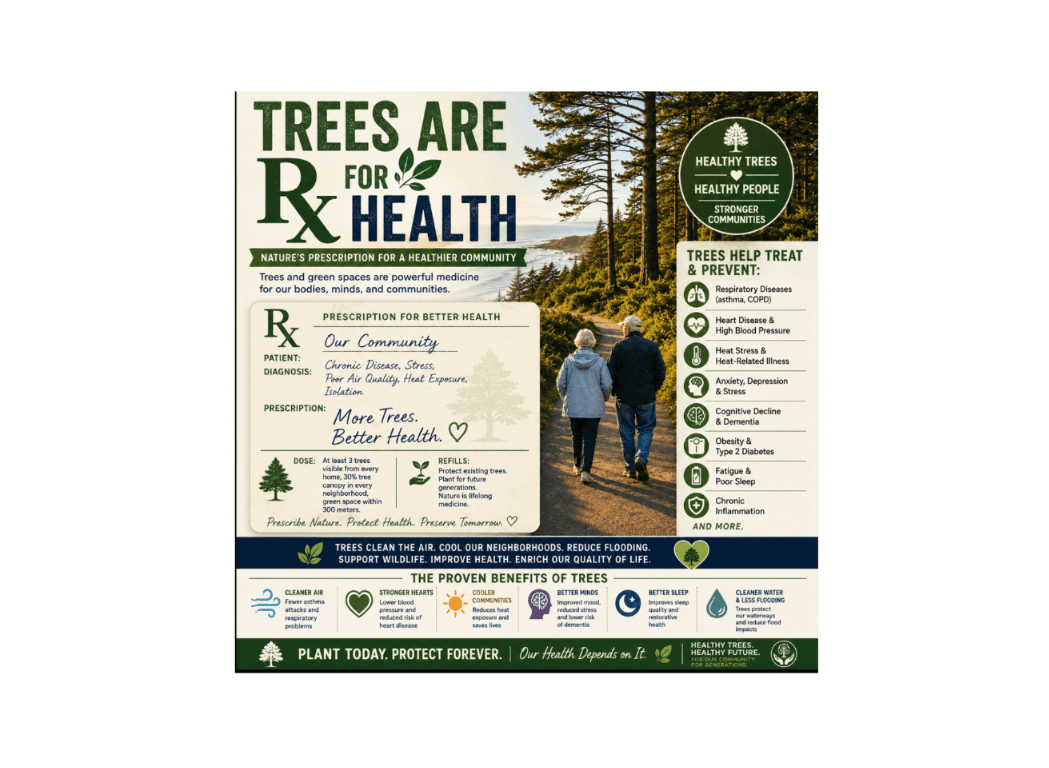
Ocean Park and Surfside, Washington, have one of the oldest populations on the Washington coast. Community survey using Election Buddy with 82 residents responding, where data showed that the majority of respondents were above 65:
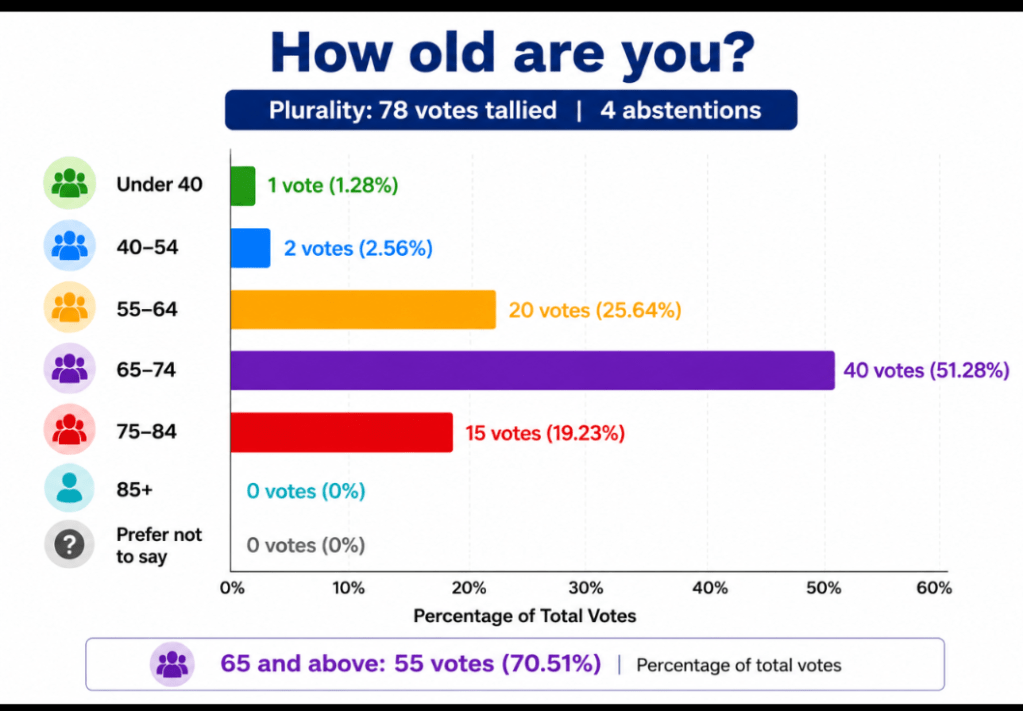
More than 70% of respondents were over age 65, highlighting that Surfside is a heavily senior communities.
Washington environmental health mapping also identifies the Ocean Park area as highly vulnerable, with:
- Sensitive Population Score: 10
- Socioeconomic Factors Score: 8
These scores reflect elevated percentages of:
- Seniors
- Residents with chronic disease
- Lower-income households
- People more vulnerable to pollution, flooding, heat, and environmental stress
Because of this, environmental decisions regarding tree canopy, riparian buffers, air quality, and water quality can directly impact public health, safety, and overall quality of life. This is especially important in vulnerable communities with large senior populations and elevated chronic disease rates, where Washington State environmental equity laws and policies are intended to help protect residents from disproportionate environmental and health risks.
Chronic Disease Rates in Pacific County
Pacific County experiences elevated rates of chronic illness compared to Washington State averages.
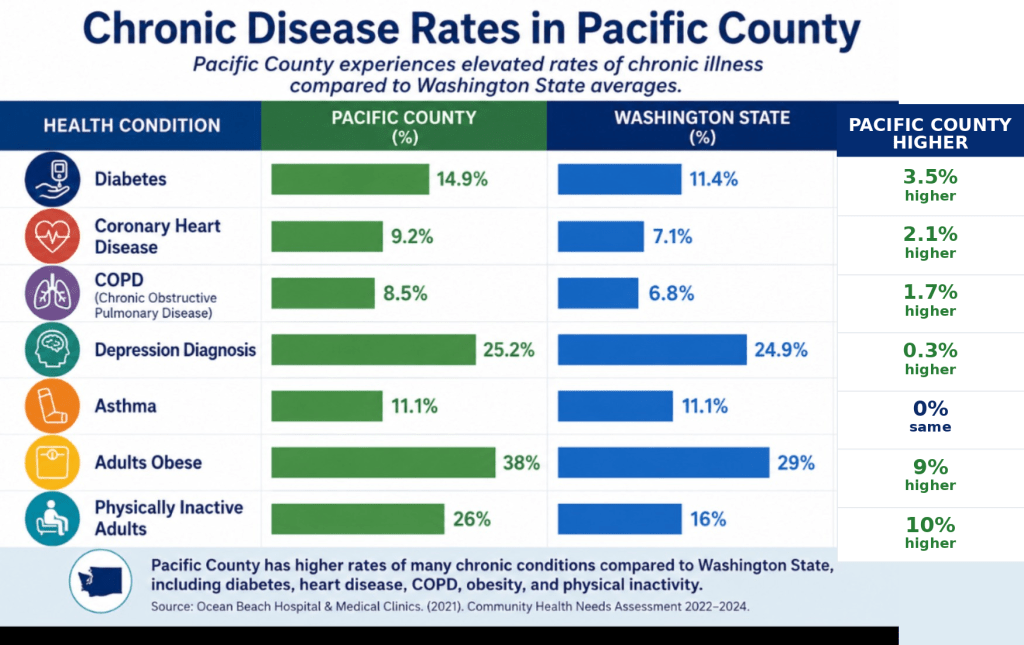
These chronic illnesses are especially concerning in a retirement community where many residents are more vulnerable to:
- Heat exposure
- Poor air quality
- Respiratory disease
- Cardiovascular stress
- Neurological decline
- Anxiety and depression
- Reduced mobility
Community Respiratory Health Survey Results
A community survey in Surfside with 82 residents regarding respiratory and lung-related conditions showed widespread breathing and respiratory concerns among residents. Many chose to abstain since people are not wanting to share health information although the results are anonymous. Surfside has the following results
Respiratory & Lung-Related Conditions (33 responses)
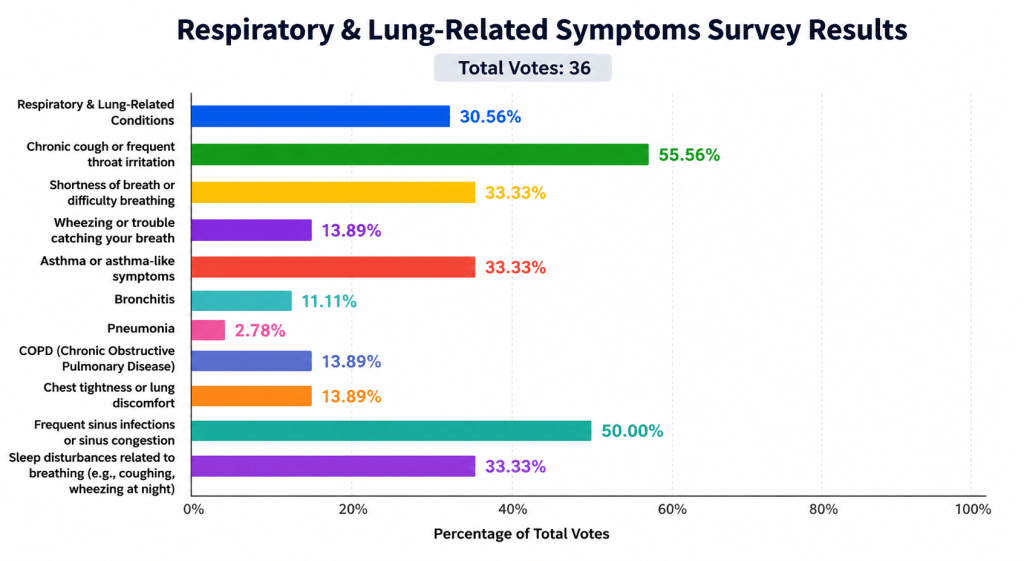
The survey results revealed a high level of respiratory and lung-related concerns among respondents. Chronic cough or frequent throat irritation was the most commonly reported symptom at 55.56%, followed closely by frequent sinus infections or congestion at 50.00%. Shortness of breath, asthma-like symptoms, and sleep disturbances related to breathing were each reported by 33.33% of respondents. In addition, 30.56% reported general respiratory or lung-related conditions, while 13.89% reported wheezing, COPD, or chest tightness. Smaller percentages reported bronchitis (11.11%). These findings suggest widespread respiratory stress and breathing-related health concerns within the community.
Neurological, Cardiovascular, and Other Health Concerns
The community survey also identified widespread neurological, cardiovascular, and chronic fatigue-related symptoms among residents.
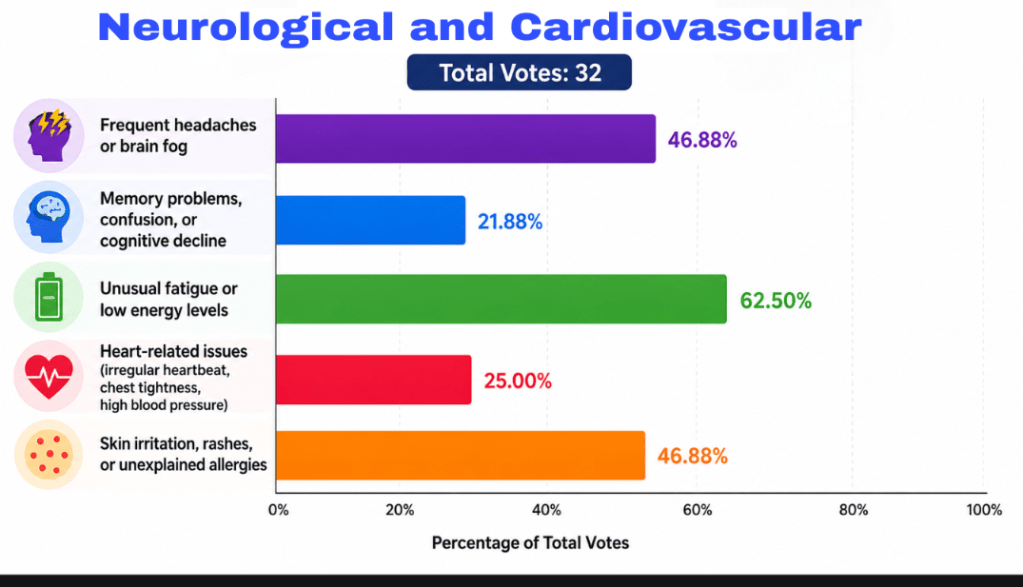
The neurological and cardiovascular survey results revealed significant health concerns among respondents. The most commonly reported issue was unusual fatigue or low energy levels at 62.50%. Frequent headaches or brain fog and skin irritation, rashes, or unexplained allergies were each reported by 46.88% of respondents. Heart-related issues, including irregular heartbeat, chest tightness, or high blood pressure, were reported by 25.00%, while 21.88% reported memory problems, confusion, or cognitive decline. These findings suggest that neurological stress, fatigue, cardiovascular symptoms, and cognitive concerns are affecting a substantial portion of the community, particularly within an aging population.
hese symptoms are important because many are commonly associated with
Respiratory Disease and Air Quality
Respiratory illnesses such as COPD, asthma, bronchitis, and reduced lung function are major concerns for older adults.
According to scientific studies :
- Even short-term exposure to airborne particulates can aggravate lung disease, trigger asthma attacks, and increase respiratory infections.
- Tree canopy and leaf area were inversely correlated with respiratory and cardiovascular disease rates.
- Trees can help reduce particulate pollution exposure for pedestrians and neighborhoods when properly planned.
- Forested environments may help support disease prevention and respiratory health.
Cardiovascular Disease and Heat Stress
Heart disease remains one of the leading causes of death among seniors.
Research has found:
- Tree canopy was associated with reduced cardiovascular risk, lower hypertension, higher life expectancy, and reduced all-cause mortality.
- Existing tree cover significantly reduced heat-related mortality, with more than half of prevented deaths occurring in people over age 65.
- Increasing tree canopy by 10% significantly lowered heat-related deaths in multiple cities, particularly for older adults.
- Higher tree density and crown volume were associated with lower medication use for cardiovascular disease.
Trees also help reduce dangerous heat buildup:
- Areas with greater canopy cover can be several degrees cooler during hot weather.
- Tree canopy helps lower sidewalk and pavement temperatures during heat events.
Mental Health, Dementia, and Cognitive Function
Mental health concerns among seniors include:
- Depression
- Anxiety
- Isolation
- Memory decline
- Dementia
- Brain fog and cognitive stress
Scientific studies found particularly strong evidence linking trees and mental wellness.
The report states that mental health and function had some of the strongest quantity and quality of evidence among all health categories studied.
Studies found:
- Tree cover around nursing homes was associated with lower depressive symptoms in elderly residents.
- Higher tree density correlated with lower odds of depression in older adults.
- Residential tree canopy reduced psychological distress during the COVID-19 epidemic.
- Adults living near greater tree canopy reported fewer memory complaints and better self-rated memory.
- A major 11-year study found that 20% tree canopy lowered dementia risk by approximately 14%.
Walking in nature studies also showed:
- Reduced cortisol (stress hormone) levels
- Lower anxiety
- Improved emotional stability
- Lower blood pressure
- Better sleep quality
Kathleen Wolf’s scientific Research and the 3-30-300 Rule
Dr. Kathleen Wolf of the University of Washington has spent decades researching the relationship between trees, health, and human well-being. Her work has become foundational in urban forestry and public health planning.
One of the planning concepts highlighted in her report is the 3-30-300 Rule, which recommends:
- At least 3 trees visible from every home, school, and workplace
- At least 30% tree canopy in every neighborhood
- Public green space within 300 meters of every residence
The report concludes that trees should not simply be viewed as landscaping, but as essential public health infrastructure that supports:
- Cleaner air
- Lower temperatures
- Reduced flooding
- Better mental health
- Cardiovascular protection
- Stress reduction
- Improved quality of life
- Climate resilience
For communities like Ocean Park and Surfside — with aging populations, elevated chronic disease rates, and high environmental vulnerability — preserving mature trees and maintaining healthy tree canopy may be one of the most important long-term investments in public health and senior well-being.
Despite these environmental justice goals, critics argue that Pacific County policies within the CARL (Climate Adaptation and Resilience Layer) area allowed Surfside HOA tree height enforcement policies to significantly reduce tree canopy between 2018 and 2024. Community analysis of aerial imagery suggests that nearly one-third of the available mature trees in some areas were removed or heavily topped during that period. Critics argue this occurred even as Washington State equity mapping identified Ocean Park and Surfside as highly vulnerable communities with large senior populations and elevated chronic disease rates.
Opponents of the policy argue that reducing tree canopy in a vulnerable coastal retirement community directly conflicts with Washington State’s broader environmental justice, climate resilience, and public health goals. Scientific studies increasingly show that mature trees help reduce heat exposure, improve air quality, mitigate flooding, and support cardiovascular, respiratory, and mental health — particularly among seniors and medically vulnerable populations.
Even tree height restrictions limiting trees to 16 feet do not represent functional tree canopy, as research from the U.S. Forest Service does not count trees less than 16.4 feet when measuring tree canopy. Many cities show that small, heavily topped trees provide far fewer benefits for flood mitigation, cooling, air filtration, and climate resilience compared to mature trees with large crowns and canopy coverage.
In communities already facing elevated environmental vulnerability scores, the long-term loss of tree canopy will reduce natural protections that become increasingly important as climate threats, atmospheric river storms, and heat events intensify.
References (APA 7th Edition)
Astell-Burt, T., Navakatikyan, M. A., & Feng, X. (2023). Why might urban tree canopy reduce dementia risk? A causal mediation analysis of 109,688 adults with 11 years of hospital and mortality records. Health & Place, 82, 103028. https://doi.org/10.1016/j.healthplace.2023.103028
Browning, M. H. E. M., Lee, K., & Wolf, K. L. (2019). Tree cover shows an inverse relationship with depressive symptoms in elderly residents living in U.S. nursing homes. Urban Forestry & Urban Greening, 41, 23–32. https://doi.org/10.1016/j.ufug.2019.03.002
Ocean Beach Hospital & Medical Clinics. (2021). Community health needs assessment 2022–2024. https://www.oceanbeachhealth.com/wp-content/uploads/2021/12/OBHMC-CHNA-Report-2022-2024-FINAL-12_16_2021.pdf
Wolf, K. L. (2024). Human health benefits of city trees & forests: Rapid review of research publications with practical application. Toronto and Region Conservation Authority.

