
Lung cancer originates in a specific region of the body, yet its effects are seldom confined to the lungs. As the disease advances, malignant cells may disseminate through the bloodstream and lymphatic system to distant organs, including the brain, liver, bones, and adrenal glands. What begins as a localized condition can ultimately compromise multiple organ systems, significantly impairing overall physiological function.
Trees produce oxygen through photosynthesis, and the oxygen we breathe comes from trees. Mature forests are especially important for carbon storage and air quality.
Trees are also susceptible to diseases that can spread, albeit through distinct biological mechanisms. Pathogens such as fungi, bacteria, and viruses, along with insect vectors, can transfer between trees via airborne spores, insect activity, root grafts, or contaminated plant material. An infected tree may serve as a source of inoculum, posing a risk to nearby susceptible trees.
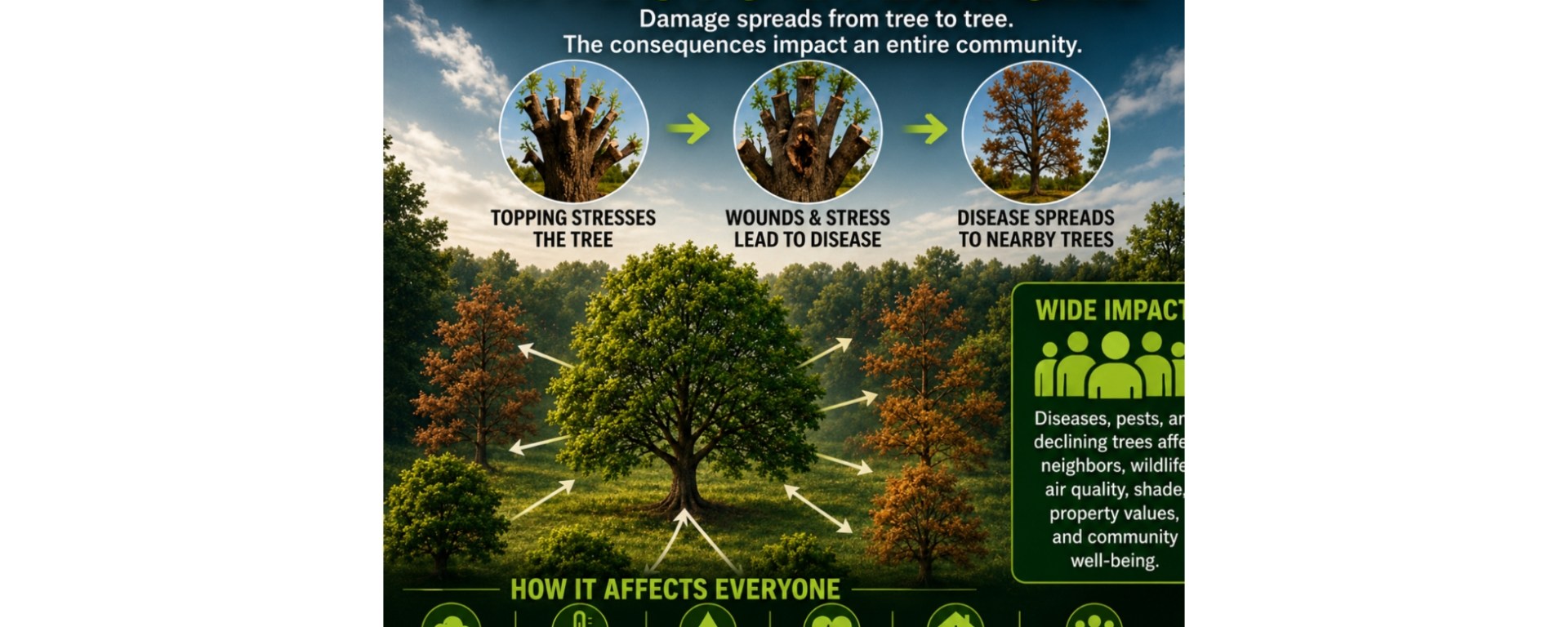
Repeated topping of trees results in substantial structural damage, including large wounds and the loss of significant portions of the canopy responsible for photosynthesis. This practice induces considerable physiological stress, weakening the tree’s natural defense systems and increasing susceptibility to pathogens that might otherwise pose minimal risk. As more trees become compromised, the prevalence of disease within a given area may rise due to the increased number of infection sources.
This comparison does not suggest that tree diseases function in the same manner as lung cancer. Rather, both scenarios demonstrate how disease can originate in a localized area and subsequently exert widespread effects. In humans, lung cancer can metastasize throughout the body. In forested and urban environments, certain tree diseases can propagate from one tree to another through established biological pathways, particularly when susceptible hosts are abundant. Maintaining tree health and minimizing unnecessary stress are essential for preserving their natural resistance to disease and supporting a resilient urban forest ecosystem.
A broader consideration emerges when examining societal responses to recognized health risks. Despite extensive evidence linking smoking to serious health consequences, including mortality and harm to both smokers and those exposed to secondhand smoke, it remains legally permitted, albeit regulated. Smoking is often defended as a matter of personal choice, while governments derive revenue through taxation and industries benefit economically. They did ban smoking in public spaces to prevent spread of lung disease to healthy individuals.but money is a significant factor and insistence it’s their right.
Similarly, if tree topping is widely acknowledged to harm tree health, facilitate disease, and diminish canopy cover that contributes to public well-being, it prompts reflection on why such practices continue to be allowed. The widespread acceptance of topping may contribute to the degradation of urban environments, with potential implications for human health, paralleling other tolerated yet detrimental practices.
Topping trees may offer short-term financial gains for a select group of property owners by increasing perceived property values by preserving views , but this benefit comes at a significant cost to the broader community. The reduction of tree canopy and the increased spread of disease among stressed, damaged trees have far-reaching consequences that extend beyond individual properties. Hundreds of scientific studies have demonstrated that healthy tree canopies play a critical role in supporting public health, including reducing respiratory and cardiovascular diseases, improving outcomes for pregnant women and unborn children, and enhancing overall mental well-being by mitigating conditions such as dementia and mental illness. When trees are compromised, these protective benefits diminish, leaving vulnerable populations, particularly seniors, at greater risk. Unlike smoking, which primarily affects the individual, the degradation of a community’s tree canopy impacts everyone who lives there. This raises an important question: if governments regulate smoking due to its health risks, why do they continue to permit the widespread practice of tree topping, which undermines the health and resilience of entire communities?
The answer is government derives property taxes from increased property taxes and individuals push that it’s their right due to HOA covenants.
Even more concerning is the possibility that management policies could inadvertently contribute to the spread of tree diseases into what was once a healthy tree canopy. Repeated tree topping is well known to stress trees, reduce their natural defenses, and create wounds that can make them more susceptible to certain diseases and insect pests. While decline often occurs gradually over many years, the long-term result can be an increase in unhealthy and dead trees. In Surfside, residents have observed an increase in dead trees, raising important questions about whether current tree management practices are supporting the long-term health and resilience of the community’s urban forest. Even worse they receive fines for dead trees caused by the policy leading to dead trees.
Numerous scientific studies have demonstrated that reducing tree canopy has measurable impacts on the health and well-being of an entire community. As canopy declines, communities lose important benefits such as cleaner air, cooler temperatures, improved mental health, reduced cardiovascular and respiratory risks, better stormwater management, and greater resilience to climate-related threats. The question to be answered is:
Why is tree topping still permitted in Pacific County despite its detrimental public health consequences when tree canopy declines as a result?
 Surfside Washington News