
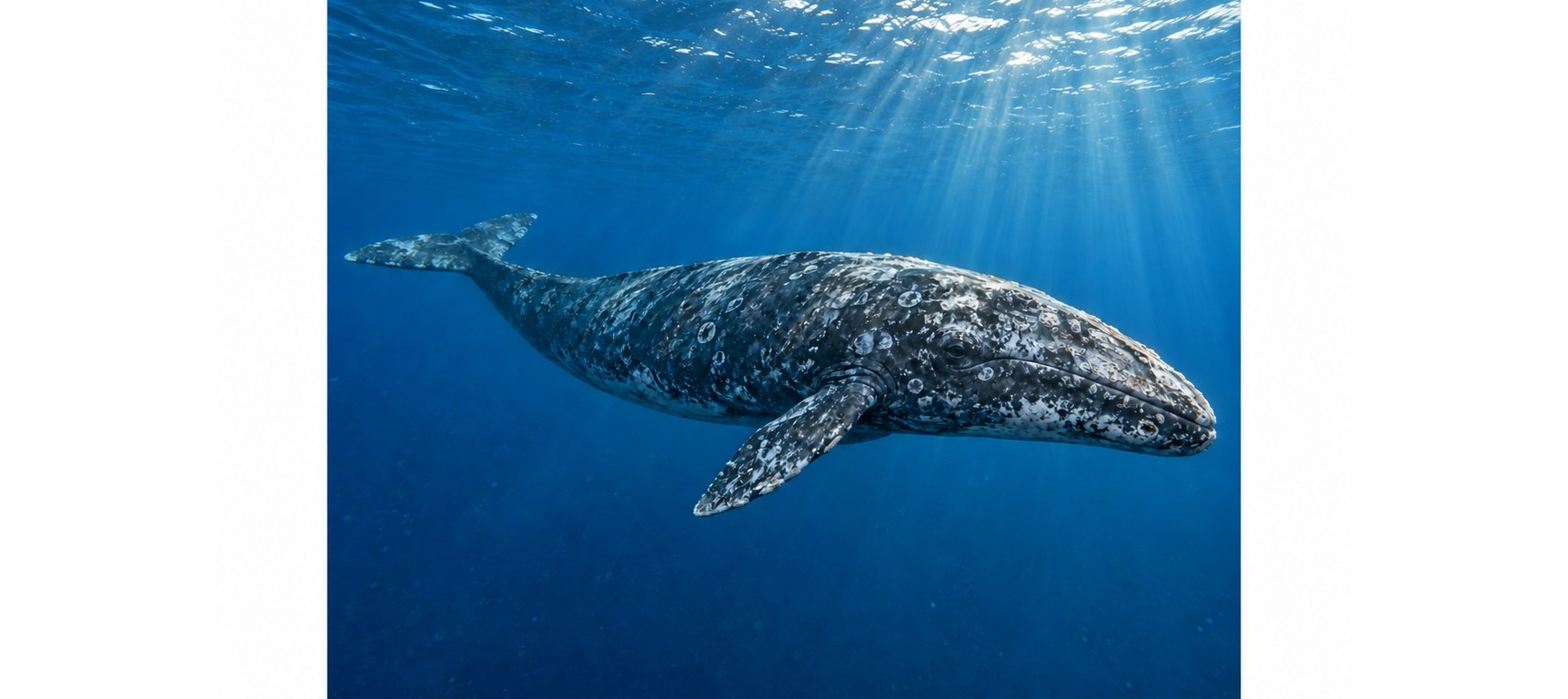
Continued gray-whale deaths across the North Pacific and a surge of poisoned sea lions along California’s coast are raising concerns about changing ocean conditions. Although the animals are being affected in different ways, both events demonstrate how warming water, shifting food supplies and harmful algae can disrupt marine ecosystems from California to Washington.
Gray Whales Face Growing Threats
Gray whales make one of the longest migrations of any mammal, traveling between breeding lagoons in Mexico and feeding grounds in Alaska and the Arctic. Their annual journey takes them directly past Oregon and Washington, where they can often be seen from coastal headlands.
Reports of dead and undernourished gray whales have continued along their migration route. Scientists believe dramatic changes in Arctic feeding areas may be playing a central role.
Gray whales feed heavily on small bottom-dwelling animals, particularly amphipods. The loss of sea ice and changes in algae, currents and seafloor communities may be reducing the availability or nutritional value of this food.
When whales cannot find enough food in the Arctic, they begin their southward migration with fewer energy reserves. Some arrive at breeding areas visibly thin, while others may not survive the journey.
Food shortages are not the only danger. Gray whales also face ship strikes, fishing-gear entanglements, underwater noise, pollution, oil spills and harmful algal toxins. Whales searching for food near busy ports and shipping lanes may face an especially high risk of collision.
Low calf production is another concern because females need substantial energy reserves to reproduce, give birth and nurse their young. Prolonged nutritional stress can affect both mothers and calves long after poor feeding conditions begin.
Sea Lions Poisoned Along California Coast
Farther south, California sea lions have been washing ashore sick, disoriented and suffering seizures during a surge of domoic acid poisoning.
The Marine Mammal Center has treated an unusually large number of affected sea lions, with many cases concentrated around Monterey and Santa Cruz counties. Rescue organizations have received hundreds of calls from people reporting animals in distress.
On September 7, a sick California sea lion died at Crissy Field Beach in San Francisco after witnesses saw it weaving its head and experiencing seizures. A rescue team attempted to transport the animal to the Marine Mammal Center’s hospital in Sausalito, but it died before treatment was possible. A necropsy was planned to confirm the cause.
Domoic acid is a powerful neurotoxin produced during certain blooms of the algae Pseudo-nitzschia. Sardines, anchovies and other small fish consume the algae and accumulate the toxin without necessarily appearing sick. Sea lions then receive a concentrated dose by eating large quantities of contaminated fish.
The toxin attacks the brain and heart, causing disorientation, tremors, seizures, abnormal behavior and sometimes heart or organ failure. Animals treated early may recover with fluids, uncontaminated food and anti-seizure medication, but repeated exposure can cause permanent brain damage.
Scientists emphasize that domoic acid occurs naturally and blooms can develop during both cold-water upwelling and unusually warm conditions. However, the Marine Mammal Center says outbreaks have become more intense, unpredictable and less seasonal.
Warmer ocean conditions can encourage some harmful algal blooms, while shifting currents and upwelling can concentrate the algae and the fish that consume it. The developing El Niño may increase marine heat and ecosystem disruption along parts of the West Coast, although scientists cannot attribute every individual bloom directly to El Niño or climate change.
Why This Matters to Washington
California’s sea-lion emergency does not mean an identical outbreak has reached Washington. It is nevertheless an important warning for the Pacific Northwest.
The same ocean currents and food webs connect California, Oregon and Washington. Domoic acid has previously forced closures of razor-clam, crab and shellfish harvests along the Washington coast. The toxin can also cause life-threatening amnesic shellfish poisoning in people who consume contaminated seafood.
Sea lions often become visible early victims because they eat large quantities of fish. Their illness can therefore serve as a warning that marine toxins are moving through the food web.
Gray whales provide another indication of broad environmental change. Whales seen off Long Beach, Cape Disappointment and the mouth of the Columbia River may have traveled thousands of miles through areas affected by warming water, diminished Arctic food supplies, algal toxins, vessel traffic and fishing gear.
These events reinforce the importance of monitoring ocean temperatures, harmful algae, shellfish toxins, whale nutrition and marine-mammal strandings across the entire West Coast.
What Beachgoers Should Do
People should never touch, feed or attempt to push a stranded marine mammal back into the water. Sick animals may behave unpredictably, and close contact can endanger both the animal and the observer.
Keep people and dogs at least 50 yards—or approximately 150 feet—away. Record the location, take photographs from a safe distance and report the animal to trained responders.
Stranded, injured or dead marine mammals on the Washington or Oregon coast can be reported to the NOAA West Coast Marine Mammal Stranding Network at 1-866-767-6114.
The continuing gray-whale deaths and sea-lion poisonings show that the Pacific is experiencing significant environmental pressure. What happens along California’s beaches may provide an early warning of changes that eventually affect the wildlife, fisheries and coastal communities of Oregon and Washington.
Sources: NOAA Fisheries, The Marine Mammal Center, KQED, and ABC7 San Francisco.
 Surfside Washington News