
October 6, 2026 | Surfside Washington News
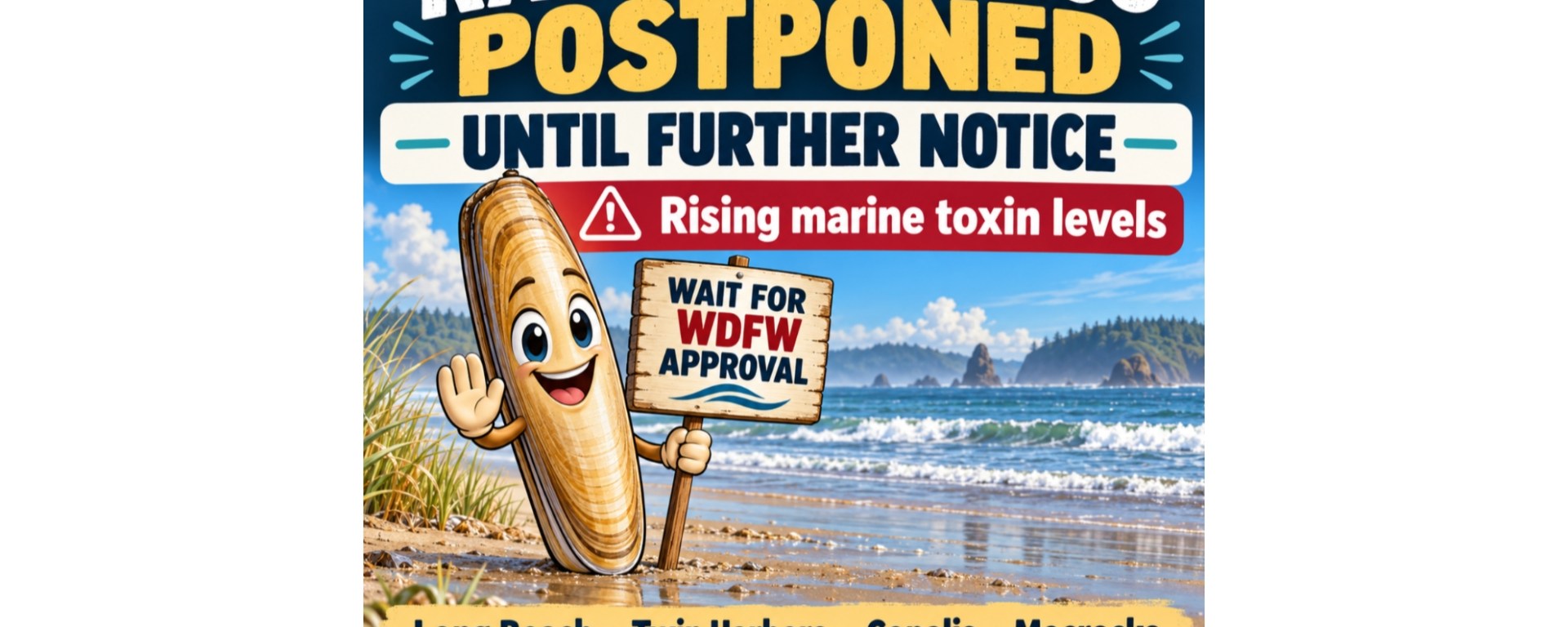
Razor clam diggers on the Long Beach Peninsula will have to wait before heading out with their shovels and clam guns. The Washington Department of Fish and Wildlife announced October 6 that the recreational razor clam season’s planned opening is postponed until further notice because of rising marine toxin levels.
The first digging series had been tentatively scheduled for October 9–14, with opportunities at Long Beach, Twin Harbors, Copalis and Mocrocks. Those openings are now on hold, and WDFW has not announced a replacement opening date.
Why the digs were postponed
Recent testing found that domoic acid levels in razor clams are increasing or have exceeded Washington Department of Health guidelines for safe consumption.
According to WDFW coastal shellfish biologist Bryce Blumenthal, the toxin bloom is moving north along the coast. Samples at Long Beach, Twin Harbors and Oregon’s Clatsop Beach have shown rapidly rising levels, including results high enough to require closures. The trend is also beginning to appear north of Grays Harbor Bay.
WDFW is pausing openings at all four beaches as a precaution while staff continue collecting samples and working with state health officials.
Domoic acid is a naturally occurring toxin produced by certain marine algae. Eating shellfish containing sufficient amounts can cause serious illness and can be fatal. The postponement is a public health measure based on testing of the clams themselves.
What this means for Surfside and Ocean Park
For residents and visitors in Surfside, Ocean Park and the rest of the Long Beach Peninsula, the announcement means the October 9–14 tentative schedule should no longer be treated as an available digging opportunity.
Long Beach’s razor clam management area extends from the Columbia River north to the mouth of Willapa Bay, encompassing the peninsula’s ocean beaches.
Wait for an explicit WDFW opening announcement before digging. A low tide or an earlier tentative date does not authorize a harvest, and digging on a closed beach can result in a fine.
What must happen before beaches reopen?
WDFW staff will continue collecting razor clams for marine toxin testing. Before a beach can reopen, DOH requires two samples taken seven to 10 days apart with domoic acid levels below its guideline.
That testing requirement means reopening depends on sustained acceptable results. WDFW will announce new digging opportunities when testing shows it is safe to proceed.
The agency had originally proposed 40 tentative digging days between October 9 and December 27. Those dates were always subject to marine toxin testing and final approval; they are not guaranteed openings.
Clam populations vary by beach
The delay comes despite above-average razor clam populations at Long Beach and Twin Harbors, according to WDFW’s summer 2026 stock assessment.
Copalis and Mocrocks have fewer clams than in recent years. Once digging resumes, those two beaches are expected to offer fewer harvest days because allowable harvest is tied to population size.
An abundant clam population, however, does not establish that the clams are safe to eat. Marine toxin testing remains a separate requirement for opening any beach.
Check official updates before heading out
Conditions and opening decisions can change. Use these official resources when planning a trip:
WDFW razor clam schedules and beach information
https://wdfw.wa.gov/fishing/shellfishing-regulations/razor-clams
Latest domoic acid levels at coastal beaches
https://wdfw.wa.gov/fishing/basics/domoic-acid/levels
WDFW information about domoic acid
https://wdfw.wa.gov/fishing/basics/domoic-acid
Washington Department of Health recreational shellfish information
https://doh.wa.gov/community-and-environment/shellfish/recreational-shellfish
Source: Washington Department of Fish and Wildlife’s October 6, 2026 announcement, “Razor clam digs on coastal beaches postponed until further notice due to spike in marine toxins.”

