
Falling trees often receive dramatic attention after storms, yet statistically they represent one of the rarest causes of accidental death. When compared with common hazards people routinely accept — such as driving, home fires, or falls — the risk from trees is extraordinarily small.
Understanding relative risk helps put public safety decisions into perspective.
Risk of Death From a Falling Tree
U.S. injury surveillance data (Consumer Product Safety Commission, National Weather Service incident reports, and insurance analyses) estimate:
- 100–200 deaths per year in the United States from falling trees or large branches.
- Annual individual risk:
About 1 in 2–3 million per year
Most occur during severe weather and involve dead or structurally compromised trees, not healthy ones. But even with trees that are dead the number of trees remain small. With 300 deaths a year, even though many may be compromised the risk is negligible.
Someone dying from a tree falling in their lifetime in the US over a year
As an individual it is 1 death per 2,000,000–3,300,000 people annually in the US.
Comparing Major Everyday Risks
Below is a comparison using approximate U.S. annual mortality risks. Hazard Approx. Annual Odds of Death Relative Risk vs Falling Tree
Heart disease 1 in 400 ~5,000× higher
Cancer 1 in 500 ~4,000× higher
Car accident 1 in 8,000 ~300× higher
Accidental fall (home/elderly) 1 in 5,000 ~400× higher
Drug overdose 1 in 6,000 ~350× higher
Home fire 1 in 100,000 ~20–30× higher
Drowning 1 in 90,000 ~25× higher Bicycle accident 1 in 140,000 ~15× higher
Lightning strike 1 in 15 million Lower than tree risk
Falling tree/branch1 in 2–3 million Baseline
Overall Risk of Sports-Related Death
Across all recreational and organized sports in the United States:
Estimated annual sports-related deaths: ~8,000–12,000
(includes cardiac events, trauma, heat illness, and accidents)
Much of this number reflects underlying medical conditions, especially heart disease in adults over 35.
Average annual risk: About 1 in 30,000–50,000 participants per year
Home Fires: A Much Larger Everyday Risk
Home fires are a useful comparison because they are a familiar residential hazard.
- About 2,500–3,000 U.S. deaths annually
- Risk roughly 20–30 times higher than dying from a falling tree.
Common causes:
- Cooking accidents
- Electrical faults
- Heating equipment
- Smoking materials
Yet people rarely advocate removing kitchens or heating systems — instead society focuses on risk management (smoke alarms, building codes).
🚗 Driving: The Risk We Accept Daily
Motor vehicle crashes cause:
- 40,000+ deaths annually in the U.S.
- Risk about 300 times greater than tree-related fatalities.
Driving is normalized because its benefits outweigh perceived risk — a useful analogy when evaluating environmental risks like trees.
🪜 Falls: The Most Overlooked Household Danger
Falls are one of the leading accidental killers, especially among older adults:
- 50,000+ deaths per year
- Hundreds of times more dangerous than trees.
Most occur:
- On stairs
- In bathrooms
- From ladders or roofs
Ironically, routine home maintenance activities pose far greater danger than nearby trees.
Overall Risk of Sports-Related Death
Across all recreational and organized sports in the United States:
Estimated annual sports-related deaths: ~8,000–12,000
(includes cardiac events, trauma, heat illness, and accidents)
Much of this number reflects underlying medical conditions, especially heart disease in adults over 35.
Average annual risk: About 1 in 30,000–50,000 participants per year
Choking While Eating
About 5,000 deaths/year in the U.S.
Common foods involved:
Meat
Bread
Hot dogs (children)
Extreme Heat — The Silent Killer
Average U.S. deaths per year: ~1,200–2,000+
(Heat waves can push this much higher in extreme years.)
Heat is consistently the leading weather-related cause of death in the U.S.
Why Tree Deaths Feel More Common Than They Are
Psychologists call this the availability bias — rare dramatic events receive heavy media coverage, making them feel frequent.
Tree incidents tend to:
- Occur suddenly
- Involve storms
- Produce striking imagery
But statistically, they remain extremely rare.
🌲 Healthy Trees vs Hazard Reality
Risk studies show:
- Healthy trees: extremely low failure probability.
- Dead or damaged trees: primary contributors to incidents. Incidents are still minimal.
- Storm exposure: major driver of nearly all fatalities. But still extremely rare.
Urban forestry research also finds tree canopy can reduce overall risk by:
- Slowing wind speeds
- Reducing flooding
- Stabilizing soils
- Lowering heat-related deaths
- Homes in Western Washington often have huge trees and canopies that surround homes but tree deaths are extremely rare.
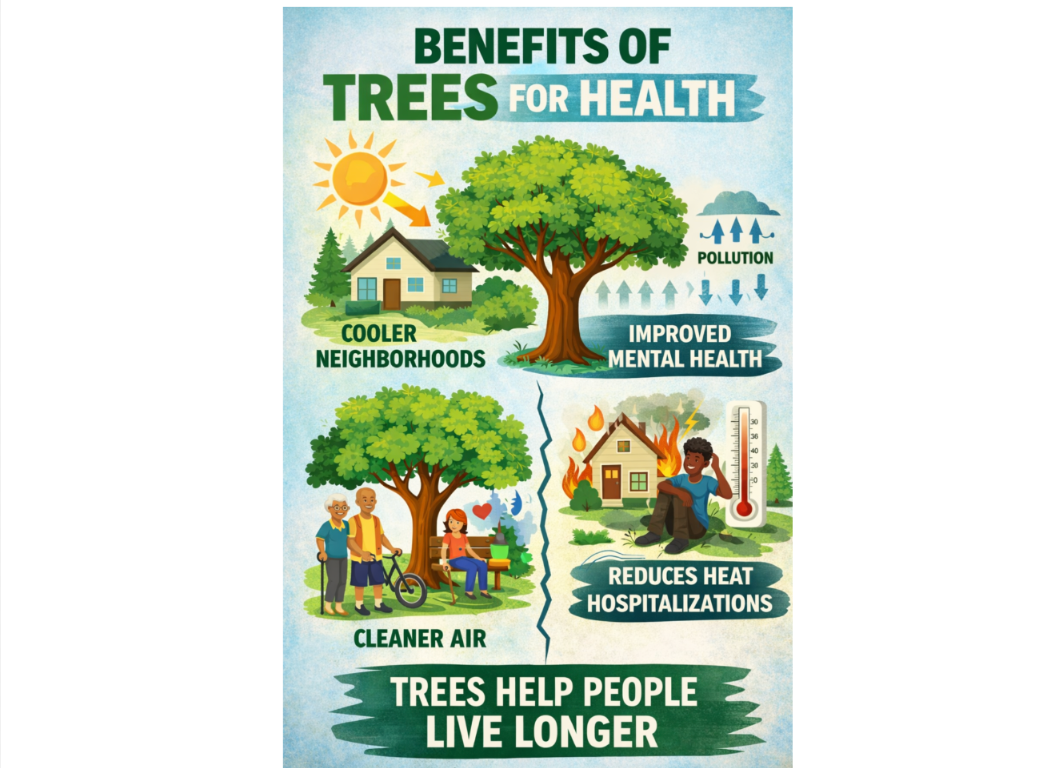
Trees protect against heat related deaths and flooding and save lives
Urban forestry plans adopted by many cities recognize that trees are not simply aesthetic features—they are critical public health infrastructure. Across the United States, municipalities such as Seattle, Portland, Bellevue, and Tacoma include urban canopy goals in their climate and health strategies because trees measurably reduce heat-related illness, flooding, and air pollution. Tree canopy can lower neighborhood temperatures by 5–10°F during heat waves, which directly reduces heat stress and heat-related mortality, particularly among seniors and vulnerable residents. Trees also intercept stormwater and stabilize soil, helping reduce flooding during increasingly intense rainfall events. A mature tree can capture hundreds to thousands of gallons of rainwater annually, easing pressure on stormwater systems and protecting homes and roads from flood damage.
The health benefits extend beyond temperature and water management. Urban trees filter airborne pollutants such as particulate matter, ozone, and nitrogen oxides, improving respiratory health and lowering rates of asthma and cardiovascular disease. Studies also show that greener neighborhoods are associated with reduced stress, improved mental health, and longer life expectancy, especially for older adults who benefit from shaded walkways, cleaner air, and restorative natural environments. For seniors and people with chronic respiratory conditions, increased tree canopy can significantly improve quality of life by reducing heat exposure and improving air quality. For these reasons, many city forestry plans quantify tree canopy as a public health investment—protecting residents from climate impacts while creating healthier, safer communities.
Lifetime Risk Perspective
Over an average lifetime:
- Chance of dying in a car crash: ~1 in 100
- Chance of dying in a house fire: ~1 in 1,500
- Chance of dying from a falling tree: ~1 in 40,000–60,000
The Big Picture
Falling trees are:
- Real hazards under specific conditions
- Primarily associated with storms and dead trees
- One of the least likely accidental causes of death
Meanwhile, society routinely accepts far greater risks every day — driving, climbing ladders, cooking, or even walking down stairs.
The evidence suggests that effective safety policy focuses not on removing trees broadly, but on identifying and managing genuinely hazardous trees, much like fire prevention focuses on alarms and wiring rather than eliminating homes themselves. Even still the statistics show minimal impact even with hazardous trees.

