
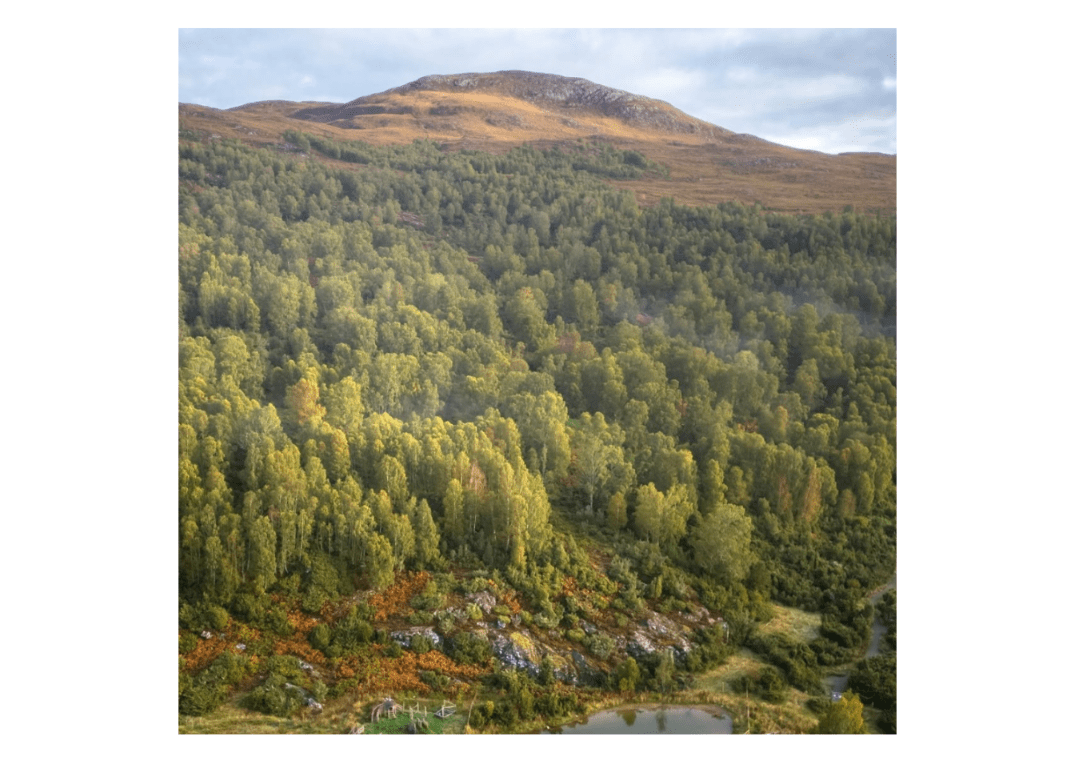
Scotland offers one of the most compelling modern examples of how intentional forest planting and long-term stewardship can rebuild an entire ecosystem. What was once a heavily deforested landscape—reduced over centuries by logging, agriculture, and grazing—has become the focus of one of Europe’s most ambitious reforestation efforts: the restoration of the Caledonian Forest.
A Land Once Covered in Forest
Thousands of years ago, much of Scotland was blanketed by dense native woodland. This ancient ecosystem, known as the Caledonian Forest, stretched across the Highlands and supported a rich web of wildlife.
By the early 20th century, however, less than 1% of that forest remained—a stark reminder of how quickly ecosystems can collapse when natural systems are not protected.
The Turning Point: Reforestation Begins
In the late 20th century, organizations like Trees for Life and Forestry and Land Scotland began restoring native woodland using a mix of planting and natural regeneration.
Their strategy was simple—but powerful:
- Restore native species
- Protect young trees from overgrazing
- Let forests evolve naturally over time
Dundreggan: A Forest Reborn
At Dundreggan Estate, led by Trees for Life, degraded land is transforming into a thriving ecosystem.
You can visit this amazing forest.
https://visitdundreggan.co.uk/
But the real story isn’t just that trees are growing again—it’s what happens after the forest returns.
The End Result: What a Restored Forest Actually Delivers
When a forest is allowed to fully recover, the benefits extend far beyond the trees themselves. Scotland provides a real-world example of what “success” looks like. Four thousand species returned.
1. Wildlife Returns—and Stabilizes the Ecosystem
As forests regenerate:
- Birds, insects, and mammals return naturally
- Predator-prey relationships begin to rebalance
- Pollinators increase, supporting plant diversity
Species that depend on mature forests—once absent—begin to reappear. This creates a self-sustaining ecological cycle, where the forest no longer needs constant human intervention.
2. Water Systems Improve Dramatically
Healthy forests act like natural water infrastructure:
- Tree roots absorb and slow rainfall
- Forest floors filter pollutants
- Sediment runoff into rivers and lakes decreases
The result:
- Clearer water
- Reduced flooding
- Lower nutrient loading, which directly reduces algae blooms
In Scotland, restored forest areas show improved watershed stability—something directly relevant to lake and canal systems in coastal communities.
3. Soil Becomes Rich, Stable, and Alive
In degraded landscapes, soil is often compacted and lifeless. Forest restoration reverses that:
- Leaf litter builds organic matter
- Fungi and microbes return
- Soil retains moisture and nutrients
This creates a living soil system that supports long-term forest growth and resilience.
4. Climate and Air Quality Benefits
Mature forests provide measurable climate benefits:
- Carbon is captured and stored long-term
- Air pollutants are filtered
- Local temperatures are moderated
Forests create cooler, more stable microclimates, reducing heat stress and improving air quality for nearby communities.
5. Human Health and Quality of Life Improve
The benefits extend directly to people:
- Reduced stress and improved mental health
- More recreational opportunities (walking, wildlife viewing)
- Increased property appeal and community value
People living near restored forests consistently report higher quality of life and stronger connection to place.
6. Economic and Community Benefits
A restored forest also creates long-term economic value:
- Eco-tourism and recreation industries grow
- Land values stabilize or increase
- Maintenance costs drop compared to degraded land
Instead of ongoing expenses to “manage problems,” forests become self-sustaining assets.
A Direct Policy Contrast: Scotland vs. Surfside
The contrast with communities like Surfside highlights why this matters.
In areas where trees are allowed to mature:
- Wildlife thrives—migratory birds, deer, and native species return
- Lakes and canals benefit from natural filtration
- The environment becomes more stable and resilient
Where canopy is reduced:
- Habitat disappears
- Runoff increases
- Nutrients flow into lakes
- Algae blooms and fish die-offs become more likely
The Real Lesson
Scotland shows the full arc:
Plant trees → allow them to mature → ecosystems recover → people benefit.
This is the missing piece in many local policies—not just planting trees, but allowing them to become fully functioning forests.
Conclusion
The success of Scotland’s reforestation is not theoretical—it is visible, measurable, and repeatable.
It demonstrates that when policy aligns with nature:
- Wildlife returns
- Water systems heal
- Communities thrive
And most importantly:
The forest becomes an asset that grows in value over time—ecologically, economically, and socially.
 Surfside Washington News