
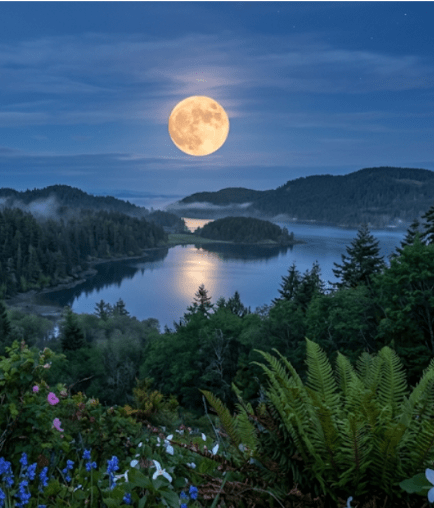
Tonight, the night sky will be illuminated by the Flower Moon, the full moon of May. In 2026, it occurs on May 1, marking a bright and symbolic beginning to the month and the peak of spring’s transformation.
Where the Name “Flower Moon” Comes From
The name “Flower Moon” comes from early North American traditions, especially among Indigenous peoples and later colonial settlers. It reflects what naturally happens in May—an explosion of blooming wildflowers across landscapes.
These names were later documented and popularized through sources like the Farmer’s Almanac full moon naming tradition, which preserved seasonal naming systems used long before modern calendars.
Full moon names served a practical purpose. They helped communities track time and seasonal changes for planting, harvesting, fishing, and travel. Each name reflected what was happening in the natural world at that moment.
A Moon of Growth and Renewal
The Flower Moon represents a period of:
- Rapid plant growth
- Increasing daylight
- Expanding ecosystems
In regions like the Pacific Northwest, May is when trees reach full leaf canopy, wildflowers spread across open areas, and wildlife activity intensifies. It is a time when nature is fully active and visibly thriving.
Why Tonight’s Flower Moon Matters
Tonight’s full moon is more than just a lunar phase. It offers a chance to observe the natural cycle in real time. The moon will appear especially bright, often casting visible shadows, and may look larger near the horizon due to a visual effect known as the moon illusion.
Clear skies can make this one of the most visually striking full moons of the year.
A Reminder of Natural Balance
The Flower Moon symbolizes abundance, but also balance. It reflects a moment when ecosystems are functioning as they should—plants growing, trees supporting life, and natural systems working together.
At a time when environmental pressures are increasing, the Flower Moon serves as a reminder of the importance of preserving healthy ecosystems, including forests and tree canopy, which support both environmental and human health.
Take a Moment to Look Up
Tonight, stepping outside to observe the Flower Moon connects you to a tradition that stretches back generations. It is a simple but powerful way to experience the rhythm of the natural world—one that continues, unchanged, above us.
 Surfside Washington News