
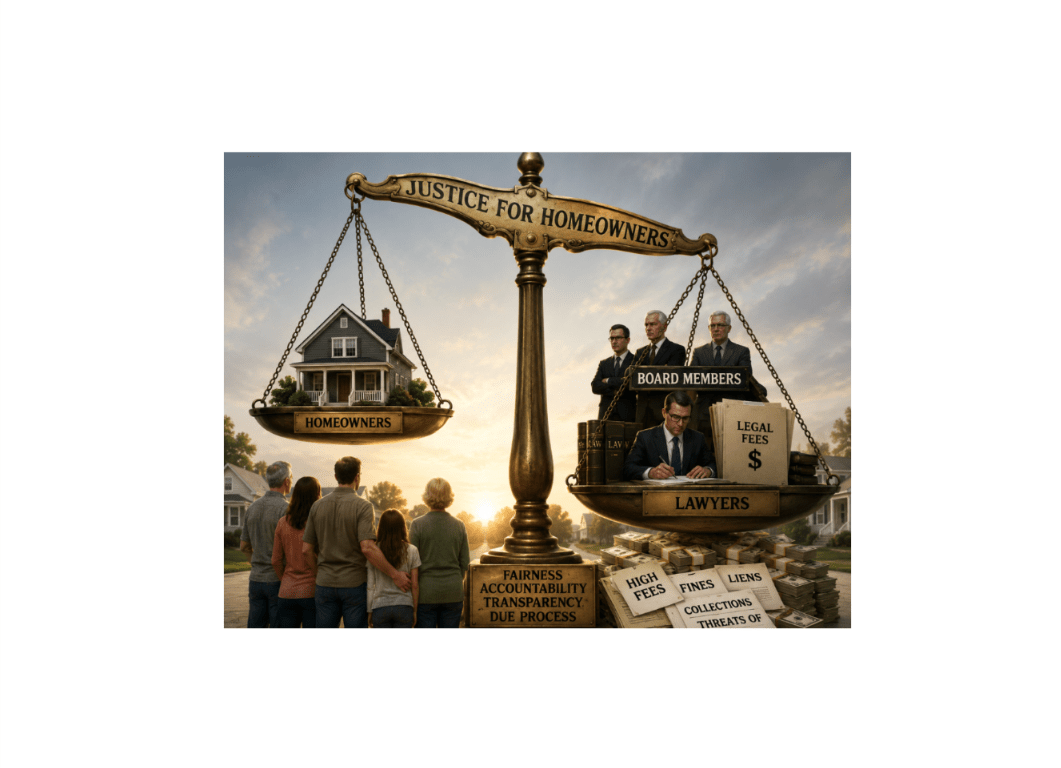
Surfside HOA and the Problem With Washington’s Weak HOA Oversight Laws
Across the country, states are beginning to recognize that homeowners associations wield enormous power over residents with very little independent oversight. In Georgia, lawmakers recently passed sweeping HOA reforms designed to protect homeowners from abusive fines, aggressive collections, legal intimidation, and unjust foreclosures.
But in Washington, many homeowners say the system still heavily favors HOA attorneys, collection firms, and association boards rather than the residents who actually fund the communities.
For residents in communities like Surfside, the issue is not theoretical. It affects people’s homes, finances, voting rights, mental health, and ability to challenge board decisions without fear of retaliation or escalating legal costs.
System With Little Real Oversight
One of the biggest complaints from homeowners is that Washington lacks a meaningful independent state oversight agency for HOAs.
Unlike government agencies, HOAs can:
Fine residents
Place liens on homes
Foreclose on property
Restrict property use
Control elections and records access
Yet homeowners often have nowhere affordable to turn when disputes arise.
Most conflicts ultimately force residents into costly litigation, where the HOA commonly uses association funds to hire attorneys while individual homeowners must pay out of pocket to defend themselves.
Critics argue this creates an uneven system where boards and attorneys hold disproportionate power over ordinary residents, retirees, and families.
Georgia’s new legislation directly addresses this issue by creating:
Mandatory HOA registration with the Secretary of State
A state complaint and hearing process for homeowners
Authority for the state to suspend or revoke HOA powers
Public filing requirements for HOA financial information and officers
Supporters say these reforms create accountability mechanisms that Washington homeowners currently lack.
The Business of Fines and Legal Fees
Many homeowners believe the current structure incentivizes escalation rather than resolution.
A small dispute can quickly evolve into:
Violation notices
Daily fines
Attorney demand letters
Collection fees
Liens
Threats of foreclosure
By the time a homeowner attempts to challenge the matter, legal fees may already exceed the original dispute.
Critics argue that attorneys and collection firms financially benefit from prolonged enforcement battles, while homeowners absorb the emotional and financial damage.
Residents increasingly question whether the HOA industry has become too dependent on legal enforcement as a revenue-generating mechanism rather than focusing on cooperation, mediation, transparency, and community well-being.
Georgia’s reforms attempt to curb some of these practices by:
Requiring judicial review of attorney fees for “reasonableness”
Requiring itemized attorney fee notices
Providing homeowners a 30-day cure period before attorney fees escalate
Preventing HOAs from rejecting payments
Requiring payments to first apply toward dues rather than fines
Supporters argue these changes help prevent legal fees from spiraling out of control and reduce the ability of associations to use technical accounting tactics to push homeowners further into delinquency.
The Legal System as a Tool of Intimidation
Another growing concern among homeowners is the enormous imbalance of power created by the HOA legal system itself.
In many HOA disputes, the association can immediately hire attorneys using homeowner dues and association funds, while individual residents must personally finance their own legal defense. For ordinary homeowners, simply retaining an attorney can cost tens of thousands of dollars upfront, while fully litigating a case can easily escalate into the six-figure range.
Critics argue this creates a fundamentally unequal system where the financial burden itself becomes a weapon.
For many residents — especially seniors, retirees, disabled homeowners, and working families — the threat of massive legal costs is enough to force compliance even when they believe the HOA is wrong. Homeowners may feel pressured to remain silent, abandon legitimate complaints, or avoid questioning board decisions simply because they cannot afford the financial risk of fighting back.
Residents increasingly argue that this environment allows legal intimidation to become part of HOA governance itself.
Instead of encouraging open discussion, accountability, and transparency, critics say the system can create fear among homeowners who worry that challenging board actions may trigger:
Expensive attorney involvement
Escalating legal threats
Liens and collections
Court actions
Financial devastation through prolonged litigation
Because HOA attorneys are often paid regardless of outcome, critics argue the current structure can incentivize conflict escalation rather than resolution or mediation.
This imbalance becomes even more troubling when homeowners are effectively funding both sides of the fight — paying their own attorney while also indirectly funding the HOA’s legal team through dues and assessments.
Many reform advocates argue that no homeowner should have to risk bankruptcy or financial devastation simply for questioning governance, requesting transparency, disputing fines, or exercising free speech within their own community.
Georgia’s legislation addresses part of this concern by automatically pausing collection actions when a homeowner files a formal complaint with the state hearing system. Supporters say this creates breathing room for disputes to be heard without homeowners immediately facing escalating legal pressure.
Foreclosure Over Small Disputes
One of the most controversial issues nationwide involves HOA foreclosure authority.
Many reform advocates argue no homeowner should risk losing their property over:
Minor covenant violations
Disputed fines
Excessive legal fees
Administrative conflicts
Yet homeowners across the country have faced foreclosure threats over relatively small debts that ballooned due to attorney fees and collection costs.
Critics of Washington’s current framework argue the laws still provide insufficient protection against disproportionate enforcement actions.
The concern is especially serious for:
Seniors on fixed incomes
Disabled residents
Families facing medical hardships
Residents unfamiliar with complex legal processes
For many homeowners, simply defending themselves legally becomes financially impossible.
Georgia’s reforms specifically address foreclosure concerns by:
Raising minimum foreclosure thresholds
Excluding fines and fees from foreclosure calculations
Extending foreclosure notice periods to 60 days
Prohibiting accelerated future assessments
Requiring more formal notice procedures
Supporters say these reforms reduce the risk of homeowners losing property over relatively small or disputed debts.
Surfside and Growing Resident Frustration
In Surfside, ongoing disputes regarding tree enforcement, fines, governance, election transparency, and property rights have intensified broader concerns about HOA accountability.
Residents have questioned:
The fairness of enforcement practices
Escalating fines
Election procedures
Access to records
The role of attorneys in governance disputes
Whether policies harming trees and property values are being enforced without adequate accountability
Critics also argue that some enforcement policies create contradictions where HOA rules themselves contribute to property damage or environmental harm, yet homeowners are later penalized for the consequences.
The growing frustration reflects a larger national debate: How much power should private associations have over homeowners without independent state oversight?
Georgia’s Reform Effort Shows Another Path
The reforms recently passed in Georgia demonstrate that states can place limits on HOA power while still allowing associations to function.
The Georgia law includes:
State registration requirements
Independent complaint systems
Higher foreclosure thresholds
Limits on attorney fee abuse
Payment protections
Expanded homeowner rights
Greater financial transparency
Fiduciary duty requirements for board members
Enhanced records access rights
Protections against discriminatory enforcement
Limits on amendment thresholds that prevent homeowner participation
Supporters believe those reforms restore balance between associations and homeowners.
Many Washington homeowners are now asking why similar protections do not exist here.
The Larger Question Facing Washington
At its core, the debate is about fairness, accountability, and the right of homeowners to participate in their communities without fear of financial retaliation.
Most homeowners support reasonable community standards. But many argue the system becomes unjust when:
Legal costs spiral out of control
Boards face little oversight
Homeowners cannot realistically challenge decisions
Attorneys profit from prolonged disputes
Residents fear retaliation for speaking out
Communities function best when trust exists between residents and leadership.
Without transparency, accountability, affordable dispute resolution, and meaningful homeowner protections, that trust begins to erode.
And increasingly, homeowners across Washington are beginning to ask whether the current HOA system protects communities — or protects the industries built around enforcement.

