
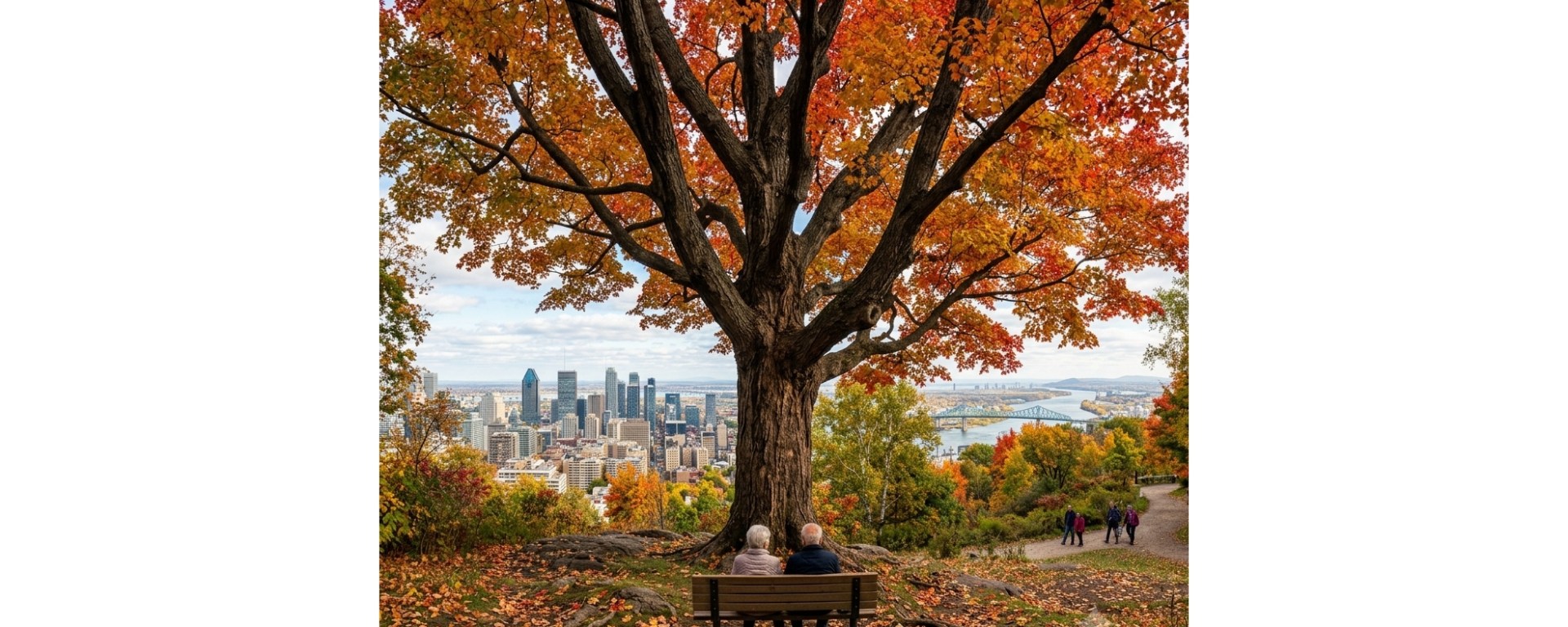
What if we stopped viewing trees as obstacles to development or simply part of the landscape and instead recognized them for what they truly are—living systems that make life on Earth possible?
That is exactly what one Canadian community has done.
The town of Terrasse-Vaudreuil, about 40 miles west of Montreal, has officially recognized trees as living beings with legal rights. In a unanimous vote, the town adopted the Universal Declaration of the Rights of the Tree, declaring that trees have “the right to life, natural growth, integrity, and regeneration.”
Mayor Michel Bourdeau explained the reasoning: “A tree is like a human being. It breathes, it lives, it takes in water. It protects us from all sorts of things.”
While some may see this as symbolic, it reflects a growing understanding of the critical role trees play in supporting both nature and human civilization.
Trees are among the most important living organisms on Earth. For more than 380 million years, they have shaped our planet by producing oxygen, absorbing carbon dioxide, storing carbon, filtering air pollution, protecting water quality, preventing erosion, and moderating temperatures. They create habitat for millions of species while providing food and shelter for wildlife.
For people, a did healthy tree canopy is directly connected to healthier communities. Scientific research has shown that mature trees improve air quality, reduce heat, lower stress, encourage physical activity, improve mental health, reduce cardiovascular disease, and can even contribute to longer life expectancy. They also reduce flooding by absorbing rainfall, stabilize soils, and increase property values.
Terrasse-Vaudreuil understands that trees are also essential infrastructure. After experiencing repeated flooding, the community recognized that protecting mature trees is one of the most effective ways to improve climate resilience. Their resolution requires a review of local bylaws to strengthen tree protections and ensure trees removed for legitimate reasons are properly replaced.
The decision is part of the growing global “Rights of Nature” movement, which argues that ecosystems deserve legal protections because human well-being depends upon healthy natural systems. Around the world, rivers, forests, and other ecosystems are increasingly being recognized as more than property—they are living systems that sustain communities.
Perhaps the greatest lesson from this small Canadian town is that trees are not simply decorations or scenery. They are among the planet’s dominant life forms, quietly supporting nearly every aspect of life on Earth. Every mature tree represents decades of environmental service that cannot be replaced overnight.
As communities face increasing challenges from climate change, flooding, extreme heat, declining biodiversity, and worsening air quality, protecting mature trees becomes not just an environmental goal but a public health priority.
The question is no longer whether trees have value. Science has already answered that.
The real question is whether communities will recognize that protecting healthy tree canopy is one of the wisest investments they can make for wildlife, future generations, and their own quality of life.
Terrasse-Vaudreuil has chosen to answer that question with action. Perhaps many more communities will follow.

