
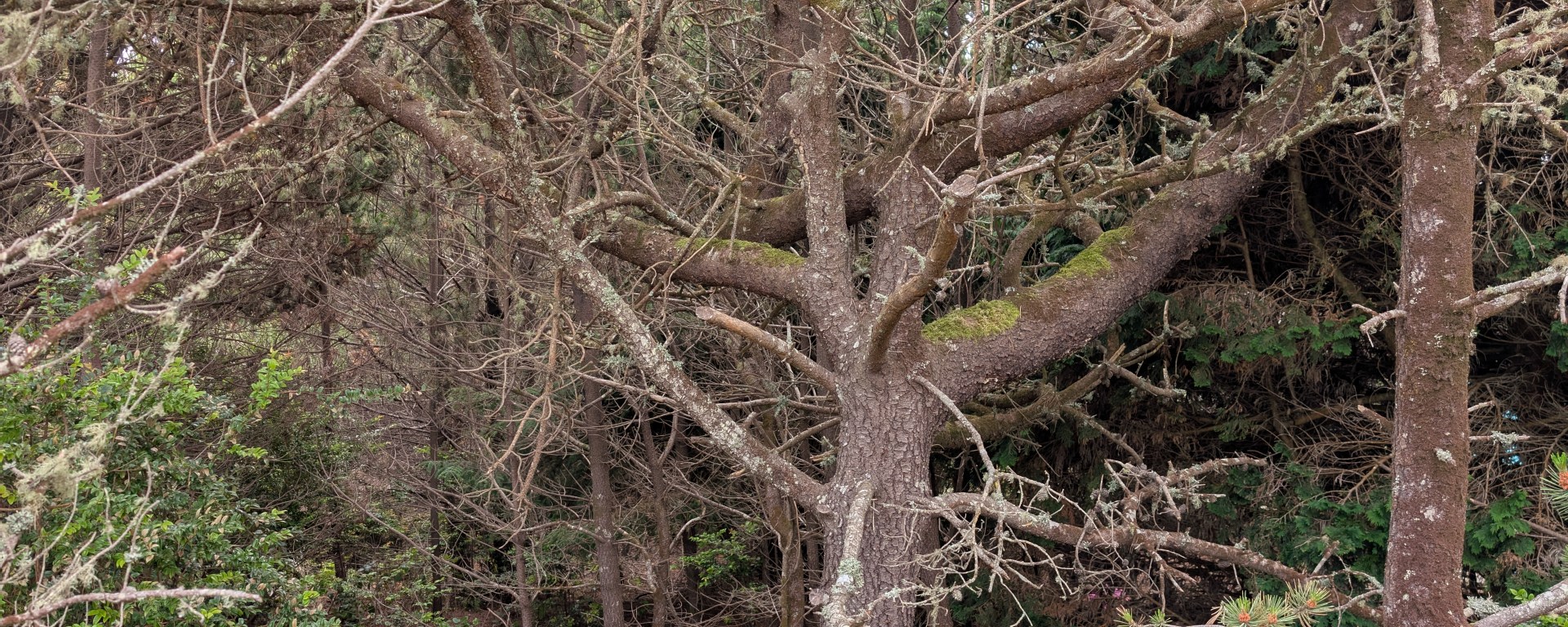
One of the most important responsibilities of any HOA board is to adopt policies that benefit the entire community, not just one group of property owners. Good policies should improve public health, protect the environment, preserve property values, and leave our community stronger for future generations. Just as importantly, they should never create unnecessary harm for another group of residents.
Surfside’s tree height restrictions were established in 1965. At the time, little was known about climate change, the health benefits of urban forests, or the critical role tree canopy plays in protecting communities. The scientific knowledge available today simply did not exist.
The world has changed dramatically over the past sixty years.
Today we face increasing flooding, stronger atmospheric rivers, hotter summers, changing weather patterns, sea level rise, and greater environmental stress. These threats are well documented throughout Washington State and across the nation. In response, cities and counties have spent decades expanding urban forests rather than reducing them because healthy tree canopy has become recognized as essential infrastructure.
Why would an HOA pursue policies that reduce environmental protections at a time when science recommends expanding tree canopy? I believe the Board’s continued support for tree height enforcement, efforts to reduce riparian buffers from 25 feet to 15 feet, and advocacy to classify Surfside’s lakes and canals as drainage ditches rather than protected waterways all move in the wrong direction. In my view, these actions would expose more shoreline trees to removal or topping, reduce the natural protections around our lakes, and weaken the environmental safeguards that benefit both residents and wildlife. At a time when Surfside has experienced declining tree canopy, dead trees, algae blooms, and fish kills, I believe our focus should be on restoring and protecting our natural infrastructure—not reducing the protections that help keep our community healthy.
Trees do far more than provide beauty. They absorb stormwater, reduce flooding, filter pollutants before they reach lakes and streams, improve air quality, cool neighborhoods during heat waves, store carbon, support wildlife, and improve both physical and mental health. Hundreds of scientific studies have documented these benefits.
Washington communities have responded accordingly. Urban forestry programs throughout the state encourage trees to grow to maturity, restore lost canopy, and work toward approximately 30 percent tree canopy because science shows healthier communities result from healthier forests.
Surfside should be moving in that same direction.
Washington’s environmental planning laws also recognize that vulnerable communities deserve additional protection. Under recent planning requirements, local governments are encouraged to consider neighborhoods with larger senior populations, lower incomes, and greater health vulnerabilities when making climate resilience decisions.
Surfside fits many of those characteristics. We have one of the oldest populations in Washington. Many residents live on fixed incomes. Many have chronic health conditions. That makes protecting our natural infrastructure even more important. But residents of the lake and canals should write Pacific county to oppose these policies.
Policies that continually reduce tree canopy while increasing environmental stress deserve careful reexamination. Pacific county and our board should not pass laws that harm Surfside’s vulnerable population.
Equally concerning is the financial burden placed on residents. When policies contribute to declining tree health, homeowners can ultimately face the costs of removing dead trees, replacing them, and paying enforcement fines. Seniors living on Social Security or limited retirement incomes often have little ability to absorb these unexpected expenses. So.they make the decision to down trees.
Good policy should solve problems—not create new ones.
Throughout Washington, agencies acknowledge that climate threats are increasing. Pacific County itself has recognized flooding, atmospheric rivers, heat, and other climate-related risks in its planning efforts. If these threats are real—and the science indicates they are—then our local policies should strengthen the natural systems that help protect us, not weaken them.
My frustration is not with having environmental laws. It is with seeing strong policies written on paper while local implementation often falls short. Residents deserve decisions based on current science, not assumptions made six decades ago.
If the people who drafted Surfside’s tree policies in 1965 had known what we know today about climate change, public health, stormwater management, and the economic value of healthy tree canopy, I believe they would have written very different policies.
Communities evolve. Science evolves. Good governance should evolve as well.
Our goal should not be to preserve every policy exactly as it existed in 1965. Our goal should be to preserve what makes Surfside special while adapting responsibly to the challenges of 2026 and beyond.
That means adopting policies that protect everyone equally—our seniors, our families, our lakes and waterways, our wildlife, and future generations.
We are in the midst of great environmental challenges. One can argue the damage of policies from the 1960s has caused permanent damage or at least impact us for decades without a different plan.
A healthier tree canopy is not simply an environmental issue. It is an investment in public health, community resilience, and the long-term future of Surfside.

