
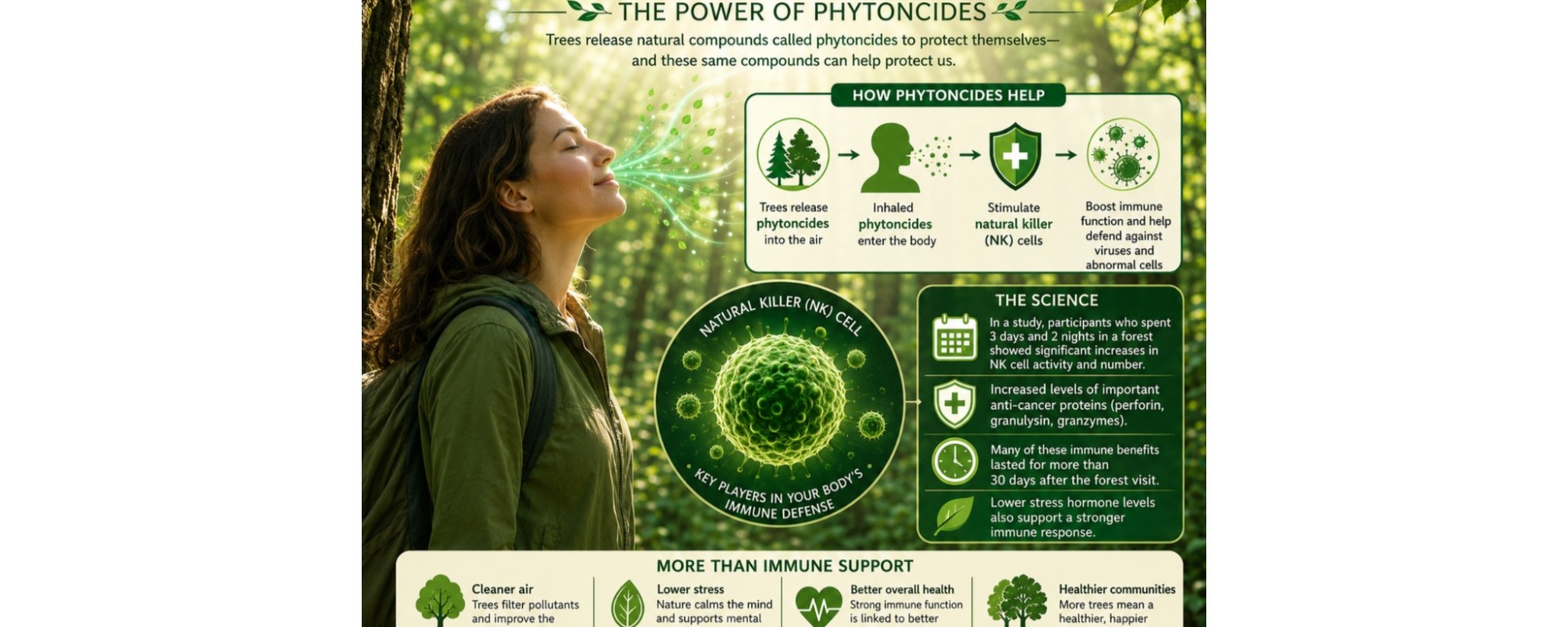
For years, scientists have known that spending time among trees does more than simply help us relax. Research from Japan has shown that forests release natural airborne compounds called phytoncides—including alpha-pinene and beta-pinene—that may help strengthen the human immune system. These compounds are produced by trees as a natural defense against insects, fungi, and disease, and humans appear to benefit from breathing them as well.
One of the leading researchers in this field, Qing Li, found that participants who spent three days and two nights in a forest experienced significant increases in the activity and number of natural killer (NK) cells—a type of white blood cell that plays an important role in defending the body against viruses and abnormal cells. The study also found increased levels of important anti-cancer proteins such as perforin, granulysin, and granzymes. Remarkably, many of these immune benefits persisted for more than 30 days after the forest visit.
Time spent in forests consistently increased NK cell activity and reduced stress hormones such as adrenaline and noradrenaline. Scientists believe the combination of breathing phytoncides and experiencing lower stress levels works together to enhance immune function.
A 2024 systematic review of the scientific literature reached similar conclusions, reporting that phytoncide exposure is associated with favorable immune responses, including increased NK cell activity and other immune-related changes. While researchers continue to study the exact mechanisms and clinical applications, the evidence supporting the health benefits of forest exposure continues to grow.
The implications extend beyond individual wellness. Healthy, mature tree canopies in neighborhoods may provide residents with regular exposure to these beneficial compounds while also reducing air pollution, lowering temperatures, and improving mental health. Protecting and expanding urban forests may therefore contribute not only to environmental sustainability but also to healthier communities.
The next time you take a walk through a forest, remember that you’re not just enjoying beautiful scenery—you may also be giving your immune system a natural boost.

