
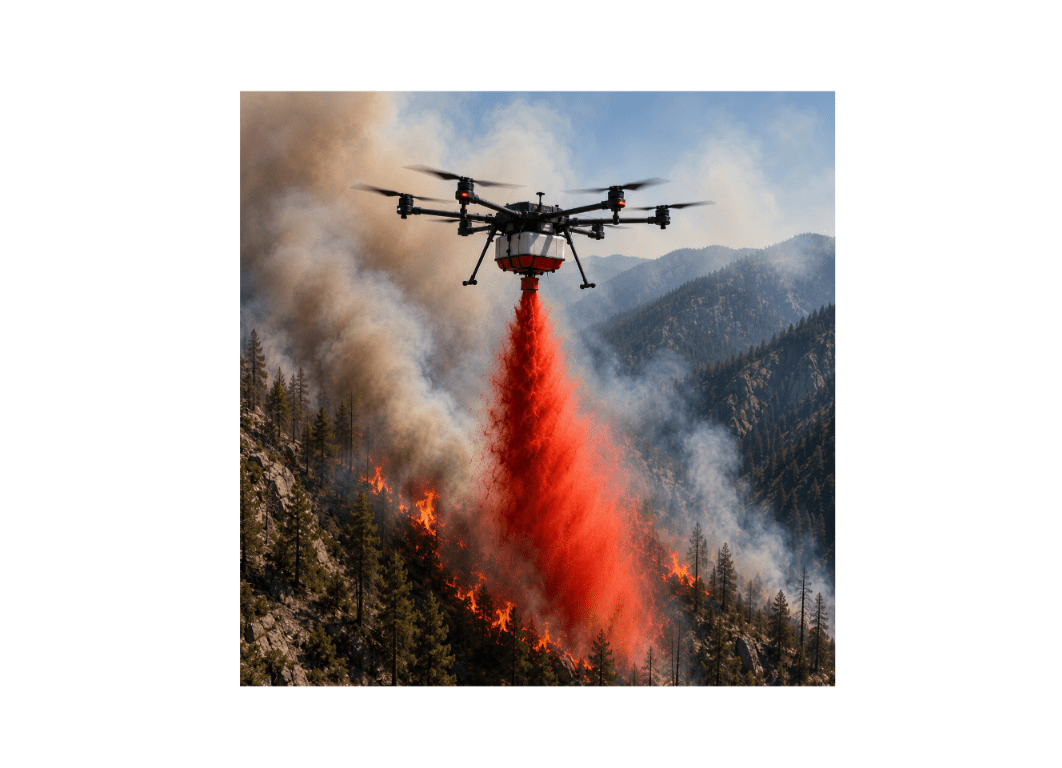
A wave of dry thunderstorms has unleashed thousands of lightning strikes across Oregon, igniting dozens of wildfires and stretching firefighting resources across the Pacific Northwest. While firefighters race to contain new fires, emerging technologies—including artificial intelligence (AI) and drones—are becoming increasingly important tools for detecting and battling fires in remote areas that are difficult or impossible to reach quickly.
Lightning Sparks Fires Across Rural Oregon
Most of the newest fires have been started by lightning rather than human activity. Many ignitions occur deep in national forests, rugged mountains, and remote rangelands where there are few roads and little access for firefighters.
A single lightning storm can ignite dozens of fires across hundreds of square miles. By the time smoke is visible or crews can hike into the area, what began as a small fire may already be several acres in size.
Eastern Oregon and Eastern Washington Face the Highest Fire Risk
The greatest wildfire activity continues to occur east of the Cascade Mountains, where hot temperatures, low humidity, dry vegetation, and frequent lightning create ideal conditions for fast-moving fires.
Eastern Washington experiences many of the same conditions and routinely faces major wildfire seasons.
In contrast, Washington’s coast—including Ocean Park, Long Beach, and the Long Beach Peninsula—benefits from cooler marine air and higher humidity, making large wildfires much less common. However, coastal communities are still affected by smoke that can travel hundreds of miles from fires burning inland, creating unhealthy air quality, especially for older adults and those with respiratory conditions.
AI Is Helping Detect Fires Earlier
Artificial intelligence is transforming how agencies monitor forests during wildfire season.
Modern AI systems analyze:
- Satellite imagery
- Infrared sensors
- Remote wildfire cameras
- Weather forecasts
- Lightning detection networks
- Computer vision data
Instead of waiting for someone to report smoke, AI can automatically identify potential new fires within minutes, allowing dispatchers to alert firefighters much sooner.
The earlier a fire is found, the greater the chance it can be contained before it grows into a large wildfire.
Drones Are Becoming Essential Firefighting Tools
Once a fire is detected, drones are increasingly helping firefighters evaluate and attack fires in locations where access is difficult.
Modern wildfire drones can:
- Fly over steep mountains and canyons
- Locate hidden hotspots using thermal imaging
- Map fire boundaries in real time
- Monitor changing fire behavior
- Guide firefighters to the safest access routes
- Provide live video to incident commanders
Unlike helicopters, drones can often operate at lower cost and continue flying in conditions where sending crews into dangerous terrain would be risky.
Some newer drone systems are even being developed to carry fire suppressants or ignite carefully planned backfires under firefighter supervision, although these technologies are still evolving.
The Challenge of Fighting Fires Without Roads
Many of Oregon’s newest lightning fires occur miles from the nearest road.
These fires may require:
- Long hikes carrying equipment
- Helicopter transport of crews
- Air tanker support
- Hand-built fire lines
- Heavy equipment brought in over rugged terrain
Even with AI identifying fires quickly, firefighters still face the difficult task of reaching remote ignition points before flames spread.
Drones help bridge that gap by giving incident commanders immediate information while crews are still traveling to the fire.
Technology Is Improving Wildfire Response
Wildfires will always require experienced firefighters on the ground, but AI and drone technology are dramatically improving how agencies respond.
By combining early detection with aerial reconnaissance, fire managers can prioritize the most dangerous fires, deploy resources more efficiently, and better protect both firefighters and nearby communities.
As lightning-driven wildfire seasons become more common across the Pacific Northwest, these technologies are expected to play an increasingly important role in protecting forests, reducing response times, and limiting the growth of fires before they become major incidents.
For coastal residents, the lesson is clear: even if the flames are hundreds of miles away, the smoke can still arrive. Monitoring wildfire conditions and air quality remains important throughout the fire season, especially for older adults and those with heart or lung conditions.

