
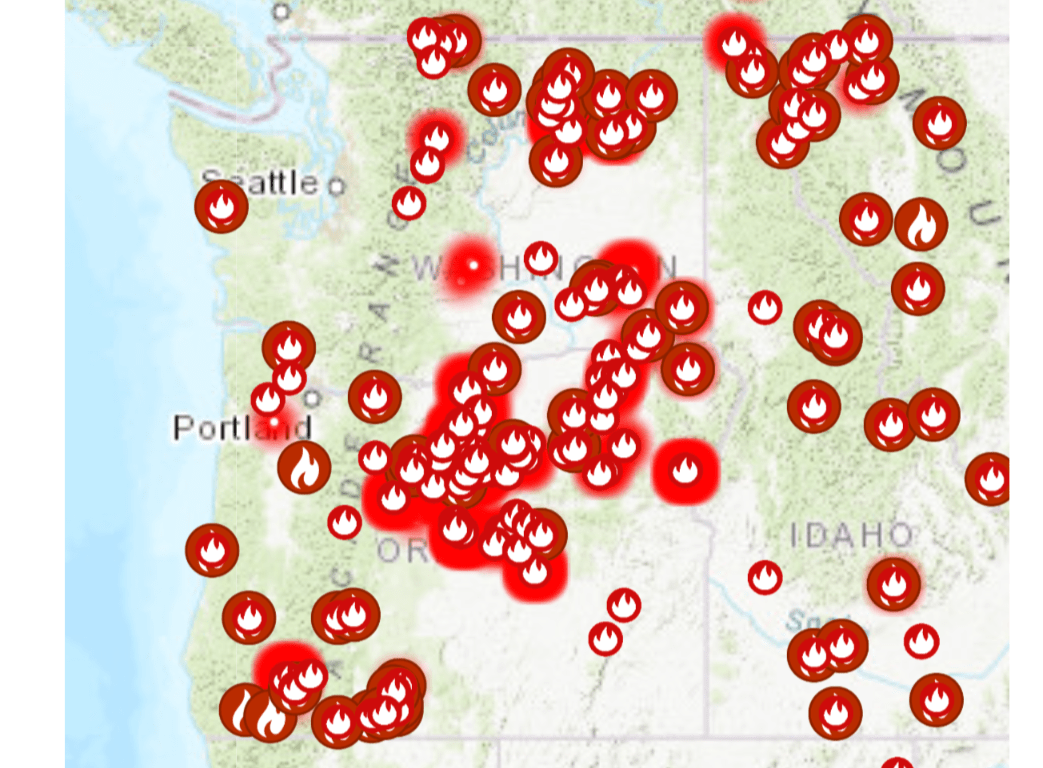
For many people, living on the coast has long been associated with fresh ocean air and a healthier environment. However, in recent years, massive wildfires burning hundreds or even thousands of miles away have demonstrated that no community is immune to poor air quality. Smoke carried by upper-level winds can blanket coastal towns for days, exposing residents—especially older adults—to dangerous levels of fine particulate pollution while also placing additional stress on the trees that help protect community health.
Smoke Travels Far Beyond the Fire
Wildfire smoke is made up of gases and microscopic particles known as PM2.5, which are less than 2.5 micrometers in diameter. These tiny particles can travel hundreds of miles across states and even international borders before reaching coastal communities.
Ocean breezes cannot always clear the smoke. Depending on weather patterns, temperature inversions, and wind direction, smoke can linger over coastal areas for several days, reducing visibility and causing air quality to deteriorate rapidly.
Communities that are far removed from any active wildfire often experience hazardous air without ever seeing flames nearby.
Why Older Adults Face Greater Health Risks
Wildfire smoke presents a significant health risk, but older adults are among the most vulnerable.
Exposure to PM2.5 has been linked to:
- Increased heart attacks and strokes
- Worsening asthma and chronic obstructive pulmonary disease (COPD)
- Reduced lung function
- Increased hospital admissions
- Higher risk of premature death during prolonged smoke events
Many coastal communities have a high percentage of residents over age 65, making smoke episodes an increasingly important public health concern.
Individuals with diabetes, heart disease, high blood pressure, or weakened immune systems are also at elevated risk.
Trees Help Improve Air Quality
While trees cannot stop wildfire smoke from arriving, they can help improve local air quality.
Healthy urban forests:
- Capture airborne particulate matter on leaves and needles.
- Filter pollutants from the air.
- Produce oxygen.
- Lower temperatures, reducing heat stress during smoke events.
- Encourage outdoor environments that support long-term physical and mental health once air quality improves.
Evergreen species continue providing many of these benefits throughout the year.
Smoke Also Affects Trees
Wildfire smoke impacts trees as well.
Heavy smoke reduces the amount of sunlight reaching leaves and needles, slowing photosynthesis. Fine particles can settle on foliage, interfering with normal gas exchange. Trees already weakened by drought, insects, disease, or improper pruning may become more susceptible to decline after repeated smoke exposure.
Although healthy mature trees generally recover from temporary smoke events, repeated environmental stresses—including excessive topping, poor pruning practices, soil compaction, and prolonged drought—can reduce their resilience.
Mature Trees Are Community Infrastructure
Large mature trees provide benefits that young trees cannot immediately replace.
Their extensive canopies:
- Filter larger volumes of air.
- Store significant amounts of carbon.
- Reduce urban heat.
- Provide shade that lowers energy use.
- Help manage stormwater.
- Improve physical and mental health.
Replacing mature trees with small saplings can require decades before equivalent environmental benefits are restored.
Preparing Coastal Communities for a Smokier Future
Climate change is increasing the frequency and intensity of large wildfires across western North America. Even coastal communities that rarely experience fire directly should prepare for more frequent smoke events.
Local governments and homeowner associations can strengthen community resilience by:
- Preserving healthy mature trees whenever possible.
- Expanding urban tree canopy through strategic planting.
- Protecting trees from unnecessary topping and severe pruning.
- Increasing green infrastructure in neighborhoods with limited canopy.
- Educating residents about wildfire smoke safety.
- Encouraging vulnerable residents to monitor daily air quality and reduce outdoor activity during smoke events.
Looking Ahead
Wildfire smoke has become a regional challenge rather than a local one. Fires burning hundreds of miles away can significantly affect air quality along the coast, placing older adults and individuals with chronic health conditions at increased risk.
Healthy trees cannot eliminate wildfire smoke, but they remain one of the community’s most valuable natural assets for improving air quality, reducing heat, supporting public health, and increasing resilience in a changing climate. Protecting and expanding tree canopy today is an investment in cleaner air, healthier residents, and stronger coastal communities tomorrow.

