
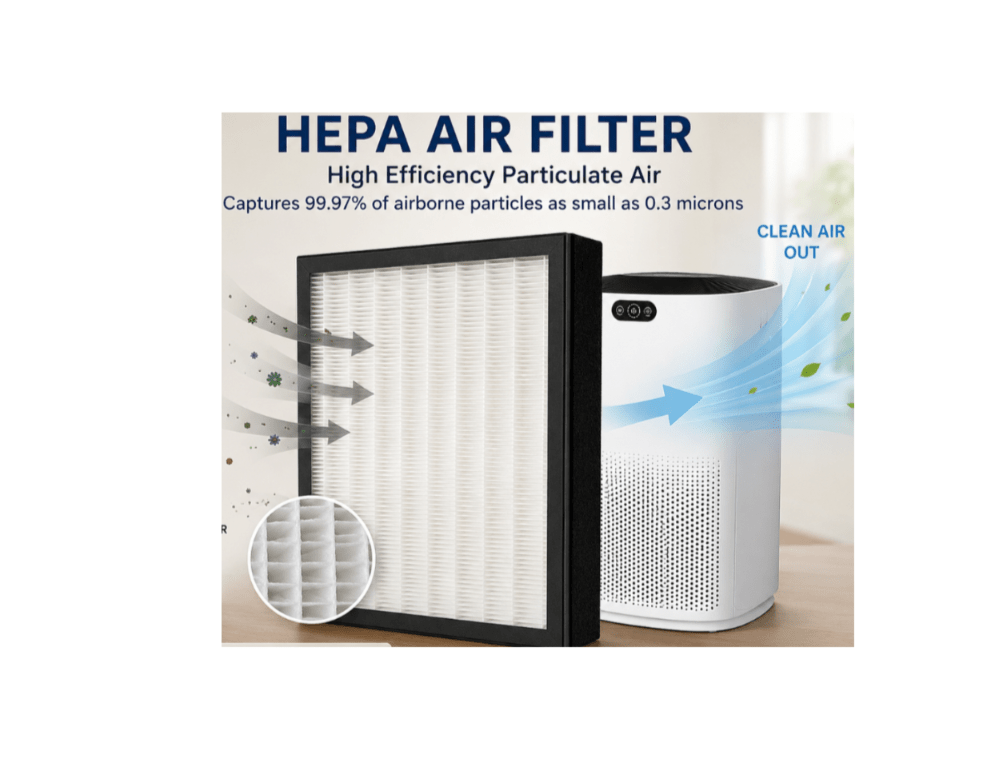
Wildfire smoke doesn’t have to be nearby to affect your health. Smoke from fires hundreds of miles away can travel across the Pacific Northwest, bringing dangerous fine particle pollution (PM2.5) that can worsen breathing problems, heart disease, and other health conditions.
For coastal communities, wildfire smoke can arrive with changing wind patterns and linger for days, making it important to prepare before air quality declines.
Why Wildfire Smoke Is Dangerous
Wildfire smoke contains tiny particles called PM2.5 that are small enough to enter the lungs and even the bloodstream. Exposure can cause:
- Coughing and sore throat
- Burning eyes
- Shortness of breath
- Asthma attacks
- Increased risk of heart attacks and strokes
- Fatigue and headaches
Even healthy people may notice symptoms, but the greatest risks are for:
- Adults over 65
- Children
- Pregnant women
- People with asthma or COPD
- Those with heart disease
- People with diabetes
Create a Clean Air Room
Choose one room in your home where you can keep the air as clean as possible.
Close all windows and doors, and if temperatures allow:
- Run your central air conditioning on recirculate.
- Install a high-quality HVAC filter rated MERV 13 if your system supports it.
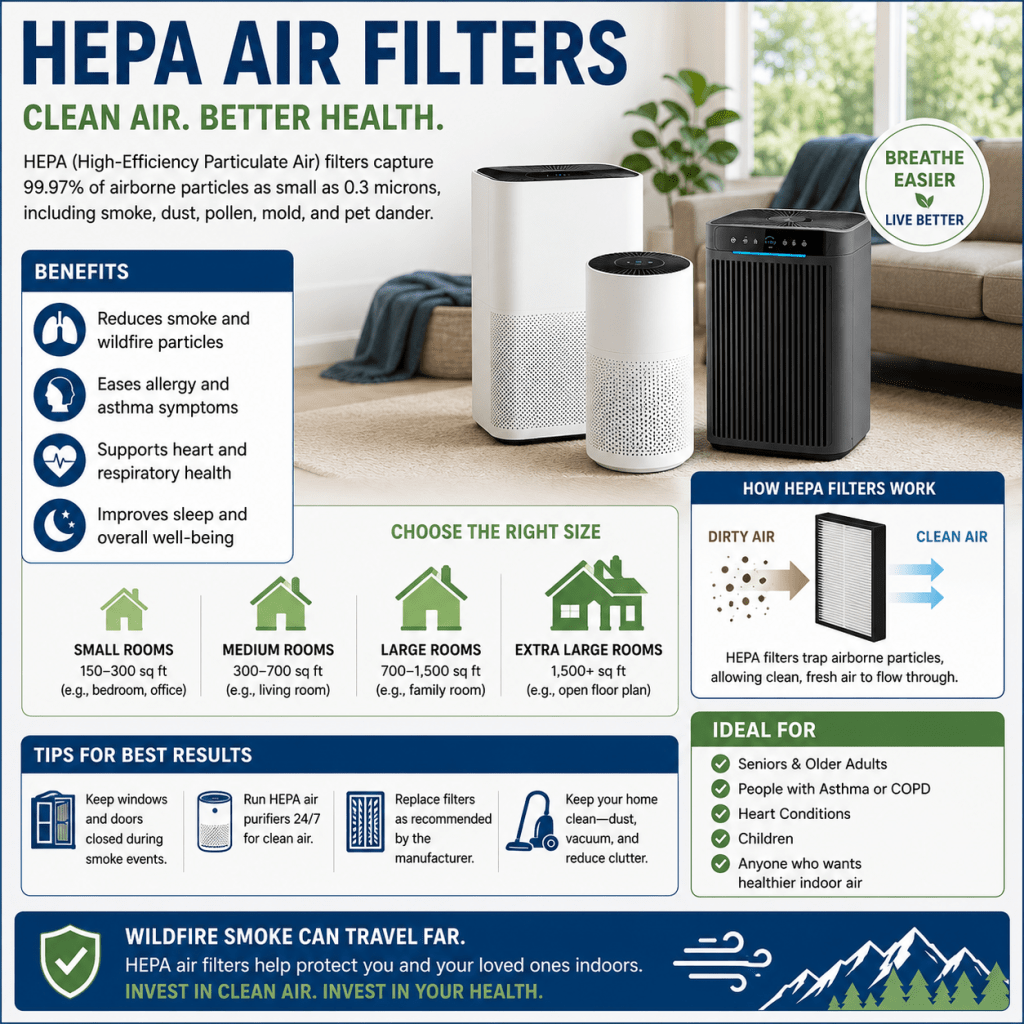
- Use portable HEPA air purifiers in bedrooms and living areas.
- Keep pets indoors as much as possible.
Portable Air Filters Make a Big Difference
Portable HEPA air cleaners can remove most fine smoke particles from indoor air.
For best results:
- Size the purifier for the room.
- Run it continuously during smoke events.
- Replace filters according to the manufacturer’s recommendations.
- Keep bedroom doors closed while sleeping.
Low-Cost DIY Air Filter
A simple and inexpensive option is a Corsi-Rosenthal Box, made using:
- A box fan
- Four or five MERV 13 furnace filters
- Duct tape
These homemade air cleaners can significantly reduce indoor smoke particles at a fraction of the cost of commercial units.
How to build your own Corsi-Rosenthal Box –
https://corsirosenthalfoundation.org/instructions/
Tips for Older Adults
Older adults should take extra precautions because smoke exposure can trigger serious health problems.
Recommendations include:
- Stay indoors when air quality is unhealthy.
- Avoid strenuous exercise.
- Keep medications readily available.
- Drink plenty of water.
- Monitor oxygen levels if advised by your healthcare provider.
- Contact your doctor if breathing becomes more difficult than usual.
If You Must Go Outside
When smoke levels are unhealthy:
- Wear a properly fitted N95 respirator.
- Avoid prolonged outdoor activity.
- Limit heavy work such as yard maintenance.
- Return indoors as soon as possible.
Cloth masks and surgical masks do not effectively filter fine wildfire smoke particles.
Check Air Quality Before Going Outdoors
Monitor local air quality throughout the day using trusted resources:
- AirNow: https://www.airnow.gov/
- Washington Smoke Blog: https://wasmoke.blogspot.com/
- NOAA Smoke Forecast: https://hwp-viz.gsd.esrl.noaa.gov/smoke/
Watch for Serious Symptoms
Seek immediate medical attention if you experience:
- Difficulty breathing
- Chest pain
- Severe wheezing
- Confusion
- Blue lips or fingertips
- Symptoms that worsen despite staying indoors
Preparation Is the Best Protection
Wildfire smoke is becoming a more frequent part of summer across the Pacific Northwest. Having clean indoor air, quality filters, and a plan before smoke arrives can greatly reduce health risks.
For seniors and people with chronic medical conditions, these preparations may help prevent emergency room visits and allow them to stay safer during prolonged smoke events.
 Surfside Washington News