
August 3, 2026
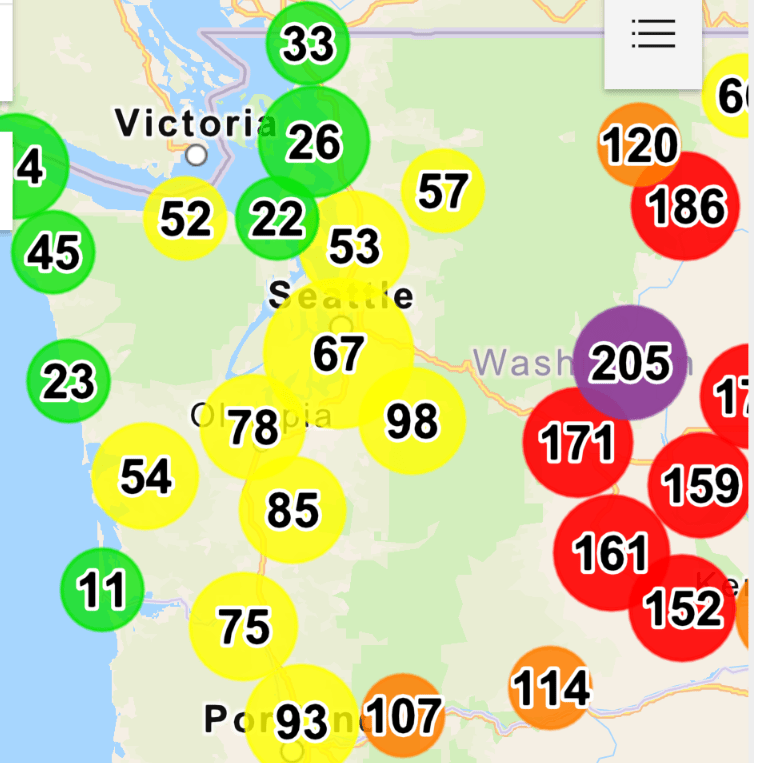
Smoke from multiple large wildfires burning across Washington and Oregon is spreading across much of the Pacific Northwest, creating deteriorating air quality from eastern Washington to the western valleys. Weather forecasters expect smoke to continue affecting many communities through midweek as shifting winds transport fine particulate matter west of the Cascade Range.
The most severe wildfire impacts remain in eastern Washington, where fast-moving fires near Spokane have destroyed approximately 700 buildings and forced more than 60,000 residents to evacuate. Firefighters from across the country are battling numerous large incidents under extremely dry conditions, while state and federal agencies continue emergency response efforts.
Oregon also continues to battle several major wildfires. The Rowe Creek Complex, located south of Fossil, has burned more than 323,000 acres and is approximately 60% contained. Meanwhile, the Hay Creek Complex includes several large fires, with the Little Buck Fire exceeding 43,000 acres and nearing 90% containment.
Satellite imagery shows a broad smoke plume stretching across Washington, Oregon, Idaho, Montana, and into parts of the Rocky Mountains. Air quality may fluctuate throughout the day depending on local winds, but sensitive groups—including children, older adults, and people with asthma, heart disease, or other respiratory conditions—should closely monitor local air quality reports before spending extended time outdoors.
Track Wildfire Smoke
Residents can monitor current smoke conditions and forecasts using these official resources:
- AirNow Fire and Smoke Map: https://fire.airnow.gov/
- Washington Department of Ecology Wildfire Smoke: https://ecology.wa.gov/air-climate/air-quality/smoke-fire/wildfire-smoke
- Oregon Smoke Information: https://www.oregonsmoke.org/
- National Interagency Fire Center: https://www.nifc.gov/
Health officials recommend limiting strenuous outdoor activity when air quality reaches unhealthy levels, keeping windows closed when possible, using high-efficiency air filtration indoors, and wearing a properly fitted N95 respirator if extended outdoor exposure cannot be avoided during heavy smoke events.
 Surfside Washington News