
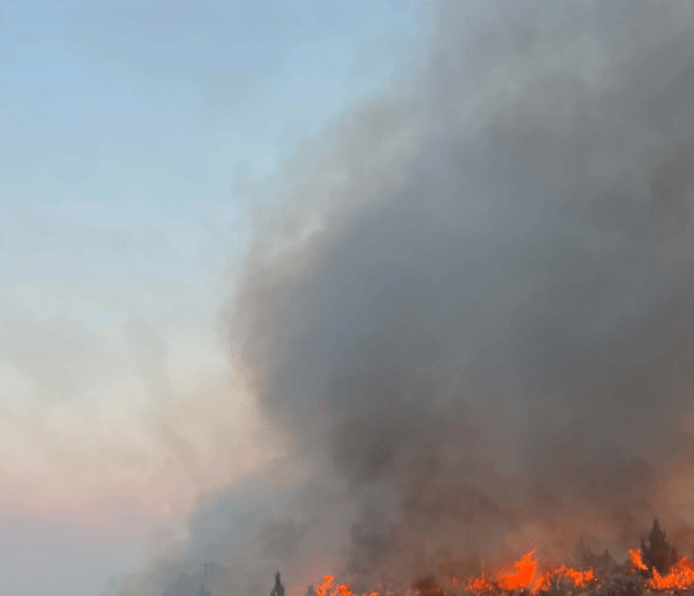
Wildfire smoke continues to impact air quality across Washington and Oregon as numerous large fires burn throughout the Pacific Northwest. Air quality alerts have been issued for much of Eastern and Central Washington, with smoke also spreading into Western Washington, including the Seattle metropolitan area. Oregon has also issued air quality advisories for much of the state as shifting winds carry smoke into the Portland metro area and surrounding communities.
The fine particles in wildfire smoke, known as PM2.5, are small enough to travel deep into the lungs and enter the bloodstream. Even short-term exposure can cause eye and throat irritation, coughing, headaches, shortness of breath, and can worsen asthma, chronic obstructive pulmonary disease (COPD), heart disease, and diabetes. Older adults, children, pregnant women, and those with existing heart or lung conditions are at the greatest risk.
Recommended Face Masks for Wildfire Smoke
Health officials recommend wearing a NIOSH-approved N95 respirator whenever you must be outdoors in smoky conditions. A properly fitted KN95 also provides good protection by filtering the tiny PM2.5 particles found in wildfire smoke.
Best choices:
- N95 respirator (NIOSH-approved)
- KN95 respirator
- P100 respirator (offers even greater filtration but is bulkier and less comfortable)
Not recommended:
- Cloth masks
- Surgical masks
- Single-strap paper dust masks
These common face coverings do not effectively filter the microscopic particles produced by wildfire smoke.
Additional Ways to Protect Yourself
- Stay indoors with windows and doors closed when smoke levels are high.
- Run your air conditioner on the recirculate setting.
- Use a portable HEPA air purifier if available.
- Avoid strenuous outdoor activities, including exercise, during periods of unhealthy air quality.
- Monitor local Air Quality Index (AQI) conditions before spending extended time outdoors, as smoke conditions can change rapidly with shifting winds.
Helpful Resources
Washington Smoke Blog: https://wasmoke.blogspot.com/
Washington Department of Ecology Air Quality: https://ecology.wa.gov/Air-Climate/Air-quality
Oregon Smoke Information: https://oregonsmoke.org/
EPA AirNow Air Quality Map: https://www.airnow.gov/
EPA Fire and Smoke Map: https://fire.airnow.gov/

