
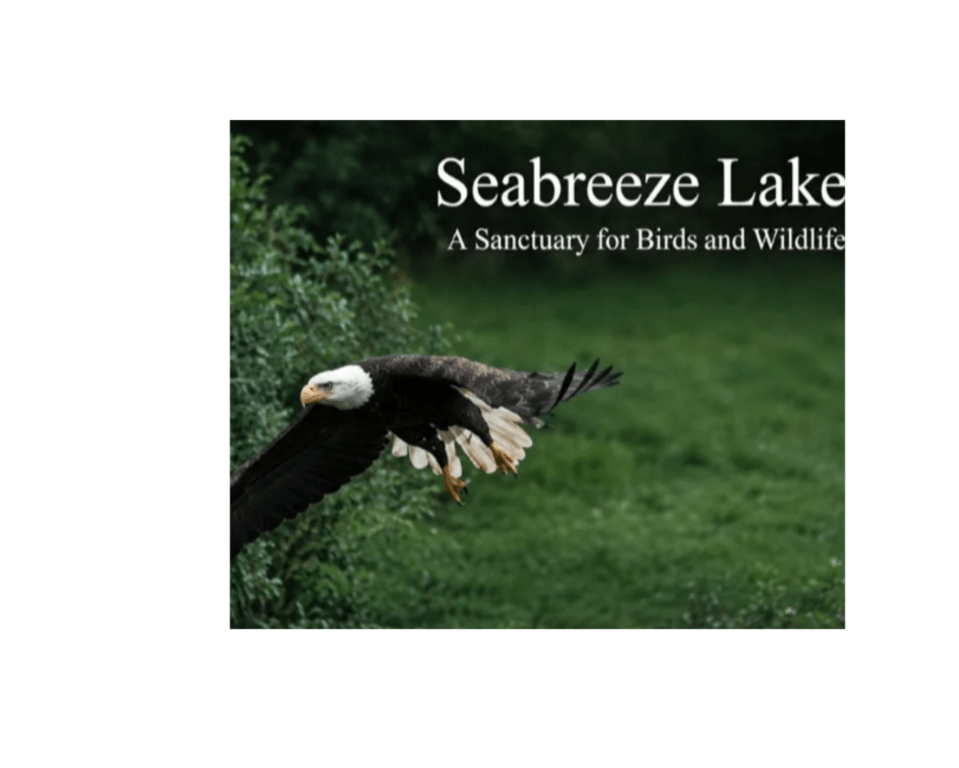
A new photo book, Seabreeze Lake: A Sanctuary for Birds and Wildlife, documents the remarkable variety of birds and other animals that depend upon this freshwater lake in Surfside, Washington.
Available on Amazon
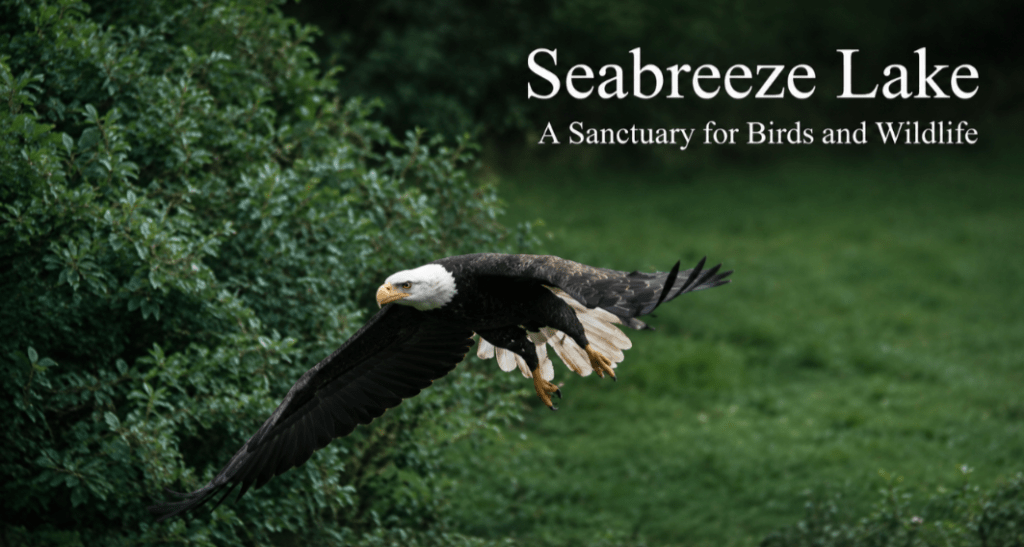
Link to Amazon Book
Created from photographs contributed by residents living around Seabreeze Lake, the book offers an intimate look at the wildlife that visits, feeds, nests and raises its young along the lake’s shoreline. Eagles, herons, ducks, geese, kingfishers and many other species appear throughout its pages—sometimes resting beside the water and sometimes photographed with freshly caught fish.
The photographs show that Seabreeze Lake is much more than a drainage feature. It is a functioning aquatic habitat and an important part of the larger coastal ecosystem.
A Lake Filled With Life
For decades, Seabreeze Lake was stocked with trout and served as a local fishing destination. Those fish also supported the lake’s natural food web, providing prey for bald eagles, great blue herons, belted kingfishers, cormorants and other fish-eating birds.
Many of the photographs in the book capture this relationship directly. Birds are shown hunting from trees, standing patiently along the shoreline, flying over the water and carrying fish in their beaks or talons.
Migratory birds also use the lake as a place to rest and feed during their seasonal journeys. Resident waterfowl, songbirds and birds of prey rely on the lake throughout the year. Deer frequently visit the shoreline for water and shelter, and residents have observed does giving birth beneath trees near the lake.
Together, these observations demonstrate that the lake and its surrounding vegetation form an interconnected habitat.
Part of a Larger Coastal Wildlife Corridor
Seabreeze Lake occupies an especially important location on the Long Beach Peninsula. The Pacific Ocean lies to the west, while the Willapa National Wildlife Refuge and Leadbetter Point State Park are located to the north and east.
Birds and other wildlife do not recognize property lines or jurisdictional boundaries. They travel between the ocean, dunes, wetlands, forests, lakes and protected lands. Seabreeze Lake provides another source of freshwater, food, shelter and resting habitat within this larger coastal landscape.
The trees and vegetation surrounding the lake are essential parts of that habitat. They offer nesting and perching sites, stabilize soil, shade the shoreline, filter runoff and help keep the water cooler. Removing shoreline vegetation or repeatedly topping trees can reduce these benefits and gradually weaken the lake’s ecological health.
Photographs That Tell an Important Story
The book is both a celebration of nature and a visual record of the species that have been observed at Seabreeze Lake.
Individual wildlife sightings can sometimes be dismissed as isolated events. A large collection of photographs taken over time tells a much stronger story. It demonstrates that numerous species consistently use the lake for feeding, resting, nesting and raising their young.
The images contributed by Surfside residents provide valuable community documentation. Special thanks to Linda Flickinger flher many photographs contributed to the book. They show the lake as people living beside it experience it—not as a line on a drainage map, but as a living body of water filled with fish, birds and wildlife.
Written captions and species descriptions were prepared with artificial-intelligence assistance and should be considered educational rather than a substitute for formal scientific identification. The photographs themselves remain the work of the contributing residents.
Why Protecting Seabreeze Lake Matters
The publication arrives as questions are being raised about how Seabreeze Lake should be classified and how much shoreline protection it should receive.
Calling the lake a drainage ditch does not erase its history, its fish population or its value to wildlife. Nor does it change what residents have documented through years of photographs and firsthand observations.
Reducing shoreline buffers, removing trees or allowing potentially polluting activities close to the water could affect water quality and diminish the habitat upon which birds and other animals depend. Protecting the lake requires maintaining adequate vegetated buffers, preserving healthy trees, preventing contaminated runoff and considering the cumulative effects of land-management decisions.
The book provides residents, officials and environmental agencies with a visual reminder of what could be lost if the lake is treated solely as drainage infrastructure.
A Community Record and a Call to Stewardship
Seabreeze Lake: A Sanctuary for Birds and Wildlife honors the residents who took the time to observe and photograph the lake’s wildlife. Their images preserve moments that might otherwise have gone unseen—a heron catching a fish, an eagle watching from a shoreline tree, waterfowl raising their young or deer finding shelter near the water.
More importantly, the book asks readers to recognize Seabreeze Lake for what the photographs reveal it to be: a living freshwater habitat connected to one of Washington’s most important coastal ecosystems.
Protecting Seabreeze Lake means protecting the birds, fish, deer and other wildlife that depend upon it. It also means preserving a special natural place for future generations of Surfside residents.
If you value birds or the coastal environment write your county commissioner to voice your opposition to the Surfsides HOA attempt to remove the riparian buffer protections around the lake.
Pacific County Commissioners
Commissioners Home https://share.google/qAtb8NKLcCmss07WO
Lisa Olsen LOlsen@co.pacific.wa.us
David Tobin DTobin@co.pacific.wa.us
Ljdoyle@co.pacific.wa.us

