
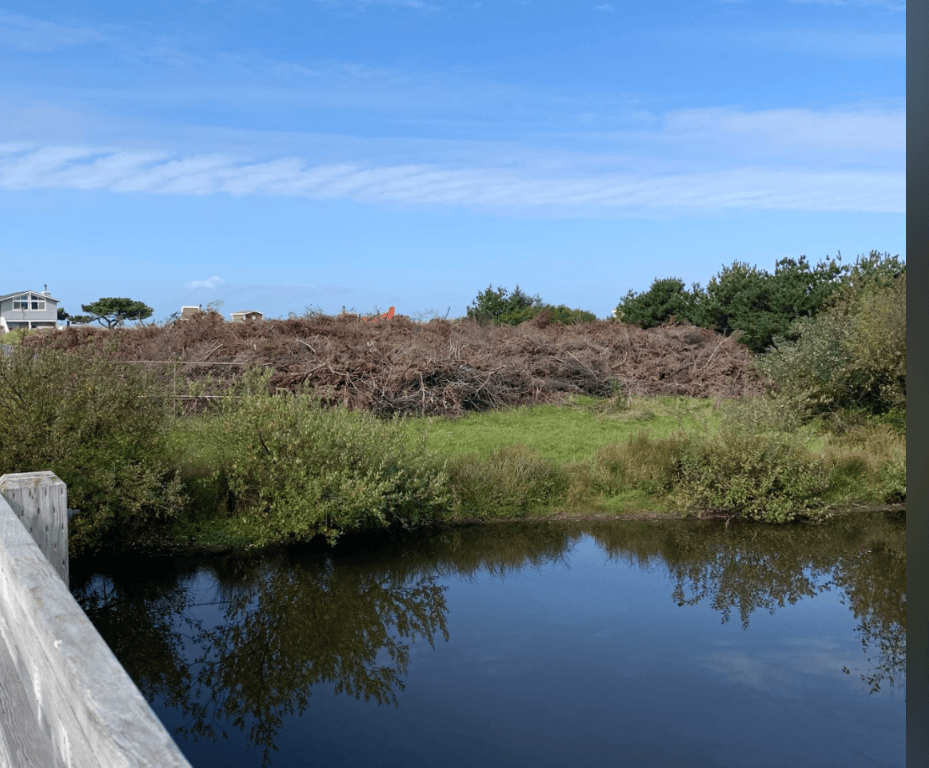
Trees affected by disease require more than simply cutting, hauling, and chipping. Modern arboriculture recognizes that diseased trees can serve as reservoirs for fungi, insects, nematodes, and other plant pathogens. As a result, commercial arborists and wood waste facilities are expected to follow best management practices designed to reduce the risk of spreading tree diseases to surrounding forests and landscapes. In the case of Surfside there are the many dead trees and diseased trees a result of mishandling of diseased trees and distribution of resulting wood chips/mulch. I consulted with a local arborist and mulch facility on what they did to process dead trees to ensure tree diseases were not present in commercial product
According to current scientific literature, disease management begins before a tree is ever chipped. Diseased material should be identified, separated from healthy trees whenever practical, and assigned an appropriate handling method based on the specific disease involved. Facilities handling infected wood become part of the disease containment process, not simply disposal sites.
The research also emphasizes that transportation and storage represent some of the highest-risk stages for disease spread. Best practices recommend securely containing loads during transport, minimizing handling, reducing storage time, separating diseased material from healthy biomass, and preventing stockpiles from becoming reservoirs for insects or pathogens. Long-term storage of untreated diseased wood is generally discouraged because warm weather can increase biological activity and create opportunities for reinfestation or pathogen persistence.
Environmental protection is another important consideration. Scientific studies recommend controlling runoff and leachate from wood stockpiles to prevent contaminated water from leaving the site. Storage areas should include measures that reduce stormwater impacts and minimize movement of biological material into surrounding soils or nearby water bodies.
Perhaps the most important finding is that chipping alone does not eliminate tree pathogens. While chipping makes wood easier to process, research shows it is only a preprocessing step. Effective pathogen control depends on validated treatment methods such as properly managed composting or heat treatment and churning that achieve temperatures known to inactivate the specific disease organism.
Quality assurance is equally important. Commercial facilities commonly monitor processing conditions, maintain temperature records where applicable, separate treated and untreated materials, and implement procedures to prevent recontamination before mulch or compost is distributed. I consulted a Portland mulch treatment facility that tests every mulch product through the US Composting Council and achieves OMRI certification before sale.
OMRI certification
Mulch produced at a commercial tree-and-organic-material processing facility should be independently tested to determine what is actually in the finished product. Testing can screen for heavy metals, herbicide and pesticide residues, plastics and other foreign material, pathogens, nutrient content, pH, salinity and product maturity or stability. Testing is not 100% fool proof so current laboratory results and documented quality-control procedures should be available to customers and regulators.
These are some of the best management practices that raise important questions for any community chipper operation, including Surfside’s:
- Are diseased trees separated from healthy material before processing?
- How are diseased trees identified and documented?
- How long are tree stockpiles stored before processing?
- What measures prevent runoff or leachate from entering nearby water bodies or to adjacent properties ?
- Are processing methods sufficient to inactivate likely pathogens?
- What quality assurance procedures are used before mulch is distributed?
- Is the mulch tested to be OMRI certified?
- What records demonstrate that accepted best management practices are being followed?
These are reasonable questions because the scientific literature consistently concludes that handling diseased trees is a disease-management process, not simply a waste-disposal operation. Proper identification, segregation, transport, storage, processing, and quality assurance all work together to reduce the risk of spreading pests and pathogens while protecting surrounding forests, neighborhoods, and waterways.
As communities become increasingly concerned about tree health, threat protection, public health and protecting trees in neighborhoods, transparency regarding these best management practices can help build public confidence that wood waste is being managed responsibly and in accordance with current scientific understanding.
What are the potential consequences of operating the HOA chipper site for more than a decade without appropriate safeguards for handling diseased trees?
The HOA should be transparent about the practices it followed to prevent the spread of tree diseases. Specifically, it should explain what safeguards, if any, were implemented consistent with recognized arboricultural best management practices for identifying, separating, transporting, chipping, storing, and disposing of diseased trees, as well as any testing or monitoring performed before wood chips/mulch were distributed throughout the community.
 Surfside Washington News