
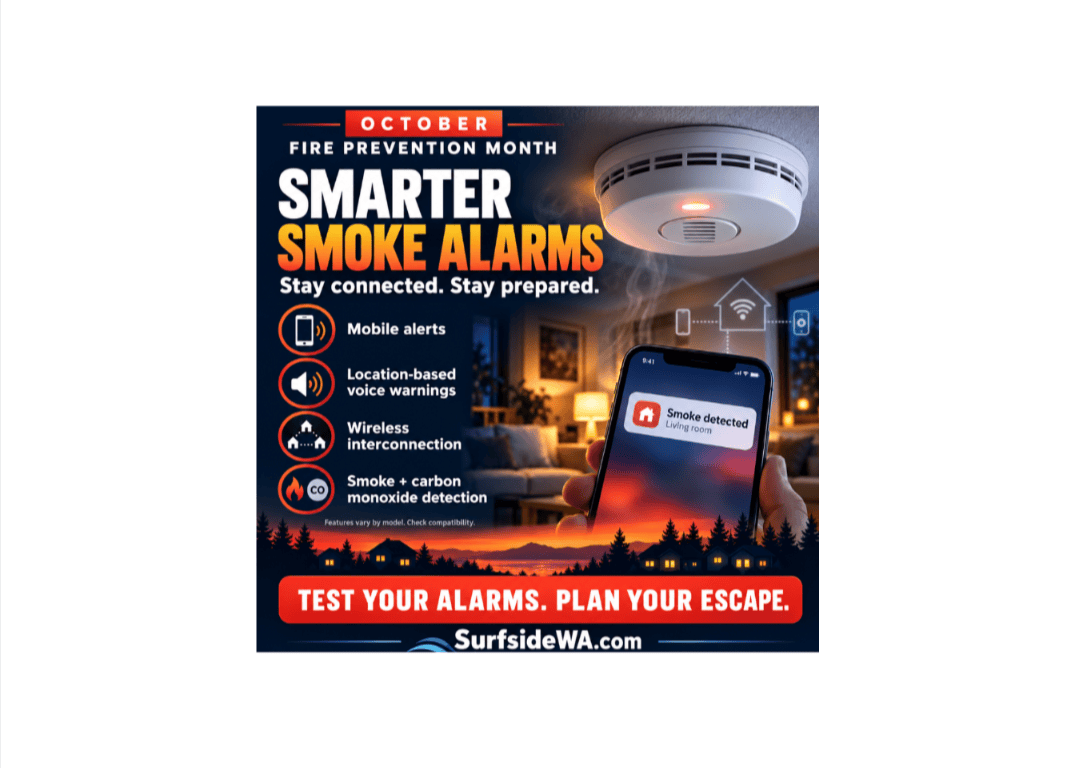
A smoke alarm may be one of the least expensive devices in a home, yet it can provide the warning that makes escape possible. NFPA’s 2024 research found that the death rate per 1,000 reported home fires was about 60 percent lower when smoke alarms worked than when alarms were absent or failed to operate.
Today’s technology adds better smoke recognition, fewer cooking-related nuisance alarms, wireless connections, voice warnings, and smartphone notifications. For homeowners replacing aging alarms, these improvements deserve attention.
Better Detection With Fewer Unwanted Alarms
An important change took effect in June 2024, when UL Solutions began applying updated UL 217 certification requirements to alarms being tested. The requirements added stronger performance expectations for fires involving modern furnishings, including polyurethane foam, and a cooking nuisance test.
Manufacturers can meet these requirements through advanced sensing technology or combinations of sensors and algorithms. The aim is to recognize dangerous fire conditions while reducing unwanted alarms from ordinary cooking.
That distinction matters. Repeated nuisance alarms can lead people to remove batteries or disconnect a unit, leaving a home unprotected. Newer technology reduces that problem, but no alarm should be assumed immune to nuisance activation.
When shopping, look for certification to UL 217 by a recognized testing laboratory and check the manufacturer’s description of compliance with updated requirements. “Smart” describes connected features; it does not, by itself, establish better fire detection.
Understanding Sensor Technology
Traditional residential alarms use photoelectric sensing, which detects smoke through its effect on light, or ionization sensing, which detects smoke through changes in an electrical current. Their response varies with the fire.
USFA continues to recommend both photoelectric and ionization protection, or dual-sensor alarms containing both technologies. Newer designs also use improved optical sensing and algorithms to meet updated fire tests. A “multi-sensor” label does not necessarily mean the product contains both traditional sensor types; check its specifications and local requirements.
Interconnected Alarms Spread the Warning
With interconnected alarms, detection in one part of a home causes compatible alarms elsewhere to sound. That can help alert someone sleeping behind a closed door or on another floor.
Connections may use wiring or wireless radio communication. Wireless interconnection can help improve coverage in an existing home without adding interconnect wiring.
Compatibility is essential. Do not assume alarms from different brands—or different product families—will communicate. Check the manufacturer’s approved compatibility list.
Phone Alerts and Voice Warnings
Connected alarms can notify an owner when smoke or carbon monoxide is detected while the owner is away. Some also report battery status or announce the type and location of a hazard.
Current examples include First Alert’s SC5 smoke-and-carbon-monoxide alarms, with mobile notifications and location-based voice alerts, and Kidde’s Ring-connected smoke and combination smoke/CO alarms. Kidde also offers battery-powered models with compatible wireless interconnection.
First Alert SC5 smart smoke and carbon monoxide alarm
https://www.amazon.com/s?k=First+Alert+SC5+smart+smoke+carbon+monoxide+alarm
Kidde Ring-connected smoke alarm
https://www.amazon.com/s?k=Kidde+Ring+connected+smoke+alarm
Kidde Ring-connected combination smoke/CO alarm
https://www.amazon.com/s?k=Kidde+Ring+connected+smoke+carbon+monoxide+alarm
Kidde battery-powered wireless interconnected smoke alarms
https://www.amazon.com/s?k=Kidde+battery+powered+wireless+interconnected+smoke+alarms
For vacation homes and residents who travel, remote notifications can add useful awareness. However, phone alerts depend on the required connectivity and services. Check the model’s instructions for what continues working during an internet or power outage. A phone notification is not a guarantee that firefighters have been dispatched; professional monitoring is a separate feature that must be verified.
Long-Life Batteries Reduce Maintenance
Sealed long-life battery alarms reduce the need for routine battery changes. They still require monthly testing and replacement of the complete unit at the end of its service life.
Not every new alarm has a sealed battery. Some smart models use replaceable batteries, while hardwired alarms may have replaceable or sealed backup batteries. Follow the instructions for the exact model.
USFA advises replacing smoke alarms 10 years from their manufacture date, or earlier if the manufacturer requires it or the alarm fails. Changing a battery does not renew an aging sensor.
Make Sure the Warning Reaches Everyone
For people who are deaf or hard of hearing, standard audible alarms may be insufficient. Available notification equipment includes flashing strobes, vibrating bed or pillow devices, and low-frequency audible signals.
Choose equipment designed to work with the alarm system and suited to the person’s needs. A smartphone alert should not be the sole means of waking someone during a fire.
Placement and Maintenance Remain Essential
Install smoke alarms inside every bedroom, outside each separate sleeping area, and on every level, including the basement. Follow the manufacturer’s mounting instructions and applicable local requirements.
USFA advises keeping smoke alarms at least 10 feet from cooking appliances. Follow model-specific instructions when resolving nuisance alarms rather than disabling protection.
Test alarms monthly, keep them clean as directed, and check their manufacture dates. Have a qualified electrician install hardwired units.
Finally, pair the warning system with a practiced escape plan. Identify two ways out where possible and an outdoor meeting place. When an alarm warns of fire, leave promptly, stay outside, and call 911 from safety.
The best upgrade combines reliable detection, complete coverage, a warning everyone can receive, and a household ready to act.
Sources:
NFPA, Smoke Alarms in US Home Fires (2024): https://content.nfpa.org/-/media/Project/Storefront/Catalog/Files/Research/NFPA-Research/Detection-and-signaling/ossmokealarms.pdf
USFA, Smoke Alarms:
https://www.usfa.fema.gov/prevention/home-fires/prepare-for-fire/smoke-alarms/
UL Solutions, updated smoke-alarm requirements:
First Alert SC5:
https://www.firstalert.com/products/sc5-hardwire-smart-smoke-carbon-monoxide-alarm
Kidde Ring battery smoke/CO alarm:
https://www.kidde.com/products/smart/ring-smart-smoke-co-alarm-aa-battery-powered
USFA, Fire Safety for People with Disabilities:
https://www.usfa.fema.gov/prevention/home-fires/at-risk-audiences/people-with-disabilities/

