
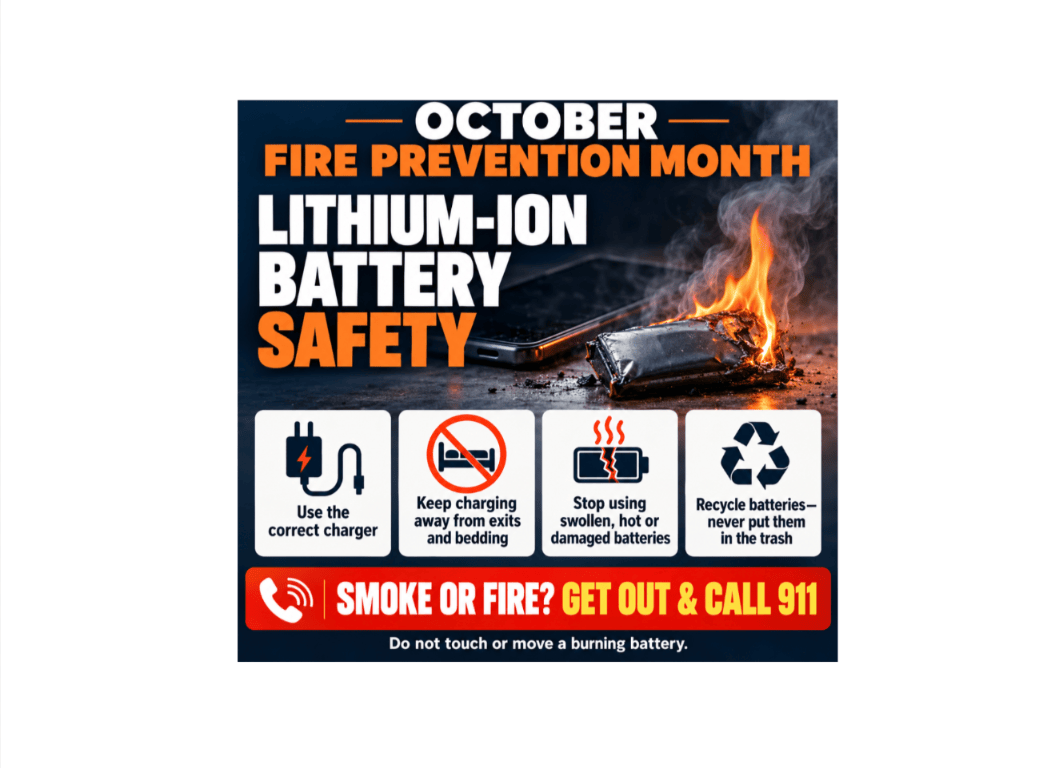
Lithium-ion batteries power much of modern life—from phones and laptops to power tools, electric bicycles and vehicles. They pack substantial energy into a small space, making portable technology remarkably useful. But damaged, defective or improperly used batteries can overheat, catch fire or explode. Understanding the warning signs and charging them correctly can help prevent a useful device from becoming a dangerous fire source.
Why these fires are different
A lithium-ion battery can experience “thermal runaway,” an uncontrolled heating process that can lead to fire or explosion. Physical damage, overheating and overcharging can contribute to dangerous failures. A failing battery may release flammable gases, and burning cells can eject from the battery pack, spreading the fire.
The danger can persist after visible flames disappear. The U.S. Fire Administration warns that lithium-ion batteries can reignite, requiring continued monitoring and cooling by firefighters. A battery that appears extinguished should never be assumed safe to handle.
Warning signs that deserve immediate attention
Stop using a battery or device if it develops an unusual odor, changes color or shape, leaks, becomes excessively hot, or makes strange noises. Swelling, cracking, popping, hissing and visible gas escaping are additional signs of a potentially dangerous failure.
A swollen phone battery or hissing bicycle battery should never be treated as an ordinary maintenance problem. Do not continue charging it or attempt to puncture, compress or repair the battery yourself.
Safer charging starts with the right equipment
The National Fire Protection Association recommends purchasing devices listed by a nationally recognized testing laboratory and following the manufacturer’s instructions. Use the charger and battery specified for the device; a plug that fits does not establish compatibility.
Charging location also matters. Keep batteries away from combustible materials, and avoid charging devices on beds, couches or other surfaces that can trap heat. Larger devices, including electric bicycles and scooters, should never be positioned where a fire could block an exit. For a household, the charging spot is part of the escape plan.
Avoid exposing batteries to direct sunlight or leaving them in hot vehicles. The U.S. Fire Administration recommends room-temperature storage when possible and advises against charging lithium-ion batteries below 32°F or above 105°F. Follow the product’s temperature limits and any more restrictive manufacturer instructions.
What this means for RV owners
An RV owner may carry several battery-powered devices into a compact living space. That makes charging placement especially important: a bicycle, power station or tool battery beside the main door could put the escape route at risk.
Before adding a lithium battery system, have a qualified installer verify compatibility with the RV’s charging equipment, wiring and protective devices. Keep installation and operating instructions available, know where batteries are located, and practice reaching the emergency exits. These are practical precautions for managing stored electrical energy in a space where people cook, relax and sleep.
When smoke or fire appears, get out
If a battery starts smoking, venting gas or burning, evacuate and call 911 from a safe location. Do not carry a burning device through the home or RV, and do not remain nearby to save equipment. Tell responders that a lithium-ion battery is involved. Its potential to spread fire and reignite makes professional assessment essential.
Battery safety continues when a device wears out. Lithium-ion batteries should go to an appropriate battery collection or recycling location, never into household trash. For damaged batteries, contact the collection facility first for handling instructions.

