
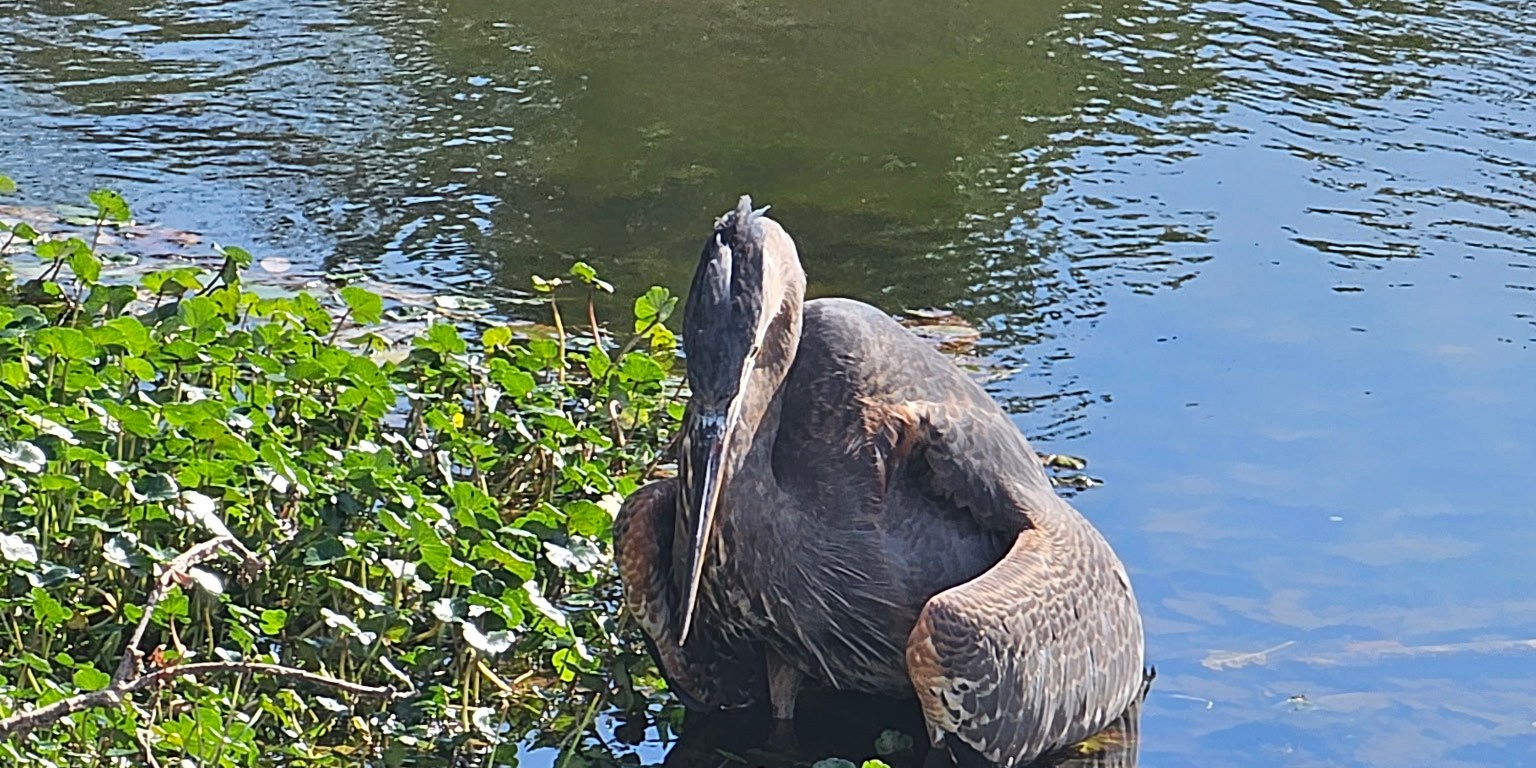
SURFSIDE, Wash. — A heron was still alive when it was spotted in distress near the shore of Seabreeze Lake on October 17. According to a local account, the bird could barely stay on its feet and died before rescuers could reach it. The carcass was reportedly frozen for testing. No necropsy or toxicology results for the bird could be verified for this article. Its cause of death remains unknown. Did the heron die of avian influenza? Was it because of an algae bloom toxin? Did it die of natural causes? Residents are concerned since algae blooms were present in the lake.
A year earlier, residents reported many fish floating in the same lake. Washington’s testing program has repeatedly recorded elevated microcystin levels, a toxin produced by some cyanobacteria. Those records establish a recurring hazard. Residents still have no clear public account of what drove the blooms, what killed the fish, or whether anyone followed up on the heron.
Washington has published the toxin readings
A year earlier, residents reported many fish floating in the same lake. Washington’s testing program has repeatedly recorded elevated microcystin levels, a toxin produced by some cyanobacteria. Those records establish a recurring hazard. Residents still have no clear public account of what drove the blooms, what killed the fish, or whether anyone followed up on the heron.
State toxin results for Seabreeze Lake ·
Washington Department of Health guidance
Ecology has documented testing and publicly flagged Seabreeze Lake in its September 2026 bulletin. The next question for the agency is what happened after the lab reported an exceedance. Has Ecology inspected inflows into Seabreeze Lake or outflows to the Pacific Ocean, reviewed runoff complaints from a chipper site with large piles of debris potentially leaching nutrients, or helped design a study of why the blooms recur? This article could verify public toxin results but could not locate a public investigation identifying what drives the recurring blooms or documenting their impacts on wildlife at this lake. If the work exists, publish it. If it hasn’t started yet, say who will lead it. Ecology’s September bulletin · Ecology’s freshwater algae program
Fish and Wildlife should say what happened after the reports.
Did the Washington Department of Fish and Wildlife intend to investigate the heron’s death or last year’s fish die-off? Did it issue a case number, assess the circumstances, or consider an examination? If the carcass is still available, the agency should advise whether it can be accepted and which tests are feasible. Symptoms described by a witness and a toxin reading from the lake cannot establish the cause of an individual bird’s death. WDFW asks the public to leave sick or dead wildlife alone and report it through the agency’s online tool. WDFW wildlife reporting guidance
The 2025 fish die-off deserves a separate answer. As a bloom decomposes, dissolved oxygen can fall low enough to kill fish. What oxygen readings were taken during the die-off, and where? Did anyone examine the fish or check for other possible causes? Ecology, WDFW, the HOA, and Pacific County should release any incident records, lake water quality tests, and say whether the case reached a finding. County Public Health should explain how it tracks suspected human, fish, wildlife, or pet exposures and how it investigates these occurrences.
Follow the water from the chipper site
Residents say the Surfside HOA stored tree debris at its chipper site through the summer for years and now chips the material periodically for distribution.
Rain passing through a debris pile can produce leachate. The HOA has not tested whether runoff from this site reaches Seabreeze Lake, or whether it carries nutrients or organic matter in quantities that affect the lake. A drainage map, leachate runoff testing during rain, site sampling, and any connected lake water quality testing would help answer these questions. If the HOA distributes chips from trees removed because of suspected disease, it should explain how it identifies and handles that material. The risk depends on the pathogen and how the material is processed and used.
Residents also say they have struggled to obtain HOA records. They refuse to release them. The association should release its water tests, treatment logs, chipper site drainage inspections, and the management materials. If the HOA considers its practices effective, residents should be able to see what it measured and over what period. Publish the requests and responses where records are disputed, and identify which tests or inspections have yet to be done. The same transparency should apply to complaints about tree removal and the loss of shoreline shade.
Pacific County should show what its rules protect
Pacific County has published draft amendments to its Critical Areas and Resource Lands ordinance. Residents say the HOA has characterized Seabreeze Lake as a drainage ditch and that the planning division and commissioners appeared to agree. They propose reducing the riparian buffers around the lake from 35 to 25 feet. How can you justify removing environmental protections around a lake experiencing recurring algae blooms and mycotoxin outbreaks? The planning division should publish which buffers or setbacks apply today, and how changing them will reduce the recurring algae blooms around the lake. If not, identify the expected impact of the reduced buffers and the potential impact on nutrient runoff.
Commissioners should ask what the proposed rules mean for shoreline shade, runoff, wildlife health, and habitat before they vote. A waterway can convey drainage and still support wildlife. But an outfall that discharges directly into the Pacific Ocean should also be examined for its impact on environmental health. Pacific County is requesting the draft ordinance and public comments for the proposed changes.
The Washington Department of Natural Resources should clarify whether any shoreline clearing falls within its authority and whether it has supplied technical advice on vegetation or buffers with recurring algae blooms.
Who cares enough to take responsibility?
Pacific County commissioners should put the toxin results, fish mortality records, wildlife reports, complaint follow-ups, and drainage findings in one place. Identify which agency holds each record and what remains uninvestigated. Residents have watched fish float and a heron die on the shore. Before the next bloom, they deserve to know who will respond, what will be measured, and when they will hear what was found before voting on environmental regulations impacting residents living around Sea Breeze Lake.

