
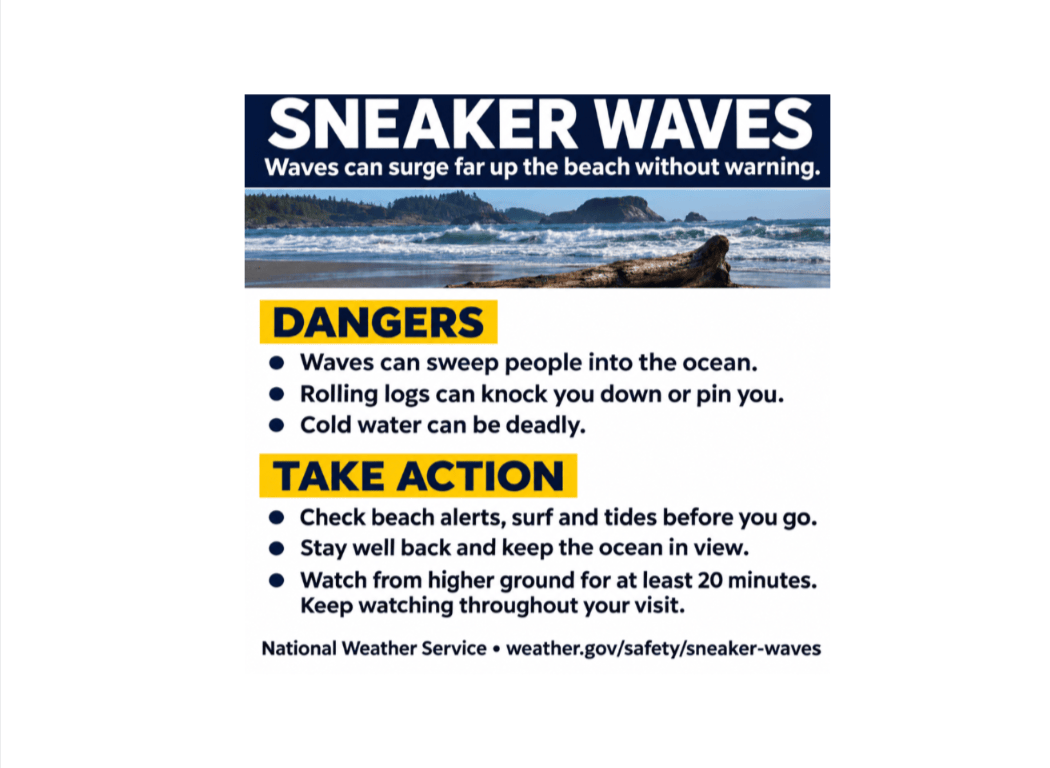
On Washington’s Long Beach Peninsula, a quiet stretch of surf can be followed by a wave powerful enough to knock someone down, roll heavy driftwood and sweep a beachgoer into cold water. Children, teens and young adults need to know what to do before they get to the beach.
Picture a family walking the beach in Ocean Park. A child runs toward the foam. Two friends move closer to the water for a video. The last few waves stopped well short of their feet. Then one wave rushes much farther up the sand, reaching all three before they can turn and get away. That sudden surge is what makes a sneaker wave so dangerous.
Waves can put on a spectacular show as they crash against the shoreline and send spray high above coastal cliffs. If you’re taking photos, use your zoom and stay well back from the surf and cliff edges. A sneaker wave can rush across dry sand in seconds, and a cliff edge can crumble underfoot or be overwhelmed by a large wave. Lower your camera and look where you’re stepping before you move, especially when backing up for a wider shot.
What gives a sneaker wave its power?
A sneaker wave runs much farther up the beach than the waves around it. The National Weather Service says 10 to 20 minutes of smaller waves can precede one. The surge can knock a person off their feet, and the water flowing back down the beach can pull them into the ocean. Cold water can quickly make it harder to move and swim.
National Weather Service sneaker wave safety
https://www.weather.gov/safety/sneaker-waves
Washington State Parks beach hazards
https://parks.wa.gov/beach-hazards
The same surge can lift and roll driftwood weighing hundreds of pounds. A log that looks like a good place to sit or climb can pin someone when the water reaches it. Give logs near the surf a wide berth, and keep children from climbing or playing on them.
National Weather Service guidance on waves and rolling logs
https://www.weather.gov/safety/ripcurrent-waves
Make the warning specific for kids and teens
Before anyone heads down the beach, point out where the group will stay and which way to move if water starts rushing toward you. For young children, “Stay beside me and hold my hand here” gives them something clear to do. Pick a spot for digging or playing well back from the surf, and have an adult actively watch the kids. If a child says the waves are getting closer or asks to move back, take it seriously and move together.
NOAA Wave Safe family and group planning guide
https://www.weather.gov/media/safety/rip/beachbaysafe_guide_v3d_wave.pdf
For teens and young adults, talk about the moments when it’s easy to drift closer: filming a wave, backing up for a group photo or following friends onto rocks or a jetty. Put the phone down while moving near the shore, keep the ocean in view and take photos from a safe distance. Agree before you go that anyone can say “Let’s back up,” and the whole group will move.
National Weather Service coastal hazard guidance
https://www.weather.gov/media/pqr/WFO%20PQR%20Marine%20and%20Coastal%20Hazard%20Criteria.pdf
Change your plans when an alert is issued
Before a trip to Surfside, Ocean Park or Long Beach, check the local National Weather Service forecast and follow posted signs and closures. Take a Beach Hazards Statement for sneaker waves seriously. When one is in effect, skip playing at the water’s edge and choose a viewpoint well away from the surf. During a High Surf Warning, stay out of the water and off jetties, piers and other structures exposed to waves. Local visitor guidance advises against ocean swimming on the Long Beach Peninsula even on calm days and says the beach has no lifeguard patrols.
National Weather Service Portland coastal hazard criteria
https://www.weather.gov/media/pqr/WFO%20PQR%20Marine%20and%20Coastal%20Hazard%20Criteria.pdf
Long Beach Peninsula beach safety
https://www.evergreencoastwa.com/plan/beach-safety-driving/
If someone is swept into the ocean
Call 911 immediately from a safe place. Stay out of the water. Give the dispatcher the nearest beach approach or landmark and tell them where you last saw the person. Keep watching from a safe spot so you can direct rescuers. The same surf that swept the person away can overpower anyone who swims after them.
Long Beach Peninsula beach safety
https://www.evergreencoastwa.com/plan/beach-safety-driving/
NOAA Wave Safe rescue guidance
https://www.weather.gov/media/safety/rip/beachbaysafe_guide_v3d_wave.pdf
Before your next beach walk, give everyone one instruction they can remember when it matters: If the water rushes toward you, move inland right away and call out to the people beside you.
Check the National Weather Service forecast and alerts for Ocean Park
https://forecast.weather.gov/MapClick.php?lat=46.49&lon=-124.05

