
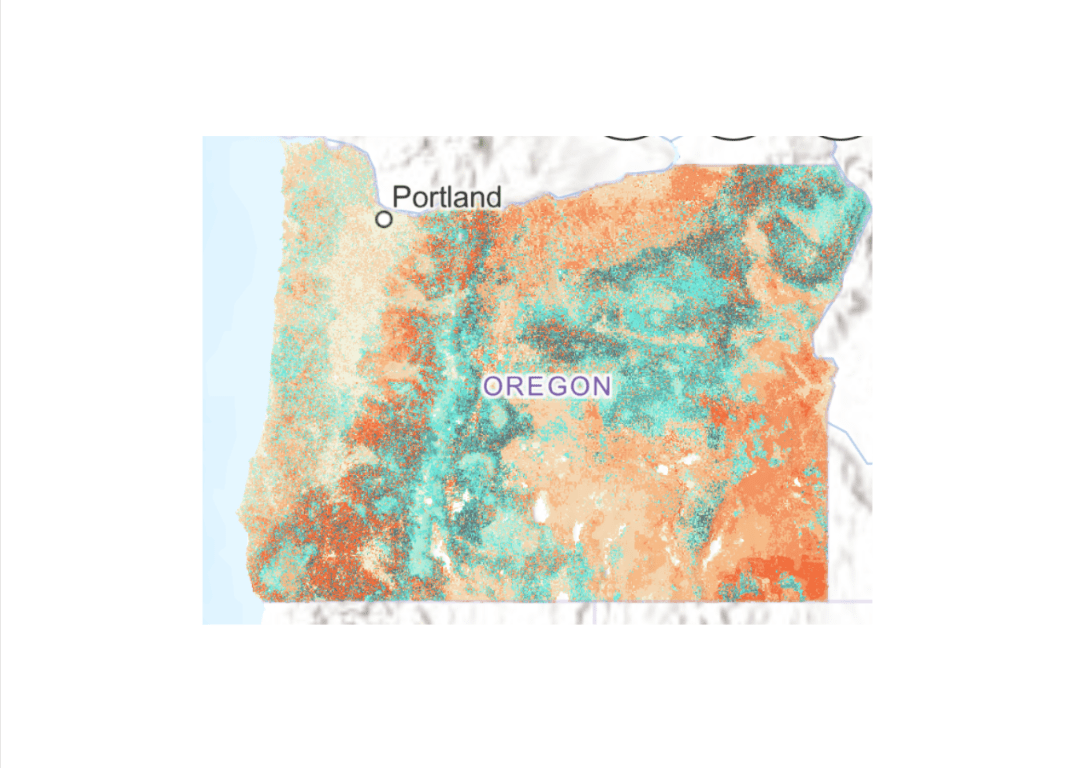
In recent years, wildfire risk mapping and Firewise-style enforcement have expanded rapidly across the West. Designed to protect communities, these policies sometimes had unintended economic and social consequences—including insurance withdrawals, falling property values, and public backlash. In at least one high-profile case, states were forced to pause or withdraw wildfire risk maps after widespread concern from homeowners, realtors, and local governments.
🗺️ Why Wildfire Risk Maps Were Pulled Back
States like Oregon faced significant pushback after releasing detailed wildfire hazard maps tied to new regulations and disclosure requirements. Critics raised several issues:
- Overgeneralization of risk
Maps classified large areas as “high risk,” even where historical wildfire activity was low or environmental conditions (like coastal moisture) reduced actual danger. - Lack of transparency and local input
Homeowners and counties argued the models didn’t reflect on-the-ground realities. - Immediate financial consequences
Designation alone triggered insurance and market impacts—before mitigation or appeals could occur.
Under pressure, officials paused implementation and began revising the approach to ensure better science, clearer communication, and economic safeguards.
Firewise Enforcement: Good Intentions, Mixed Results
Programs modeled after National Fire Protection Association Firewise principles focus on reducing ignition risk near structures. Core ideas—like managing the 0–5 foot zone around homes—are widely supported.
However, problems arise when enforcement becomes:
- Overly rigid or one-size-fits-all
- Applied in low-risk or coastal environments without adjustment
- Focused on broad vegetation removal rather than structure hardening
- Enforced through fines and penalties rather than incentives
In some communities, this has led to:
- Removal or damage of healthy trees
- Increased costs for homeowners
- Limited measurable reduction in actual wildfire risk
Oregon wildfire map withdrawn twice
Oregon’s experience with wildfire risk mapping underscores how powerful—and disruptive—these designations can be. The state initially released a comprehensive wildfire hazard map in 2022, but it was quickly withdrawn after widespread backlash from homeowners, local governments, and real estate professionals who warned of impacts to insurance availability and property values. A revised map was later introduced, yet concerns persisted over accuracy, transparency, and economic consequences, ultimately leading lawmakers to repeal the map and its associated mandates in 2025. In effect, Oregon was forced to step back twice—first withdrawing the initial version, then dismantling the updated framework—highlighting the challenge of balancing wildfire risk reduction with real-world economic impacts on communities.
Insurance Fallout: The Immediate Impact
Wildfire risk designation has become a trigger point for insurers.
Once areas are labeled “high risk”:
- Policies may be non-renewed
- Premiums can increase sharply
- Coverage may shift to expensive state-backed plans
Major insurers like State Farm and Allstate have already reduced exposure in high-risk California markets, citing wildfire losses and regulatory constraints.
The key issue:
Insurance decisions often rely on modeled risk, not just historical fires—so a map designation alone can change coverage availability.
Real Estate Values: The Ripple Effect
Once insurance becomes expensive or unavailable, property values follow.
Common impacts:
- Fewer qualified buyers (due to insurance requirements for mortgages)
- Lower home appraisals in designated zones
- Longer time on market
- Reduced investor interest
In some areas, homeowners reported:
- Immediate value declines after risk designation
- Difficulty selling homes without proof of insurability
In effect, wildfire maps can act like a financial zoning tool, reshaping entire markets overnight.
The Policy Dilemma
There is no question that wildfire risk is real in many regions. But the experience with withdrawn maps highlights a core tension:
How do you reduce risk without creating economic harm?
Key lessons emerging from these policy reversals:
1. Risk must reflect local conditions
Not all “forested” or “vegetated” areas carry the same fire risk.
2. Structure vulnerability matters more than location alone
As seen in events like the Palisades Fire, once fires reach communities, home construction and spacing often drive destruction.
3. Incentives outperform punishment
Programs that:
- Fund home hardening
- Support defensible space improvements
- Assist seniors and low-income homeowners
…are more effective than fine-based enforcement.
4. Economic impacts must be considered upfront
Risk policy that destabilizes insurance and housing markets can:
- Undermine community resilience
- Displace residents
- Create inequity
The Overlooked Factor: Misapplied Mitigation
In some communities, broad vegetation removal policies have:
- Reduced tree canopy
- Increased heat and runoff
- Created dead or damaged vegetation (which can become fuel)
Meanwhile, research shows that targeted, structure-focused mitigation—not blanket clearing—is the most effective way to reduce losses.
Bottom Line
The withdrawal of wildfire risk maps in places like Oregon wasn’t about denying risk—it was about recognizing flawed implementation.
- Wildfire risk is real—but varies widely
- Structures—not just vegetation—drive losses
- Insurance markets react instantly to policy signals
- Property values can shift overnight
The lesson is clear:
Wildfire policy must be precise, science-based, and economically balanced—or it risks doing more harm than good.
.
 Surfside Washington News