
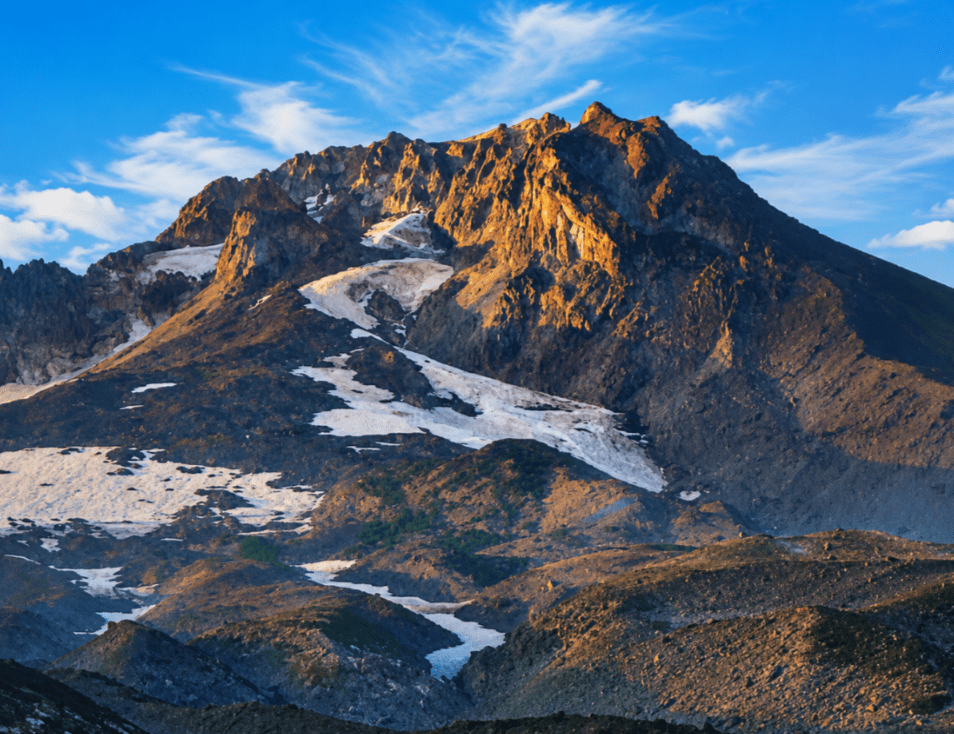
Personally, I’ve been studying the tree canopy and environmental changes in Surfside for years. While climate change is certainly affecting the Washington coast, its impacts remain far less dramatic than those experienced inland. One reason I own property in Surfside is to escape Portland’s increasingly frequent 90- and 100-degree summer days. Ocean Park’s average temperatures have risen modestly, and the Pacific Ocean continues to provide a moderating influence that keeps the coast considerably cooler than interior areas. However, what we’re now witnessing on Mount Hood—and across parts of western Washington—shows that even regions long thought to be buffered from the worst effects are changing. Compared with eastern Washington, the coast has experienced climate impacts so far, but the rapid loss of mountain snowpack is a reminder that no part of the Pacific Northwest is completely insulated from a warming climate. It’s not the ugly landmark that is alarming. It is what it potentially means going forward.
For generations, Mount Hood’s snow-covered peak has been one of Oregon’s defining landmarks. Even in midsummer, patches of snow and ice have typically remained high on the mountain, serving as a reminder that Oregon’s rivers begin with winter snow stored high in the Cascades.
This year tells a very different story.
Following one of the warmest winters on record and a historic snow drought, Mount Hood has lost nearly all of its seasonal snow far earlier than normal. The mountain’s unusually bare appearance is more than a striking visual—it is a warning about the future of water across Oregon and the Pacific Northwest.
Mountain snowpack acts as a natural reservoir. Snow accumulates during winter, then melts gradually through spring and summer, providing a steady supply of water to rivers, reservoirs, farms, fish, and communities. When that snowpack is missing, much of the winter precipitation runs off immediately instead of being stored for the dry months ahead.
The consequences are already becoming clear. Rivers that depend on snowmelt are expected to experience lower summer flows. Reservoirs may receive less sustained inflow during the hottest months, placing additional pressure on municipal water supplies, agriculture, hydropower generation, recreation, and aquatic ecosystems. Scientists have also warned that warmer winters are causing runoff to occur earlier in the year, leaving less water available during late summer when demand is greatest.
The impacts extend well beyond drinking water. Lower river levels can increase water temperatures, stressing salmon and trout. Dry forests with extreme drought become more vulnerable to drought, insects, disease, and catastrophic wildfire. Farmers may face greater irrigation challenges, while outdoor recreation and tourism may also be affected as streams and reservoirs shrink.
Mount Hood has long been more than a scenic backdrop—it is a critical part of Oregon’s water infrastructure. Its snowpack quietly stores millions of gallons of water that support communities throughout the year. When that snow disappears weeks or months ahead of schedule, the effects ripple across the entire region.
The nearly snow-free slopes of Mount Hood are not simply an unusual summer sight. They are a visible reminder that a warming climate is changing how the Pacific Northwest stores and delivers water. Protecting forests, improving water conservation, expanding storage where appropriate, and preparing for more frequent snow droughts will become increasingly important as Oregon adapts to a future in which the state’s iconic mountain may spend more of each summer without its familiar blanket of white.
One of the strongest natural defenses against rising temperatures is expanding the tree canopy. Planting and protecting trees helps cool neighborhoods through shade and evapotranspiration, reduces the urban heat island effect, lowers energy use by cooling homes, improves air quality, and makes communities more resilient as the climate continues to warm. While trees alone cannot stop climate change, they are among the most effective local actions communities can take to reduce its impacts.
Policies that damage trees or make them more vulnerable to disease are counterproductive to the goal of building climate protected communities. Such practices can accelerate tree decline by disease, reduce long-term canopy cover, and undermine one of the most effective natural defenses against rising temperatures. If communities want to preserve and expand their tree canopy, policies should prioritize maintaining healthy, structurally sound mature trees using evidence-based arboriculture practices rather than actions that increase stress, remove, kill, decay, or increase susceptibility to pests and disease. At this point to do otherwise is pure insanity and simply indefensible.

