
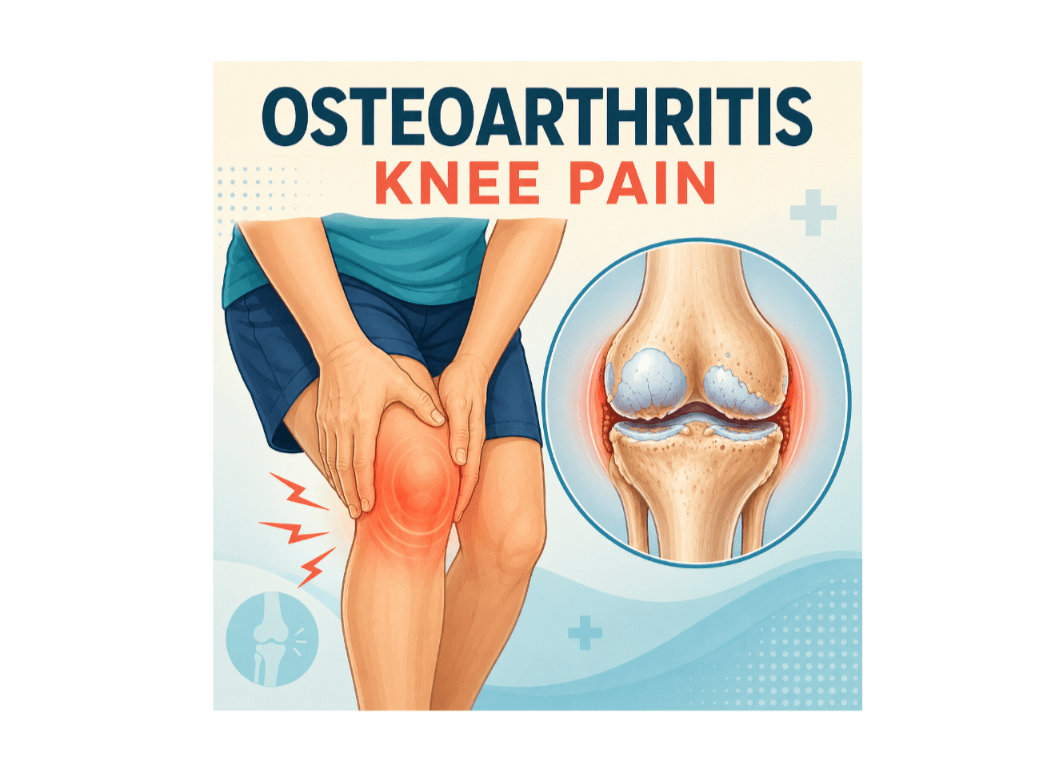
A medication used for nearly 20 years to treat seizures may eventually offer a new approach to osteoarthritis—reducing pain while also protecting damaged cartilage.
Yale School of Medicine researchers found that lacosamide, commonly sold as Vimpat, reduced pain and cartilage deterioration in preclinical studies. The drug works by blocking Nav1.7, a sodium channel involved in transmitting pain signals that also becomes overactive in cartilage-maintaining cells during osteoarthritis.
At an optimal low concentration, lacosamide encouraged cartilage cells to produce protective proteins and reduce tissue breakdown. Researchers caution that the dosage must be carefully controlled because concentrations that were too high or too low produced fewer benefits.
A Slow-Release Knee Injection
Because medications injected into the knee can be cleared within hours, researchers developed a temperature-responsive collagen hydrogel. It remains liquid in a cool syringe but forms a gel inside the joint, slowly releasing lacosamide for several weeks.
In preclinical testing, one hydrogel injection every four weeks protected cartilage more effectively than a daily oral dose. Local delivery could also reduce the side effects associated with medication circulating throughout the body.
Promising—but Not Yet Proven in People
Lacosamide has been FDA-approved for seizure disorders since 2008, but it is not approved for osteoarthritis. The hydrogel injection remains experimental, and human clinical trials are needed to determine whether it can safely reduce pain or repair cartilage in patients.
The drug can cause dizziness, balance problems, double vision, sleepiness and changes in heart rhythm. People should not use lacosamide for arthritis outside appropriate medical supervision or an authorized clinical trial.
Although it is too early to call this a cure, the research could represent an important step toward osteoarthritis treatments that do more than temporarily control pain.
References
Yale School of Medicine:
Peer-reviewed study:
https://pmc.ncbi.nlm.nih.gov/articles/PMC12963906/
PubMed:
https://pubmed.ncbi.nlm.nih.gov/41799961/
Inc. article:

