
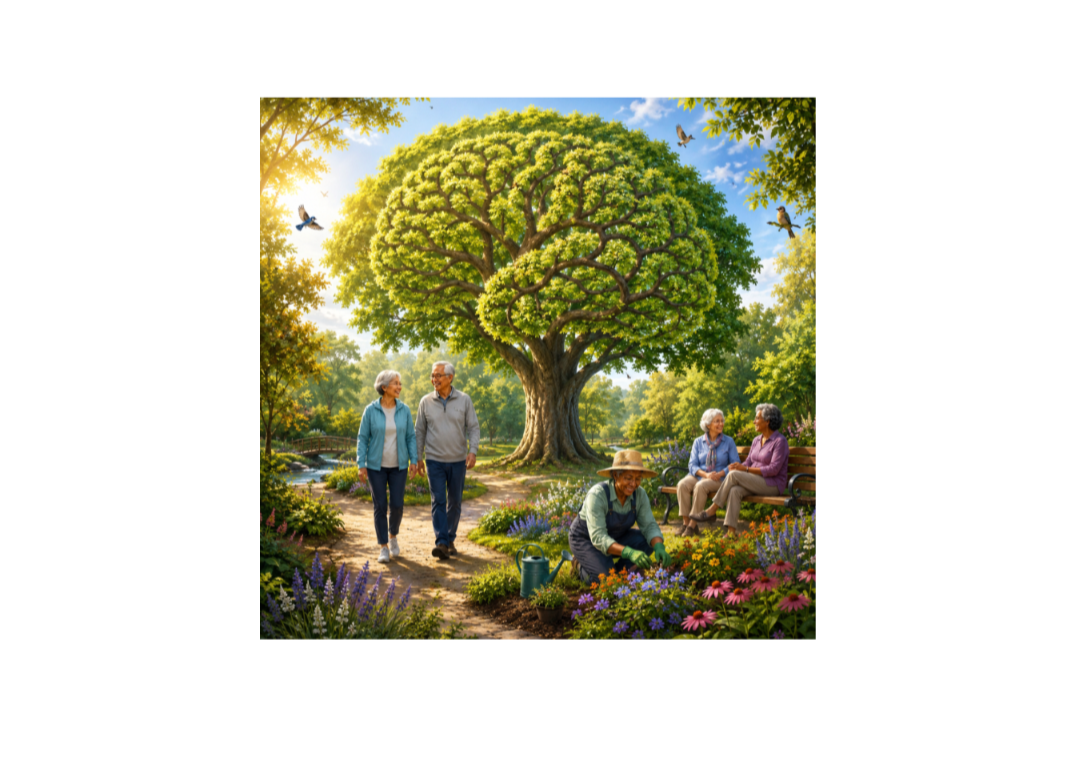
Dementia is becoming one of the world’s greatest health challenges as populations grow older. Although age and genetics cannot be changed, mounting evidence indicates that people can substantially reduce their risk through cardiovascular care, healthy living, social and mental activity—and regular access to trees, parks and nature.
Approximately 57 million people worldwide were living with dementia in 2021, with nearly 10 million new cases occurring annually, according to the World Health Organization. Global cases are projected to reach approximately 153 million by 2050, largely because people are living longer.
In the United States, an estimated 7.4 million people age 65 and older are living with Alzheimer’s dementia. That number could approach 13.8 million by 2060 without major advances in treatment or prevention, according to the Alzheimer’s Association.
Nearly half of cases may be preventable or delayed
Dementia cannot always be prevented, and a healthy lifestyle offers no guarantee. However, the 2024 Lancet Commission concluded that addressing 14 modifiable risk factors throughout life could potentially prevent or delay approximately 45% of dementia cases.
Those factors include high blood pressure, diabetes, high LDL cholesterol, obesity, physical inactivity, smoking, excessive alcohol consumption, hearing loss, untreated vision loss, depression, social isolation, traumatic brain injury, air pollution and limited education.
The finding means communities have an opportunity to reduce dementia’s future burden through both personal healthcare and healthier surroundings.
Trees and nature may help protect brain health
Trees are not a proven cure or stand-alone method of preventing dementia. Nevertheless, greener neighborhoods may help address several recognized dementia risk factors at the same time.
Tree-lined streets, parks, trails and natural areas can encourage people to walk, exercise and spend time outside. Pleasant and shaded public spaces may also make it easier for older adults to meet neighbors, participate in community activities and avoid social isolation.
Contact with nature has also been associated with lower stress, improved mood and greater psychological well-being. These benefits may be particularly valuable because depression and chronic isolation are associated with increased dementia risk.
Trees can additionally reduce exposure to excessive heat and help filter some air pollutants. Air pollution is one of the 14 modifiable dementia risk factors identified by the Lancet Commission. Trees alone cannot eliminate pollution—and poorly selected vegetation can sometimes trap pollution beside busy roads—but a well-designed urban canopy can be part of a broader clean-air strategy.
Research examining green space and dementia is largely observational. It can show an association but cannot yet prove that planting a specific number of trees will prevent dementia. Greener neighborhoods may also have better healthcare, safer walking routes and higher incomes, which can influence results. Even so, nature supports several behaviors already known to benefit the brain.
Nature can make prevention more accessible
Advice to exercise is less useful if a neighborhood lacks safe, comfortable places to walk. This is especially important for older people, those with disabilities and people who are sensitive to heat.
Mature trees can provide shade, reduce summer temperatures and create more inviting routes to parks, stores and neighbors. Benches, smooth walking surfaces, adequate lighting and accessible trails can make these environments safer for seniors.
Nature-based activities may include:
Walking in a park or tree-lined neighborhood
Gardening
Birdwatching
Joining an outdoor walking group
Visiting a lake, forest or wildlife area
Volunteering in a community garden
Exercising outdoors when conditions are safe
Meeting friends or relatives in a park
These activities combine physical movement, mental stimulation and social connection—three important components of healthy aging.
Protecting the heart protects the brain
High blood pressure, diabetes, elevated cholesterol and smoking can damage the blood vessels supplying the brain. This raises the risk of strokes, vascular dementia and potentially Alzheimer’s disease.
People can reduce these risks by controlling their blood pressure, cholesterol and blood sugar; avoiding tobacco; maintaining a healthy weight; limiting alcohol; and taking prescribed medications consistently.
Regular physical activity is particularly valuable. Adults should generally aim for at least 150 minutes of moderate activity each week when medically appropriate. Walking, cycling, swimming, gardening and dancing can all contribute.
Hearing, vision, sleep and emotional health matter
Untreated hearing loss can interfere with communication and increase isolation. Hearing evaluations and properly fitted hearing aids may help people remain socially and mentally engaged. Treating cataracts and other correctable vision problems may offer similar benefits.
Poor sleep can impair memory, while untreated sleep apnea may repeatedly lower oxygen levels and disrupt restorative sleep. Depression can also cause memory and concentration problems and is associated with increased dementia risk. These conditions deserve proper medical evaluation and treatment.
Communities have a role in prevention
Dementia prevention cannot rest entirely on individual choices. Communities influence whether residents have access to healthcare, clean air, education, social opportunities and safe places to exercise.
Preserving mature trees and expanding equitable access to parks and natural areas should be considered part of a broader public-health strategy. Neighborhoods with older residents particularly benefit from shade, accessible trails, benches and nearby places where people can exercise and connect with others.
A healthy community canopy cannot guarantee that someone will avoid dementia. It can, however, help create the conditions that allow more people to remain physically active, socially connected and mentally engaged throughout life.
Prevention should begin before symptoms appear
The projected growth in dementia is serious, but it is not entirely unavoidable. The strongest evidence supports a lifelong strategy:
Control blood pressure, cholesterol and diabetes
Remain physically active
Protect hearing and vision
Avoid smoking and excessive alcohol
Maintain friendships and community connections
Treat depression and sleep disorders
Prevent head injuries
Reduce exposure to air pollution
Spend time walking, gardening or socializing in nature
Trees and natural spaces are not substitutes for medical care. They are part of the preventive environment—living infrastructure that can support cleaner air, cooler neighborhoods, physical activity, emotional health and social connection.
Protecting brain health therefore involves more than treating disease. It also means creating communities where people can move safely, breathe cleaner air, connect with one another and maintain a meaningful relationship with nature.

