
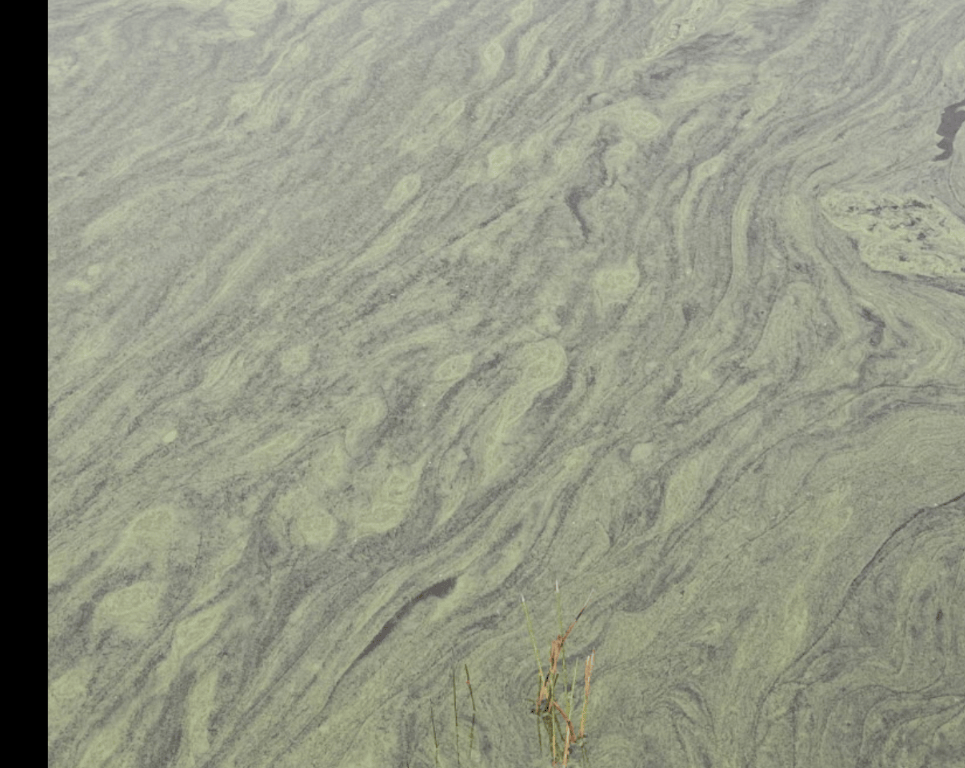
Wind can concentrate toxic algae along a shoreline—and may carry contaminated droplets into the nearby air
A toxic cyanobacteria bloom is not necessarily confined to the place where it was first observed. Wind can move floating cyanobacteria across a lake, concentrate the bloom against a downwind shoreline, and help create airborne droplets containing cyanobacterial cells or toxins.
This matters for people living, walking, or working near an affected lake—even when they never enter the water.
Microcystins Do Not Simply Evaporate
Microcystins are liver-damaging toxins produced by certain cyanobacteria, commonly called blue-green algae. They are not volatile chemicals, so they do not evaporate from a lake like gasoline or alcohol.
However, microcystins can become airborne when contaminated water is broken into extremely small droplets or particles. This can happen through:
Wind-driven waves and spray
Water splashing against a shoreline
Boating and personal watercraft
Aerators, fountains, sprinklers, or pumps
Pressure washing with contaminated water
Dried bloom material or shoreline scum becoming disturbed
The toxin is carried in water droplets, cyanobacterial cells or tiny particles—not as an invisible gas evaporating from the lake.
The CDC recognizes inhalation of aerosolized cyanotoxins as a potential exposure route. Researchers have also detected cyanobacterial material and microcystins in aerosols produced around freshwater blooms, although scientists are still determining how much exposure people receive at different distances and wind speeds.
Wind Can Create Toxic Hot Spots
Wind frequently pushes buoyant cyanobacteria toward the downwind side of a lake. As the organisms accumulate, the water may become streaked with green material or resemble spilled paint, pea soup, foam or surface scum.
Cyanobacteria and toxin concentrations at these downwind locations can be substantially higher than concentrations in open water. Conditions can also change rapidly when the wind changes direction. A shoreline that appeared relatively clear in the morning may contain a dense accumulation later that day.
This means one sample does not necessarily describe the entire lake—and a test taken from one location may not represent conditions along another shoreline.
What Seabreeze Lake’s Result Means
The reported Seabreeze Lake microcystin concentration of 28.2 micrograms per liter was approximately 3.5 times Washington’s recreational warning level of 8 micrograms per liter.
Washington guidance calls for warning signs and weekly sampling while microcystin concentrations remain at or above 8 micrograms per liter.
That result confirms a recreational water hazard at the sampling location and time. It does not, by itself, measure toxin concentrations in the surrounding air. Air monitoring would be needed to determine actual airborne exposure.
However, because wind can relocate a bloom and wave action can generate contaminated droplets, residents should treat visible accumulations—especially along the downwind shoreline—as areas requiring additional caution.
Can Breathing Near the Lake Make Someone Sick?
The best-established ways people are exposed to microcystins are swallowing contaminated water and direct contact with a bloom. Airborne exposure is scientifically plausible and has been documented, but the health risk at various distances from freshwater blooms remains less understood.
Possible symptoms following exposure to cyanobacteria or their toxins include:
Coughing, wheezing or throat irritation
Eye or nasal irritation
Headache
Skin irritation or rash
Nausea, vomiting, diarrhea or abdominal pain
Weakness or unusual fatigue
Microcystins primarily affect the liver when enough toxin enters the body. Severe poisoning can cause significant liver injury, but this is more commonly associated with ingestion or a substantial exposure rather than simply smelling a lake.
An unpleasant odor does not measure microcystin concentration. Odors during a dying bloom may come from gases such as hydrogen sulfide or methane, which can cause separate respiratory irritation.
Who Should Be Especially Careful?
Extra caution is reasonable for:
Children
Older adults
Pregnant people
People with asthma, COPD or other respiratory conditions
People with liver disease
Anyone with a weakened immune system
Pets, particularly dogs
Dogs face especially serious danger because they may drink contaminated water, swallow shoreline scum or lick toxins from their fur. Animals can also be exposed through skin contact or inhalation.
Precautions During a Windy Toxic Bloom
When a lake is under a toxic-algae advisory:
- Stay away from visible scum and discolored water. Give the bloom plenty of room.
- Avoid the downwind shoreline. This is where floating material may accumulate and where waves can create spray.
- Keep windows closed if spray, foam, strong odors or respiratory irritation are present near a home. Consider running an air conditioner or purifier on recirculation.
- Do not use lake water in sprinklers, fountains or pressure washers. These devices can deliberately convert contaminated water into inhalable droplets.
- Do not swim, wade, kayak or allow pets into affected water.
- Do not boil contaminated water. Boiling does not reliably remove microcystins and may concentrate toxins as water evaporates.
- Wash exposed skin with clean water. If a pet enters the water, rinse it immediately while wearing gloves and prevent it from licking its fur.
- Seek fresh air if coughing, wheezing, burning eyes or throat irritation develops.
People with significant breathing trouble, repeated vomiting, confusion, jaundice, severe weakness or other serious symptoms should seek urgent medical attention. Tell the medical provider about the possible toxic-algae exposure.
The Important Distinction
Wind does not turn microcystin into a freely evaporating poisonous gas. But it can make conditions more hazardous by:
Moving the bloom toward homes and public shorelines
Concentrating cyanobacteria and toxins in shallow water
Producing contaminated spray through breaking waves
Disturbing dried bloom residue
Rapidly changing which part of the lake has the greatest exposure
The absence of contact with the water therefore does not guarantee zero exposure—particularly beside a dense, wind-driven bloom. At the same time, current science does not support declaring that everyone living near a bloom will receive a dangerous airborne dose.
The prudent response is to avoid visible bloom material, minimize spray-generating activities, pay attention to wind direction and continue water testing until toxin levels remain below Washington’s advisory threshold.
Sources
Washington State Department of Health — Cyanobacteria:
https://doh.wa.gov/community-and-environment/contaminants/cyanobacteria
Washington recreational guidance for freshwater toxins:
https://doh.wa.gov/sites/default/files/2025-08/333-279-GuidanceFreshwaterToxins.pdf
Centers for Disease Control and Prevention — Harmful Algal Blooms:
https://www.cdc.gov/harmful-algal-blooms/
U.S. Environmental Protection Agency — Harmful Algae, Cyanobacteria and Cyanotoxins:
https://www.epa.gov/habs/learn-about-harmful-algae-cyanobacteria-and-cyanotoxins
Washington State Department of Ecology — “See an algal bloom, give it room”:
https://ecology.wa.gov/blog/june-2026/see-an-algal-bloom-give-it-room

